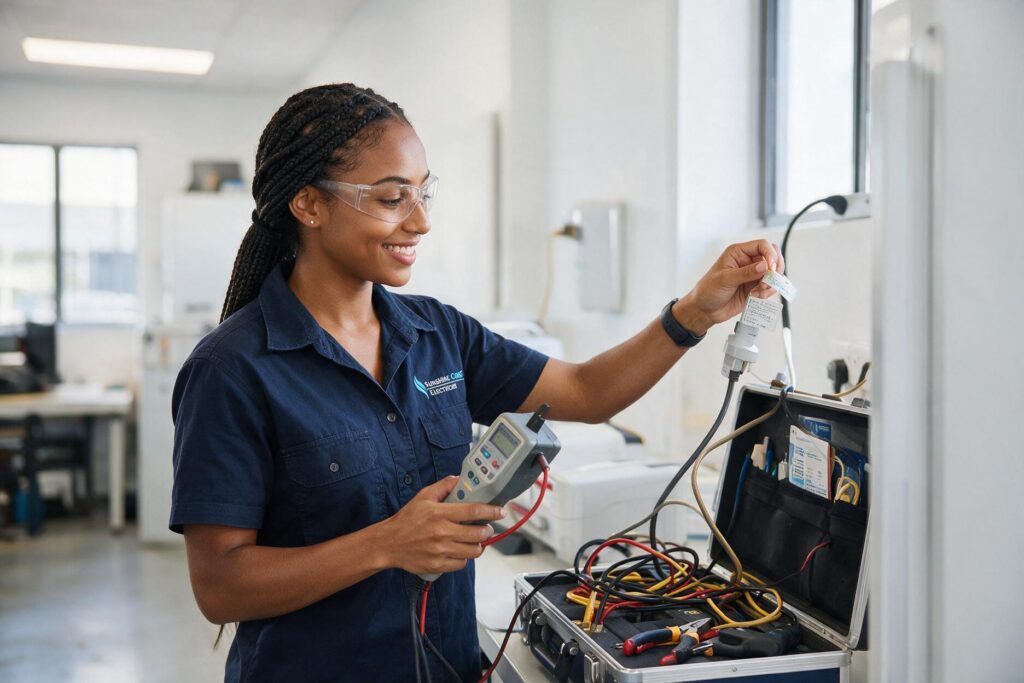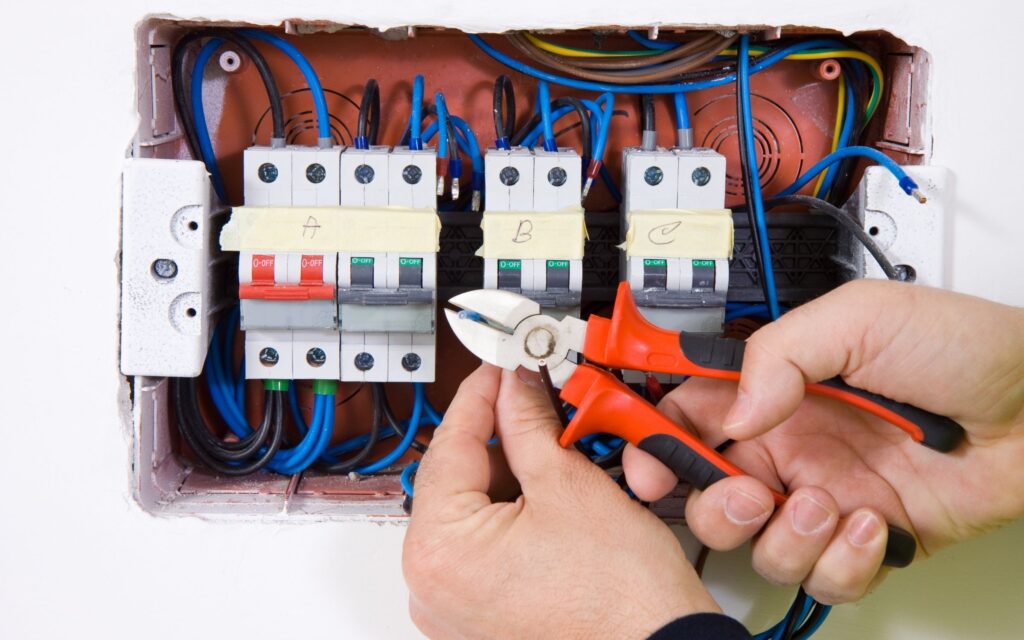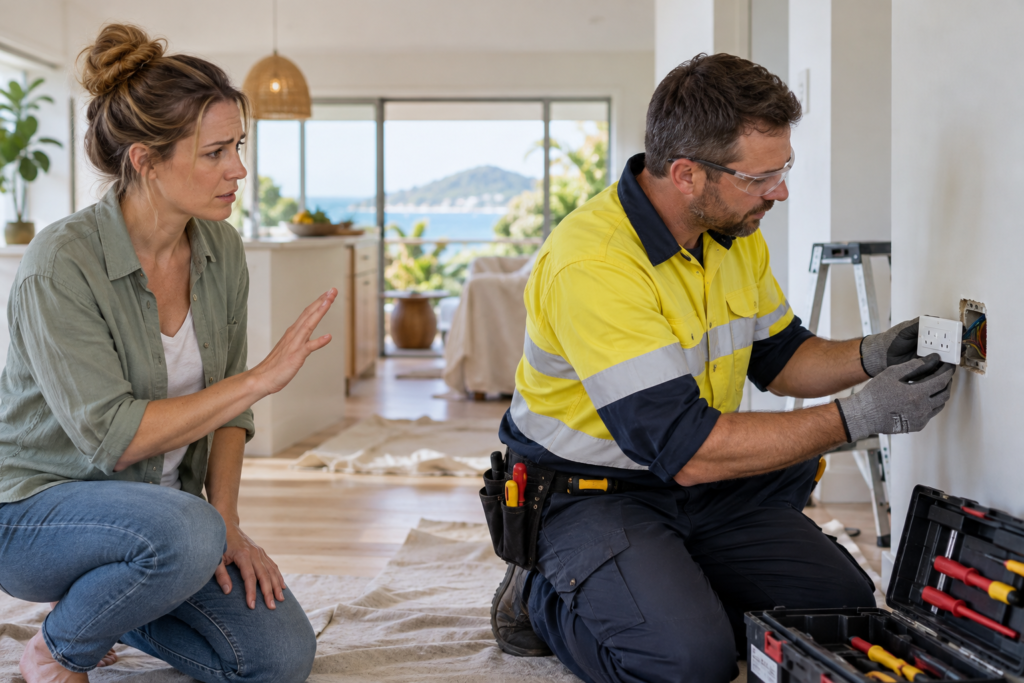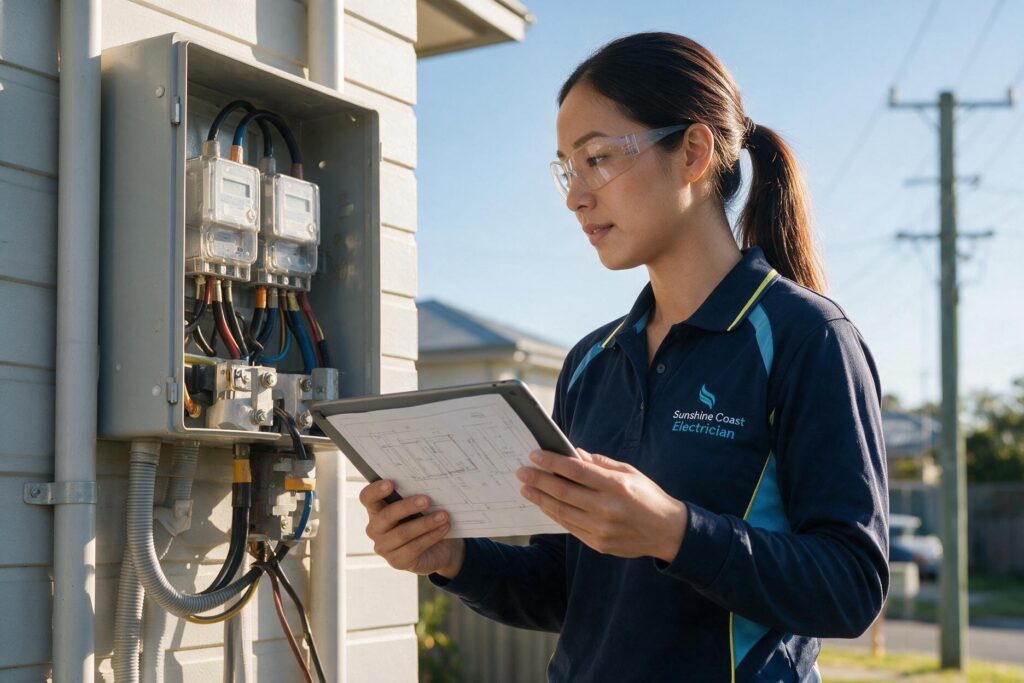
Energex approval electrical work QLD requirements apply to new connections, supply upgrades, meter changes, solar exports and some major electrical alterations. Your licensed electrical contractor normally prepares the application, coordinates technical details and completes required testing. Approval timing depends on the job, network capacity and whether Energex must attend, so early planning helps prevent delays.
In simple terms, you need Energex approval whenever electrical work changes your main supply, meter, phase size, embedded generation (like solar and batteries) or how your property physically connects to the street network. Internal wiring inside the home often does not go through Energex, but it still has to comply with Queensland safety laws and Australian Standards.
This article explains who Energex is, when they must be involved, and how network approval links to Queensland electrical safety laws. It also breaks down the steps from first quote through to final metering, plus typical timelines, cost categories and safety rules near overhead and underground lines. Sunshine Coast Projects & Electrical is used as a local example of how a licensed contractor can handle the approvals and paperwork, while you focus on your home or business plans.
Read on to see where your project fits, and how to plan work so Energex approval for electrical work in QLD does not slow everything down. Always confirm current rules and tariffs on official Queensland and Energex sites before you commit to any design.
Key Takeaways
-
Many jobs that change how your place connects to the Energex network need approval. This includes new supplies, supply upgrades, solar and battery systems, larger EV chargers, meter moves and work that affects mains. Simple internal wiring often sits outside this process.
-
Energex approval for electrical work in QLD usually means your electrician lodges a network connection application and an Electrical Work Request. Energex checks safety and local capacity, then issues a Connection Offer before meters are changed and power is switched on.
-
Standard jobs such as modest solar systems or simple new home connections often move from application to energisation in around 3 to 4 weeks. Larger solar, batteries, three phase upgrades or commercial loads can take 3 to 8 weeks, with metering work a common delay.
-
Common triggers for Energex sign off include solar and battery installations, EV charger projects, secondary dwellings, big renovations and commercial fit outs. Any work near poles, overhead lines or underground cables may also need Safety Advice from Energex.
-
A locally experienced contractor can design to suit Energex limits, lodge forms correctly and follow up on progress. This keeps projects compliant and reduces surprises, even though no electrician can control Energex or retailer timelines.
Tip: Before you start major work, ask your electrician one direct question: “Will this job change my mains, meter, phase size or solar export?” If the answer is yes, Energex is probably involved somewhere in the process.
What Is Energex Approval For Electrical Work In QLD?
Energex approval for electrical work in QLD means the distribution network checks and accepts certain jobs before they connect to the grid. It applies when work affects mains, meters or how a Sunshine Coast property links into the wider electricity network. Normal internal wiring still needs to meet Australian Standards, but it does not always need network sign off.
Energex is the distribution company for South East Queensland, including the Sunshine Coast, Brisbane, Ipswich, Logan and the Gold Coast. It owns and operates local poles, wires, transformers and many meters, while retailers such as Origin, AGL and EnergyAustralia handle billing and some metering charges. When a job could change demand or generation at the connection point, Energex approval for electrical work in QLD helps keep both people and the network safe.
You can find current Energex connection information on:
-
Energex – “Connections” and “Solar and battery systems” pages: https://www.energex.com.au
-
Energy Queensland technical requirements: https://www.energyq.com.au
Energex, The Network And The Legal Framework
Energex acts as the distribution network service provider for most of South East Queensland, while Ergon Energy Network does the same for regional areas. Both sit under Energy Queensland and must follow state laws and national rules. On the Sunshine Coast, any new connection or major change to mains or meters will go through Energex, even though your bill still comes from a retailer.
Queensland electrical safety sits under:
-
Electrical Safety Act 2002 (Qld)
-
Electrical Safety Regulation 2013 (Qld)
-
Codes of Practice published by the Queensland Electrical Safety Office (ESO): https://www.worksafe.qld.gov.au/electrical-safety
Technical details come from:
-
AS/NZS 3000 (Wiring Rules)
-
AS/NZS 4777 series for grid‑connected inverters
-
AS/NZS 5139 for battery energy storage system installations
Energex also publishes Service and Installation Rules that set out meter positions, clearances, maximum demand and other connection requirements. These rules apply alongside the legislation and standards and are available through the Energex website.
Only licensed electrical contractors can legally carry out and certify this work in Queensland. According to the Queensland Electrical Safety Office, using unlicensed people for fixed wiring is illegal and can void insurance. For network related jobs, your electrician must meet all these laws and standards before Energex will approve the connection.
What Counts As “Energex Approval” Vs Normal Electrical Work?
For network related jobs, electricians usually submit a network connection application, often called a CX form, through the Energex Electrical Partners Portal. This covers:
-
New supplies
-
Supply upgrades
-
Embedded generation such as solar and batteries
-
Temporary Builders Supply
-
Some metering changes and relocations
After the work is complete and tested, the contractor lodges an Electrical Work Request (EWR), which tells Energex and the retailer the job is ready to connect.
Energex approval for electrical work in QLD usually involves:
-
Assessing the application
-
Checking local transformer capacity and voltage
-
Issuing a Connection Offer with any conditions, such as export limits or demand controls
Energex or its metering providers then carry out any network side tasks, such as connecting service lines or changing meters.
By contrast, plenty of internal jobs do not need Energex to look at a formal application. Adding power points inside a room, changing light fittings, or wiring a standard circuit that does not alter supply size or metering are handled fully by the electrician. They still must comply with the Wiring Rules and Queensland law, but Energex does not review each one.
Important: Network approval is about the point where your installation meets the Energex system. Internal safety is still governed by Queensland law even when Energex is not directly involved.
Which Electrical Jobs On The Sunshine Coast Need Energex Sign-Off?
Electrical jobs on the Sunshine Coast need Energex sign off when they change how a property connects to the grid or place extra strain on the network. Energex approval for electrical work in QLD is most often triggered by new connections, supply upgrades, major solar and battery systems, larger EV chargers, meter relocations and work that alters service lines. Routine internal wiring that stays behind the main switchboard normally sits outside this process.
Network approval focuses on two main points, echoing research on modernizing distribution networks for an electrified future in Queensland, which highlights how local transformers and feeders must be checked as demand from solar, batteries and EV chargers grows: safety, meaning avoiding shocks, fires and unsafe back feed into the grid; and network performance, meaning checking that local transformers and lines can handle new demand or solar export.
The jobs below are the ones that most often cross that line from simple installation to network related work.
Common Residential Jobs That Need Energex Approval
For homeowners, many everyday projects quietly step into the network space rather than staying as a simple internal change. Once mains, meters or the point of attachment are touched, Energex approval for electrical work in QLD usually comes into play.
Common Sunshine Coast residential jobs include:
-
New home builds, granny flats and secondary dwellings
New dwellings often need a fresh connection, meter and sometimes a Temporary Builders Supply. These require a network connection application before Energex agrees to supply the new premises. Separate tariffs or meters can also involve retailer requests and metering work. -
Switchboard upgrades that increase supply capacity
Upgrades that move the meter panel or change from single phase to three phase supply alter how much current the property can draw from the network, so Energex needs to check local capacity. The electrician will generally lodge a connection application plus an Electrical Work Request once work is complete. -
Solar PV and battery installations or upgrades
Systems that change inverter size, add export capacity or introduce a new battery are classed as embedded generation. Energex approval for electrical work in QLD in this area focuses on export limits, voltage rise and inverter standards. Even replacing an inverter may require updating the existing approval to reflect the new model and settings. -
EV charger installations
Projects that add a 7 kilowatt or larger charger, or several chargers on one site, can take a supply to its limits. Energex may need to confirm that mains and transformers can cope. Storm repairs that affect service lines, a fallen point of attachment or a damaged meter enclosure also bring Energex into the picture.
A licensed local contractor will look at the whole picture, including mains size and likely load, and then advise whether Energex involvement is required before work starts. The legal duty to comply with the Electrical Safety Act and Regulation sits with the contractor, not the homeowner.
Typical Commercial And Renovation Projects Requiring Energex Involvement
On the commercial side, new shop, cafe or office fit outs often trigger Energex review. Air conditioning plant, commercial kitchen equipment, refrigeration and machinery can push demand well beyond the previous tenant. Where maximum demand jumps, the supply may need upgrading or the site may switch from single phase to three phase, which means a connection application and a Connection Offer.
Warehouse and workshop projects can involve:
-
Electric vehicle fleets
-
Large lighting or refrigeration loads
In these cases, Energex approval for electrical work in QLD helps confirm that local transformers and feeders can handle the added draw. Some sites may be treated as large customer connections that need more detailed engineering review and longer timeframes.
Major home renovations, extensions and secondary dwellings also come under scrutiny, especially where the main switchboard or meter is relocated or extra kitchens and bathrooms are added. A Temporary Builders Supply might be installed during construction, then later removed when the permanent connection is ready. All of these steps involve formal dealings with Energex alongside the usual building and council requirements.
How Does The Energex Connection And Approval Process Work?
The Energex connection and approval process on the Sunshine Coast follows a clear series of steps from design to energisation. Energex approval for electrical work in QLD is granted only after the distributor has checked the application, the contractor has completed compliant work, and the retailer has arranged metering. Owners mainly choose their electrician and retailer, then review and accept any Connection Offer.
Understanding who does what removes much of the stress around these jobs. While the process can feel slow at times, each party has defined roles that fit together to get power on safely.
Who Does What – Customer, Contractor, Energex And Retailer?
Each party has a distinct role:
-
Customer or property owner
Decides what they need (new supply, upgrade, solar, EV chargers, renovations) and selects an electricity retailer. They also authorise the contractor to act on their behalf with Energex where required and accept any Connection Offers. -
Licensed electrical contractor
Designs the installation, carries out a load review and confirms whether Energex approval for electrical work in QLD is required. Using the Energex Electrical Partners Portal, the contractor lodges network connection applications and Electrical Work Requests, then completes onsite wiring to match the approved design. They handle testing, certification and Electrical Certificates of Compliance. -
Energex (distribution network service provider)
Assesses each application against local network capacity, voltage limits and safety standards. Where the proposal is acceptable, Energex issues a Connection Offer that sets out any conditions, such as export limits, staged work or required network upgrades. They then schedule any network side tasks once they receive correct service orders. -
Electricity retailer
Manages the customer’s energy account and raises service orders so Energex or its metering partners can change meters and complete final connection work. Retailers also pass through many metering charges on the power bill.
Energex does not design customer installations or certify internal wiring. That duty remains with the licensed contractor under Queensland law.
From First Quote To Final Metering – Step-By-Step
For most Sunshine Coast homes and small businesses, the sequence from first chat to live connection follows a familiar pattern. Energex approval for electrical work in QLD fits into that pattern at specific stages.
-
Site consultation
The electrician visits the site to discuss goals such as new builds, renovations, solar or EV charging. They check existing mains, switchboards and space for meters, then estimate likely demand. -
Design and preliminary checks
The contractor designs the installation and confirms what approvals are needed, including any embedded generation or Temporary Builders Supply. They collect property details such as address, lot and plan numbers, proof of ownership and, for existing supplies, the National Meter Identifier (NMI) from power bills. -
Network connection application
A connection application is lodged through the Energex Electrical Partners Portal for new connections, supply upgrades or embedded generation. Simple cases may receive near instant approval while complex ones are queued for engineering review. -
Energex assessment and Connection Offer
Energex reviews the proposal, checking local transformers, lines and voltage performance, and either approves, approves with conditions or requests design changes. Once accepted, a Connection Offer is issued and must be agreed to by the owner or their authorised contractor. -
Electrical installation work
The electrician completes onsite work to match the approved design, following Queensland legislation, the Wiring Rules and Energex Service and Installation Rules. After testing, they lodge an Electrical Work Request that certifies the job is safe and ready. -
Metering and energisation
The electricity retailer raises a service order for meter work, which Energex or its metering providers schedule and carry out. Once meters and any network side connections are in place, the new or altered supply, solar system or EV charger is energised.
Tip: Ask your contractor for clear updates at three points – after the application is lodged, after the Connection Offer arrives, and after the EWR is submitted. Those are the milestones that drive the overall timeline.
When Do You Need Energex Approval For Solar, Batteries And EV Chargers?
Solar, batteries and EV chargers are now some of the most common reasons homes and businesses need Energex approval for electrical work in QLD. These technologies either add generation into the grid or create high peak loads that can stress local transformers and lines. On the Sunshine Coast, many streets already have high solar penetration, so extra care is needed.
Energex focuses on inverter size, export limits and overall maximum demand. A well designed system that fits within standard limits usually passes through the approval process smoothly, while one that pushes boundaries may face extra conditions or further studies.
Up‑to‑date solar and battery connection requirements are published on:
-
Energex “Solar and batteries”: https://www.energex.com.au/home/our-services/solar-pv-and-batteries
-
Queensland Government solar information: https://www.qld.gov.au/housing/home‑electricity‑and‑energy/solar
Solar And Battery Systems – Key Energex Rules And Limits
For a typical single phase home, Energex often allows inverter capacity up to around 10 kilovolt amperes, subject to network checks. Panel capacity can be higher than the inverter rating, which is known as oversizing, but the inverter itself must stay within Energex limits. Standard export limits on many single phase homes sit around 5 kilowatts, although local constraints can reduce this figure.
Key technical requirements include:
-
All grid connected inverters must comply with AS/NZS 4777 and be on relevant approved product lists.
-
Connection settings such as voltage trip points, frequency limits and export caps must match Energex requirements.
-
Batteries are treated as part of the same inverter energy system and must be included in the design and application.
Energex approval for electrical work in QLD in this area involves a specific embedded generation application. The contractor submits details of inverters, panels, batteries and protection devices, then Energex checks transformer capacity and local voltage history.
Common issues that can delay or complicate approvals include:
-
High grid voltage due to many nearby solar systems
-
Incorrect inverter model numbers or serials on forms
-
Mismatches between the approved and installed equipment
-
Missing single line diagrams or inadequate site plans for larger systems
If conditions such as reduced export limits are applied, your electrician can often redesign the system to focus on self‑consumption and battery use rather than high feed‑in.
EV Chargers And High-Demand Loads – Do You Need Pre-Approval?
Home EV chargers are usually 7 kilowatt single phase units, while commercial and some residential three phase chargers can be 11 to 22 kilowatts or more. These loads can quickly push a standard residential supply towards its maximum, especially when combined with ducted air conditioning, electric ovens and pool equipment. For that reason, many EV projects need Energex approval for electrical work in QLD before the charger can be energised.
In practice:
-
The electrician assesses current demand and planned charger size.
-
They decide whether a network connection application is required in addition to an Electrical Work Request.
-
Single 7 kilowatt chargers on newer homes with robust mains may only need an EWR.
-
Clusters of chargers or three phase units often trigger a formal capacity review.
In multi dwelling car parks and commercial premises, charger management systems that stagger or limit charging can help satisfy network constraints and meet Energex conditions.
If Energex identifies concerns, conditions may include:
-
Demand control or load shedding devices
-
Automatic reduction of charger output during peak times
-
Mains or switchboard upgrades before extra chargers are energised
Designing with these options in mind at the start usually gives better results than retrofitting controls after an application is restricted.
How Long Do Energex Approvals And Connections Take On The Sunshine Coast?
Timeframes for Energex approvals and connections on the Sunshine Coast vary with job type and local network conditions. Simple work with standard settings can move from application to energisation in a few weeks, while larger or more complex projects may take longer. Energex approval for electrical work in QLD is only one part of the timeline, with metering and contractor schedules also playing roles.
Owners often feel that meter work is slow because it happens after all visible onsite work is complete. Planning for realistic time ranges from the start reduces frustration and helps you coordinate with builders and other trades.
Typical Timeframes For Common Jobs
While exact durations can change and should always be confirmed with Energex and your retailer, many Sunshine Coast projects follow rough patterns such as:
-
Standard residential solar with no supply upgrade
Portal applications can sometimes be auto approved or cleared within a few days when they fall within standard limits. Installation itself may only take one or two days on site. Meter changes, which rely on retailer orders and Energex scheduling, often add another week or two, giving an overall window of roughly 3 to 4 weeks. -
New house connections following standard designs
The electrician submits a simple connection application, Energex responds, and the builder and electrician schedule works to suit the build program. As long as metering is requested early and information is accurate, the final energisation normally lands close to handover, often in that same 3 to 4 week overall band from application to power on. -
Larger or more complex jobs
Bigger solar systems, battery projects, three phase upgrades, EV charger clusters and commercial fit outs generally take longer. Energex approval for electrical work in QLD at this scale may involve engineering studies, back and forth on design details and sometimes offers that include options for network upgrades at cost. A total window of 3 to 8 weeks or more is common, depending on complexity and metering lead times.
These are general observations, not guarantees. Owners should always check current service level information with Energex and understand that weather events or high workload periods can extend timelines.
What Causes Delays – And How To Avoid Them
Delays often start with incorrect or incomplete information in applications. Problems that frequently slow projects include:
-
Incorrect NMI or property address details
-
Missing or outdated site plans for commercial jobs
-
Wrong inverter model numbers or ratings on embedded generation forms
-
Incomplete load assessments for upgrades and EV chargers
Each correction cycle adds time, especially on complex commercial jobs where engineers are involved.
Design changes halfway through a project cause similar problems. If the owner decides to increase solar size, add a battery or install extra EV chargers after an application is lodged, a fresh review may be required. Network capacity limits in areas with many existing solar systems can also slow things down, a challenge documented in Queensland energy market research examining consumer and network impacts of high rooftop solar penetration, as Energex may need extra voltage checks or field work.
Late metering requests create a final wave of delay, as retailers and Energex juggle technician schedules.
Homeowners and business owners can reduce risk by:
-
Choosing an electrician who double checks property details against power bills and plans
-
Designing within common Energex limits where sensible, rather than pushing right to the edge
-
Submitting applications and metering requests early in the build or renovation program
-
Avoiding major design changes once approval is underway, unless there is a strong reason
Tip: Ask your contractor to confirm that all application details match your latest electricity bill and council records before they click “submit”. Simple admin checks can save weeks.
What Are The Rules For Working Near Energex Overhead And Underground Lines?
Projects near overhead lines, service lines and underground cables must comply with strict safety rules. These rules sit beside Energex approval for electrical work in QLD and focus on preventing contact with live parts by workers, plant and structures. On the Sunshine Coast, they affect builders, homeowners, tree workers, crane operators and anyone else working close to network assets.
The “Electrical safety code of practice 2020 – Working near overhead and underground electric lines” sets out minimum approach distances, called exclusion zones, and is published by the Queensland Electrical Safety Office at:
-
https://www.worksafe.qld.gov.au/resources/guides/electrical-safety-code-of-practice-2020-working-near-overhead-and-underground-electric-lines
Only people with the right training and authorisation can work inside these zones, and even they have clear limits.
Authorised, Instructed And Untrained Persons – What’s The Difference?
The Code of Practice and Energex guidance use three main categories of people working near lines:
-
Untrained Person
Anyone who is not formally authorised or instructed for work near a particular electric line. This group includes most homeowners and many general trades. They must always stay outside exclusion zones and must never touch or interfere with any Energex equipment. -
Instructed Person
Someone working under the direct supervision of an Authorised Person. They might be an apprentice or an assistant who follows instructions but does not decide safe distances themselves. Their role is to help, not to set safety rules for work near lines. -
Authorised Person
Authorised Persons are split into electrical and non electrical categories. An Authorised Person Electrical holds a Queensland electrical mechanic licence and extra training approved by Energex or Ergon Energy Network. They may remove and replace some service fuses, act as Safety Observers and work closer to the point of attachment under strict conditions. Even so, they cannot climb Energex poles, move service lines or work inside locked assets without specific written permission.
These definitions are legal categories, not casual labels. Working too close to lines without the right authorisation can breach the Electrical Safety Act and expose people to serious injury or death.
Safety Advice, Exclusion Zones And Construction Near Lines
Safety Advice is a formal response from Energex that tells owners and contractors how to manage risks when work cannot stay outside normal exclusion zones. It often applies to projects such as:
-
Two storey extensions near street lines
-
Scaffolding close to service lines
-
Crane lifts near feeders
-
Excavation near underground cables
Until written advice is received and any required controls are in place, high risk work must not start.
Common control measures include:
-
Temporary insulated covers on lines
-
Warning flags and signage
-
Dedicated Safety Observers watching clearances
-
Changed work methods or equipment
-
In some cases, de‑energisation, relocation or undergrounding of lines
In some cases, lines may be raised, relocated or placed underground, sometimes at the owner’s cost. When Safety Advice suggests major changes, owners and builders should factor those works into budgets and programs.
For most Sunshine Coast projects, the starting point is a careful risk assessment by the builder and electrician. If they identify any chance that plant, scaffolding or structures could enter exclusion zones, they should contact Energex for advice before work proceeds. This sits alongside, not instead of, any need for Energex approval for electrical work in QLD related to the connection itself.
What Does Energex Approval Cost – And What Do You Pay Your Electrician For?
Costs around Energex approval sit in several buckets that involve different parties. Owners may pay their electrician, their retailer and Energex itself for different aspects of the same project. Understanding where each cost fits makes it easier to compare quotes and ask the right questions.
Most standard residential jobs on the Sunshine Coast do not attract separate Energex application fees. Instead, owners pay the contractor for design and installation, plus any metering charges passed through by the retailer. Where network upgrades or relocation of assets are required, Energex may issue its own quotes, and these need careful review before acceptance.
Typical Cost Buckets For Network-Related Electrical Work
Common cost categories for network related jobs include:
-
Electrical contractor fees
These cover design, consultation and all physical work on the customer side of the supply point. This includes switchboard upgrades, wiring, solar and battery installation, EV chargers, testing and Electrical Certificates of Compliance. Time spent lodging network connection applications, Electrical Work Requests and coordinating with Energex and retailers also sits in this category. -
Retailer metering fees
Retailers usually charge for meter installation or changes, with the cost added to future power bills. Examples include new meters for new houses, import‑export meters for solar and three phase meters for larger supplies. Commercial metering, especially current transformer metering, can be more complex and more expensive than standard single phase units. -
Energex network upgrade or alteration charges
Energex charges may appear when local network assets need upgrading or moving. That could mean a larger transformer, extended low voltage lines, or relocation of poles and underground pillars to make room for driveways or new buildings. Safety Advice work, such as covering or shifting lines for construction, can also attract fees. -
Developer and subdivision costs
In new developments, developers often pay for internal reticulation while lot owners pay for their individual connections. These arrangements are usually set out in development approvals and related documents.
All of these cost types are influenced by technical design, location and current tariffs. Owners should not rely on generic online price lists and should seek written quotes for their specific site.
Tip: When you compare quotes, ask for a breakdown that separates contractor labour and materials from estimated retailer and Energex charges. That makes it easier to see which items are within the electrician’s control and which are third party costs.
How Sunshine Coast Projects & Electrical Handles Pricing And Paperwork
For network related projects, owners often want clear pricing and a simple view of who they pay and when. Sunshine Coast Projects & Electrical provides written quotes that explain which parts relate to design and installation and which parts are likely third party charges. Where possible, it outlines expected retailer metering fees and flags when Energex might quote separate network work.
The company cannot control Energex or retailer pricing, but it can help clients read and understand any Connection Offers or network quotes before they accept. All completed work is backed by appropriate Electrical Certificates of Compliance that record what was done and confirm it meets Queensland legislation and relevant Australian Standards. Keeping these documents on file helps with future sales, rentals and insurance checks.
Because pricing structures and tariffs change over time, owners should always confirm current charges directly with their retailer and review any Energex quotes carefully before agreeing.
How Can Sunshine Coast Projects & Electrical Help With Energex Approvals?
A contractor who deals with Energex processes daily can make approval and connection work far smoother for Sunshine Coast owners. While Energex approval for electrical work in QLD still follows the same rules, an experienced team knows how to design within limits, avoid common errors and respond quickly to questions. This reduces the chance of designs being knocked back or stuck in long review loops.
This section looks at the local experience and services that help projects move from idea to energised installation with fewer surprises.
Local Experience With Complex Sunshine Coast Projects
Sunshine Coast Projects & Electrical is led by Managing Director Charlie Doblo, who has more than 20 years of electrical trade experience and holds Queensland electrical contractor licence 79977. That experience covers everything from small switchboard upgrades to multi stage commercial fit outs across suburbs such as Buderim, Maroochydore, Caloundra and Noosa. Long exposure to local council requirements, Energex Service and Installation Rules and state safety laws helps the team design jobs that pass approval more easily.
Coastal conditions on the Sunshine Coast add extra design factors. Salt laden air can attack outdoor switchboards, solar racking and EV charger housings, especially within a few kilometres of the beach. Heavy storms can cause voltage dips, flicker and damage to older wiring. Drawing on local knowledge, the team selects gear with suitable corrosion ratings and designs protective measures in line with Queensland Electrical Safety Office advice.
The business also operates under Clean Energy Council accreditation and Master Electrician membership requirements for solar, batteries and general installations. That means every project is planned against Energex limits, Australian Standards and current safety codes from the start, rather than trying to adjust designs late in the process.
End-To-End Support For Solar, EV, Renovations And Emergencies
For solar and battery work, the company designs systems that match household usage, local network limits and inverter rules such as AS/NZS 4777 and AS/NZS 5139. Design includes:
-
Sensible inverter sizing and panel layouts
-
Export limit settings that align with Energex rules
-
Safe locations for equipment, with fire and access considerations
-
Battery integration that supports self‑consumption and backup where appropriate
The team then submits embedded generation applications, installs the system and lodges Electrical Work Requests once testing is complete.
EV charger projects for homes and commercial car parks start with a switchboard and mains capacity check. The team advises on charger sizes, load management options and, where needed, supply upgrades before any hardware is ordered. For renovations, new builds and granny flats, it handles switchboard upgrades, new circuits, Temporary Builders Supply and final reconnection, always keeping the Energex approval pathway in mind.
When urgent faults occur, such as storm damage or burnt switchboards, the business offers 24-hour emergency services. In these cases, electricians make the site safe, liaise with Energex where network assets are involved, and complete any required Electrical Work Requests for reconnection. Throughout all these project types, they keep clients informed about application progress and expected metering timeframes, while reminding owners that Energex and retailers control final scheduling.
In Summary
For Sunshine Coast homes and businesses, jobs that change mains, meters or network demand usually need Energex sign off. New connections, three phase upgrades, larger solar and battery systems, high capacity EV chargers, meter relocations and many renovation works all sit in this category. Energex approval for electrical work in QLD helps protect both the people using the site and the wider grid that feeds the area.
The pathway follows a consistent pattern. A licensed contractor designs the work, lodges a network connection application where required, then completes wiring that matches the approved design. Energex reviews the proposal, issues a Connection Offer with any conditions and, once work is finished and an Electrical Work Request is submitted, arranges network side tasks and metering in conjunction with the retailer. Owners mainly decide scope, choose a contractor and retailer and agree to any offers or quotes.
Because rules and tariffs can change, owners should always check current requirements on official Energex and Queensland Government sites, including the Queensland Electrical Safety Office. For project specific advice and quotes, they can call Sunshine Coast Projects & Electrical on 0400 677 514 before starting major electrical work. That way, design, safety and Energex approval for electrical work in QLD can all be planned together from day one. Ready to discuss the right electrical solution? Call Sunshine Coast Projects & Electrical on 0400 677 514 to request an obligation-free quote. Learn more at https://sunshine-coast-electrician.com.au/services/ or contact the team at https://sunshine-coast-electrician.com.au/contact/.
Frequently Asked Questions
Most network approvals are lodged by licensed electricians through the Energex Electrical Partners Portal. Owners might use the customer portal for outage alerts or meter reads, but not for technical applications. Because incorrect forms can delay work and risk non‑compliance, it is safer for a qualified contractor to handle approval paperwork.
Installing grid connected solar or high demand EV chargers without going through approval is not allowed under Queensland rules. Unapproved systems may be disconnected, create safety risks and cause insurance problems. A licensed contractor must design, install and, where required, obtain Energex approval for electrical work in QLD before energisation.
Not every switchboard upgrade needs formal network approval. Internal safety upgrades that leave supply size and metering unchanged may only need normal testing and an Electrical Work Request. Changes that increase supply capacity, alter phases, move meters or shift the point of attachment usually need Energex review before work proceeds. Your electrician should explain which category your project falls into.
If local transformers or lines cannot handle more export, Energex may offer reduced export limits, zero export conditions or require network upgrades at cost. You can still gain value by focusing on self‑consumption and batteries rather than high grid feed‑in. Discuss the Connection Offer with your electrician and adjust system design to suit, or consider staging upgrades over time.
Your licensed electrical contractor is responsible for testing the installation and making sure it meets Queensland legislation and Australian Standards. They issue Electrical Certificates of Compliance and lodge Electrical Work Requests that certify work is ready for connection. Energex checks applications against network requirements but does not replace the contractor’s safety duties, so owners should keep all compliance papers safely filed.
If you are ever unsure, you can contact the Queensland Electrical Safety Office or check its guidance at https://www.worksafe.qld.gov.au/electrical-safety for independent information on your rights and responsibilities.