Coastal corrosion on the Sunshine Coast occurs when salt-laden air and high humidity accelerate the deterioration of metal components within electrical systems. Over time this can damage switchboards, wiring, and appliances, increasing the risk of electrical faults, power failures, and even fires. Regular inspections, corrosion-resistant materials, and professional electrical maintenance are essential to protect coastal properties.
How Coastal Salt Air Quietly Damages Your Home’s Electrical System
Living on the Sunshine Coast offers a wonderful lifestyle, with beautiful beaches and a relaxed atmosphere. But the very sea breeze we enjoy brings a hidden problem for our homes and businesses: an aggressive form of corrosion. This natural process, where materials break down due to their environment, happens much faster here. The salty, humid air constantly attacks metal surfaces, from your barbecue to the critical components of your electrical system.
This salt air corrosion isn’t just a cosmetic issue; it’s a serious threat to coastal electrical safety. It silently degrades wiring, switchboards, and appliances, creating risks of power failures, costly damage, and even electrical fires. The constant exposure to marine corrosion means standard electrical installations can have a surprisingly short lifespan, putting properties at risk without the owner even realising it.
“Corrosion costs the world economy trillions of dollars annually, but its impact on safety and reliability is often far more significant than the financial expense.” — NACE International
This article will explore the specific challenges of coastal corrosion on the Sunshine Coast. We’ll look at how it directly impacts your electrical systems, identify the warning signs of electrical corrosion, and outline the most effective strategies to protect your property. With expert guidance from Sunshine Coast Projects & Electrical, you can safeguard your home or business from this persistent environmental threat.
Key Takeaways
-
Coastal corrosion severely degrades electrical systems on the Sunshine Coast due to salt air and humidity.
-
This leads to premature failures, safety hazards like fires or electric shock, and expensive repairs.
-
Proactive maintenance, proper material selection, and expert electrical work are essential for protection.
-
Sunshine Coast Projects & Electrical offers custom, guaranteed services to make sure the safety and longevity of your property’s electrical infrastructure.
What Is Coastal Corrosion and How Does It Impact Electrical Systems on the Sunshine Coast?
Coastal corrosion is the accelerated deterioration of materials, especially metals, caused by the distinct conditions found in marine environments. It’s a chemical and electrochemical reaction where metals try to return to their more stable, natural state, like ore. While all metals degrade over time, the combination of salt and moisture on the Sunshine Coast creates a perfect storm for rapid decay, as outlined in research on Corrosion rate prediction and influencing factors in marine atmospheres. This is very different from mechanical wear like erosion; it’s a chemical attack that eats away at the integrity of essential infrastructure.
Distinct Drivers on the Sunshine Coast
Several local factors work together to make corrosion a significant problem for electrical systems in our region:
-
High Humidity and Moisture: Our subtropical climate means the air is often heavy with moisture. This water vapour acts as an electrolyte—a medium that allows electrical current to flow and chemical reactions to happen. When condensation forms on metal surfaces, it creates a persistent film of moisture that dramatically speeds up the corrosion process, providing a constant pathway for degradation.
-
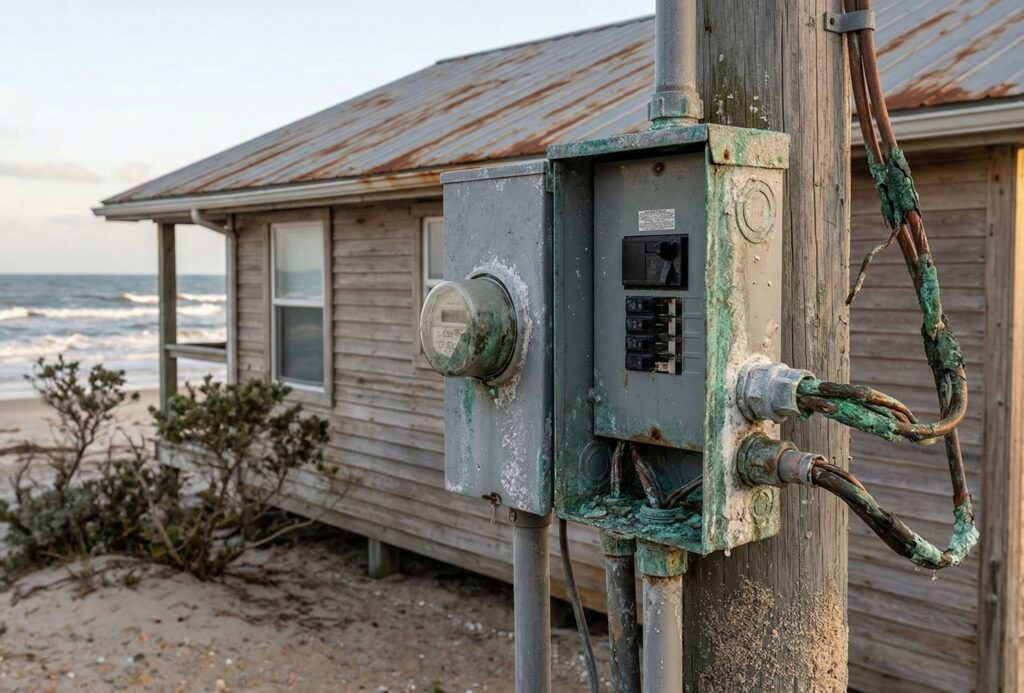
Salt Spray and Aerosol Particles: The sea breeze carries tiny, invisible particles of salt inland. These particles can travel several kilometers, landing on every exposed surface, including outdoor light fittings, air conditioning units, and inside meter boxes. Salt is a powerful electrolyte, so when it combines with humidity, it creates a highly corrosive solution that attacks metals far more aggressively than freshwater moisture alone. These fine particles can also penetrate seemingly sealed enclosures, reaching sensitive components.
-
Temperature Variations: The daily and seasonal temperature cycles cause materials to expand and contract. This constant movement can lead to micro-fractures in protective coatings and metal components. These tiny cracks expose fresh, unprotected metal to the salty, humid air, giving corrosion a starting point to creep in and spread, leading to material fatigue.
-
Atmospheric Pollutants: While the air is generally clean, emissions from traffic and local industries can release gases like sulphur oxides. When these pollutants mix with atmospheric moisture, they can form weak acids. These acids further accelerate the degradation of electrical components, especially in areas with higher vehicle density or industrial activity.
Specific Impacts on Electrical Systems
The effects of coastal corrosion on electrical infrastructure are serious and wide-ranging:
-
Wiring and Connections: Electrical corrosion directly attacks copper wires, terminals, and connections. This process, sometimes called contact corrosion, creates a layer of resistance that hinders the flow of electricity. This can lead to flickering lights, intermittent power, and dangerous overheating at connection points, which is a known fire risk. These “hot spots” are a significant cause of electrical failures and fires.
-
Switchboards and Components: Your switchboard is the heart of your electrical system, and it is highly vulnerable. Corrosion can damage circuit breakers, safety switches, and the metal busbars that distribute power. This degradation can cause nuisance tripping, a complete failure of safety devices to operate when needed, or a catastrophic system failure. Corroded contacts can also lead to dangerous arc faults.
-
Appliances and Equipment: Any electrical equipment exposed to the elements is at high risk. Salt air corrosion is a primary enemy of air conditioning units on the Sunshine Coast, eating away at coils and casings. It also damages solar panel components, outdoor lighting, pool equipment, electric gates, and hot water systems, reducing their efficiency and lifespan significantly.
-
Safety Risks: In the end, corrosion in electrical systems is a major safety concern. Compromised wiring insulation and corroded conductors increase the risk of short circuits, electrical arcing, and electric shock. Upholding coastal electrical safety is vital to protect your family, employees, and property from direct dangers like electrocution and property damage from fires.
Common Forms of Electrical Corrosion in Coastal Settings
Several types of corrosion are particularly common in our local environment:
-
Galvanic Corrosion (Bimetallic Corrosion): This happens when two different types of metal are in contact in the presence of moisture. The less noble metal corrodes rapidly to protect the other. A classic example is when copper wiring is connected to a galvanised steel conduit or junction box without proper isolation, causing the steel to rust away quickly. Using anti-corrosion paste or dielectric grease between dissimilar metals can help mitigate this.
-
Pitting Corrosion: This is a particularly sneaky form of corrosion that creates small, deep holes or pits in a metal surface. While the rest of the surface may look fine, these pits can penetrate deep into a conductor or an enclosure, causing a sudden and unexpected failure. This form of corrosion is insidious because it often goes undetected until a critical failure occurs.
-
Electrolytic Corrosion / Electro Corrosion: This is an accelerated form of corrosion driven by external electrical currents. Stray currents from poorly installed or faulty systems, or damaged insulation, can speed up the degradation process dramatically, especially where moisture is present. These currents can effectively “charge” the corrosive reactions.
-
Microbial Corrosion: In some cases, certain bacteria and fungi can contribute to corrosion. This is more common in underground conduits or areas where water can pool, particularly in anaerobic conditions. These microorganisms produce by-products, such as hydrogen sulfide, which directly attack metal surfaces and accelerate their decay.
Proactive Strategies and Expert Services for Coastal Electrical Safety
Fighting coastal corrosion requires a proactive approach that combines smart material choices, regular maintenance, and expert installation. By taking the right steps, you can significantly extend the life of your electrical systems and maintain a high level of Sunshine Coast electrical safety. Relying on a qualified professional like Sunshine Coast Projects & Electrical makes sure these strategies are implemented correctly for lasting protection.
“The best defense against nature’s persistent forces is intelligent design and diligent upkeep.” — Industry Expert
Material Selection and Design for Coastal Resilience
The first line of defence against saltwater corrosion begins at the design and installation phase:
-
Corrosion-Resistant Materials: Whenever possible, choosing materials designed for marine environments is the best long-term investment. This includes using specific grades of stainless steel (like 316 for superior resistance) for enclosures and fittings, marine-grade aluminium for conduits, and components with factory-applied protective finishes. These materials are manufactured to withstand the constant assault of salt and humidity.
-
Protective Coatings and Sealants: For existing installations or components where material choice is limited, applying high-quality protective layers is key. Using corrosion-resistant coatings for steel on meter boxes and brackets provides an excellent barrier. Similarly, epoxy coatings, polyurethane coatings, zinc-rich primers, and specialised weather-resistant sealants help achieve effective metal rust prevention on exposed parts and connections. An electroless coating can also offer a superior, uniform layer of protection for intricate components.
-
Proper Installation Techniques: How components are installed is just as important as what they are made of. A professional electrician will make sure all outdoor connections are properly sealed with weatherproof connectors, and that conduits are angled to allow moisture to drain (e.g., using drip loops). Critically, they will isolate different metals from each other using appropriate bushings, washers, or dielectric grease to prevent galvanic corrosion. Proper cable glands are also essential for sealed entry points.
Environmental Controls and Regular Maintenance
Ongoing care is essential to manage the effects of our coastal environment:
-
Humidity Management: In enclosed spaces like switch rooms or garages where electrical panels are located, managing airborne moisture is beneficial. Good ventilation can prevent humid air from stagnating, and in some commercial settings, a dehumidifier might be a worthwhile investment to keep ambient moisture levels low.
-
Regular Cleaning: A simple but effective step is to periodically wash down outdoor electrical equipment, like A/C units and meter boxes, with fresh water. Make sure the power is off before cleaning. Use a soft brush to gently remove the build-up of salt deposits that attract moisture and accelerate corrosion, followed by a thorough rinse with fresh water.
-
Routine Electrical Inspections: The most important step for any property owner is scheduling routine electrical inspections with a qualified professional. At Sunshine Coast Projects & Electrical, our inspections are custom for coastal properties, drawing on advances in detection methodologies like those used in the Corrosion Image Data Set project for automating the scientific assessment of material degradation. We know exactly where to look for the early signs of corrosion in pipes and electrical systems, often using thermal imaging to detect “hot spots,” allowing us to address issues before they become dangerous and costly failures.
-
Importance of “Preventative Maintenance”: This proactive approach is the foundation of electrical longevity on the coast. Rather than waiting for something to break, preventative maintenance identifies and rectifies small issues, saving you from major expenses and unexpected downtime. It provides peace of mind knowing your electrical system is consistently monitored and cared for.
Sunshine Coast Projects & Electrical’s Specialised Coastal Services
We offer a complete range of services designed specifically to address the challenges of living and working on the Sunshine Coast:
-
Custom Services for Coastal Environments: We provide specialised services to combat the effects of coastal corrosion on air conditioning units and offer protection for solar panels in coastal areas. This includes regular servicing to clean components and check for signs of degradation, making sure your systems run efficiently for longer.
-
Electrical System Upgrades & Maintenance:
-
Switchboard Upgrades: Many older homes have outdated switchboards that are not only vulnerable to corrosion but also unable to handle modern power demands. We can upgrade your system to improve safety and performance.
-
House Rewiring: Old wiring is a major hazard, especially when weakened by corrosion in electrical systems. We provide professional rewiring services to bring your property up to current safety standards.
-
Comprehensive Electrical Upgrades: We can improve your entire property with modern, energy-efficient electrical solutions built to withstand our local conditions.
-
-
Expert Fault Diagnosis & Repairs: We are experts at troubleshooting issues often caused by corrosion, such as flickering lights, tripping circuit breakers, and malfunctioning safety switches. We find the root cause and provide lasting repairs.
-
EV Charger Installation: Before installing a high-load device like an EV charger, we perform a critical switchboard assessment to make sure your system can handle the demand safely, taking into account the potential impacts of the coastal environment.
-
Unwavering Safety & Compliance: As licensed and fully insured electricians, all our work complies with Queensland legislation. We are committed to Sunshine Coast electrical safety and mitigating fire risks for every client.
-
The “Real Cost of DIY Electrical Work”: In a high-risk coastal environment, DIY electrical work is incredibly dangerous. We strongly advise against it, as the risks of electric shock, fire, and expensive damage from incorrect work far outweigh any potential savings. Always use a licensed professional.
Why Choose Sunshine Coast Projects & Electrical
-
Coastal Specialisation: Our services are custom to the specific needs of coastal living. We have the expertise to protect your property from salt air damage.
-
Quality Workmanship & Guarantee: Our professional work is backed by a 12-month guarantee on all labour, giving you complete peace of mind.
-
Exceptional Customer Service: You’ll communicate directly with Charlie Doblo, an Accredited Master Electrician. We are fast, friendly, and local experts who genuinely care about our community.
Conclusion
Coastal corrosion is an unavoidable reality for properties on the Sunshine Coast, presenting a real and persistent threat to electrical systems. Ignoring it can lead to unreliable performance, expensive repairs, and serious safety hazards. Protecting your investment and making sure the wellbeing of your family or staff requires a proactive approach and specialised knowledge.
By choosing appropriate materials, performing regular maintenance, and engaging qualified professionals, you can effectively manage these risks. Sunshine Coast Projects & Electrical stands as your local specialist, offering custom services, a firm commitment to safety, and guaranteed quality workmanship. Don’t wait for a problem to arise—contact us today for an inspection or to discuss your electrical needs, and let us help you safeguard your home or business.
Frequently Asked Questions About Coastal Electrical Corrosion
Question: How quickly can coastal corrosion affect my electrical system?
Answer: Coastal corrosion, driven by salt air and humidity, can cause noticeable degradation to unprotected electrical systems within just a few years, leading to premature failures and significant safety issues long before their expected lifespan ends. The rate depends on proximity to the ocean and material types.
Question: What are the early signs of electrical corrosion I should look for?
Answer: Look for discolouration like green or white powdery residue on wiring and terminals, visible rust on enclosures, flickering lights, or circuit breakers that trip frequently. These signs indicate potential electrical corrosion and require a professional inspection. You might also notice a burning smell or warm outlets.
Question: Does Sunshine Coast Projects & Electrical offer specific approaches for solar panel corrosion?
Answer: Yes, we provide specialised protection for solar panels in coastal areas. This includes regular servicing and maintenance of solar systems to combat the effects of salt air corrosion, making sure their long-term efficiency and safety. Our services can extend the lifespan and performance of your solar investment.