When lights dim when air conditioner starts, it is usually caused by the air conditioner drawing a short burst of power as the compressor kicks in. A brief flicker can be normal, but strong or ongoing dimming may point to voltage drop, an overloaded circuit, older wiring, switchboard issues or a faulty AC component.
This sudden, heavy demand on your home’s electrical system causes a temporary voltage drop across all circuits, which makes the lights momentarily lose brightness. While a brief flicker can be normal, if it is severe or prolonged, it can point to an underlying electrical issue that needs a professional eye. Here at Sunshine Coast Projects & Electrical, we understand this perfectly and are here to help you understand what is happening in your home’s electrical system.
“Understanding these power dynamics is crucial. A minor flicker is often nothing to worry about, but consistent, severe dimming can be a canary in the coal mine for bigger electrical issues.” — Alex Thompson, Master Electrician at Sunshine Coast Projects & Electrical.
This guide will walk you through the causes, warning signs, and ways to address this. Let’s get to the bottom of this common electrical quirk.
Key Takeaways
-
A momentary dimming of your lights is often normal and caused by the high start-up power, or “inrush current,” that your air conditioner needs to turn on its compressor. This creates a temporary voltage drop across your home’s electrical system.
-
If the dimming is prolonged, severe, or happens frequently, it signals a deeper electrical issue that requires professional assessment. Ignoring these signs can lead to appliance damage or safety hazards.
-
Many older homes on the Sunshine Coast have wiring and switchboards that were not designed to handle the heavy electrical loads of modern air conditioners, EV chargers, and other appliances, making voltage drops more noticeable.
-
Loose or corroded electrical connections are a serious concern, as they create high resistance that can generate intense heat and pose a significant fire hazard, especially in coastal environments.
-
The safest and most effective way to address persistent dimming lights is to have a licensed electrician conduct a professional assessment to identify the root cause and recommend a lasting remedy.
Jump to section
- Why Do Lights Dim When Your Air Conditioner Starts? Understanding the Basics
- Is Your Dimming Normal or a Sign of Trouble? When to Be Concerned
- What Common Electrical Issues Cause Lights to Dim When Your AC Kicks On?
- What Can Sunshine Coast Homeowners Safely Check if Lights Dim?
- How Do Electricians Diagnose AC-Related Dimming Lights?
- What Are the Best Ways to Address Lights Dimming When the AC Starts?
- Keeping Your Sunshine Coast Home’s Electrics Safe and Sound
- Frequently Asked Questions
Why Do Lights Dim When Your Air Conditioner Starts? Understanding the Basics
The reason your lights dim when the air conditioner starts is due to a fundamental principle of electricity. Your air conditioner’s compressor needs a substantial burst of power to get moving from a standstill, and this sudden demand can briefly lower the voltage available to other electrical circuits in your home. This momentary reduction in power is what you see as dimming lights.
Think of your home’s electrical supply like the water pressure in your pipes. If someone turns on a high-flow fire hose (your AC), the pressure in the kitchen tap (your lights) might drop for a second. Understanding the concepts of inrush current and voltage drop is the first step to figuring out if what you are seeing is normal or a sign of a problem.
What is “Inrush Current” and Why Does it Matter?
“Inrush current,” sometimes called Locked Rotor Amps (LRA), is the large, momentary surge of electricity an electric motor draws when it first starts. Your air conditioner’s compressor motor needs this powerful kick to overcome mechanical inertia and start the process of pressurising refrigerant gas. It is a bit like a car engine needing a lot more fuel to accelerate from a complete stop than it does to cruise at a steady speed on the highway.
This initial power draw can be anywhere from three to seven times the air conditioner’s normal running current, known as Running Load Amps (RLA). This intense surge typically lasts for only a fraction of a second, often **between 50 and 200 milliseconds**, but it places a significant, short-term demand on your electrical system. This is a necessary part of how non-inverter air conditioners operate.
How Does This Cause a “Voltage Drop”?
Your home’s electrical system has a finite capacity determined by the connection to the street’s power grid. When your air conditioner draws its massive inrush current, it temporarily uses a large portion of that available capacity. This sudden demand can “starve” other circuits of the electrical power they need to operate at full strength.
This effect is known as a voltage drop, which is a temporary reduction in the electrical potential (measured in volts) across your entire system. Lights are particularly sensitive to these fluctuations. When the voltage supplied to a light bulb drops, its output decreases, causing the visible dimming effect you notice just as the air conditioner kicks on. This is also why you might notice your lights flicker when the air conditioner turns on.
Is Your Dimming Normal or a Sign of Trouble? When to Be Concerned
Distinguishing between a harmless, brief dimming and a more serious symptom is important for any Sunshine Coast homeowner. A subtle dip in brightness that lasts for a split second is often just a characteristic of how your AC starts. However, prolonged or severe dimming, especially when accompanied by other issues, should be investigated by a professional electrician.
Knowing what to look for can help you decide whether to monitor the situation or make a call for professional help. Paying attention to the duration, intensity, and frequency of the dimming can provide valuable clues about the health of your electrical system.
When is a Brief Dim Just Part of Life on the Sunshine Coast?
A minor voltage drop is generally considered a normal part of a home’s electrical function, especially in properties with powerful appliances. The dimming is likely normal if it meets these criteria:
-
Duration: The dimming is extremely brief, lasting for less than a second before the lights return to their full brightness. You might even miss it if you are not looking for it.
-
Intensity: The lights only dim slightly, by about 5% to 10%, making it a subtle change rather than a dramatic loss of light. It is often barely noticeable. In fact, the Australian Standard AS/NZS 3000 permits voltage drops of up to **5% at the furthest point** from the switchboard.
-
Consistency: This only happens at the exact moment the air conditioning compressor starts and at no other time. The lights should immediately return to normal.
-
No Other Symptoms: The dimming is not accompanied by circuit breakers tripping, strange noises, or any other appliances turning off or resetting. This is particularly common in homes with older, non-inverter style air conditioners.
What Are the Warning Signs of a Serious Electrical Problem?
You should treat the situation as a warning sign if you notice more significant symptoms. These red flags indicate that your electrical system is under strain and cannot cope with the demand. It is time to call an electrician if you experience the following:
-
Prolonged Dimming: The lights remain noticeably dimmer for several seconds or for the entire time the air conditioner is running. This suggests your system is struggling to supply enough power.
-
Severe Brightness Loss: Your lights dim drastically, flicker violently, or even turn off completely for a moment. This indicates a severe voltage sag that can damage electronics.
-
Tripping Safety Switches: The main circuit breaker or a Residual Current Device (RCD) trips frequently when the air conditioner attempts to start.
-
Happens with Other Appliances: The lights also dim when you use other large appliances like a microwave, kettle, or electric oven. This points to a systemic capacity issue, possibly an overloaded circuit.
-
Impact on Neighbours: If starting your air conditioner causes lights to dim in a neighbour’s house, the issue could be with the local power grid, requiring a call to Energex as well as an electrician.
What Common Electrical Issues Cause Lights to Dim When Your AC Kicks On?
When the lights dim when the air conditioner starts and it’s beyond a brief flicker, it is usually a symptom of a specific issue. Outdated wiring, a failing air conditioner component, or the combined electrical load of a modern home are often the main culprits. For Sunshine Coast properties, these problems can be worsened by the local climate, the high humidity, and the increasing demand for high-powered appliances in both owner-occupied and rental properties.
Understanding these common causes can help you identify why your home’s electrical system might be struggling. From old switchboards to the new demands of EV chargers, several factors can contribute to this problem.
Could Your Home’s Wiring or Switchboard Be Outdated?
Many older homes across the Sunshine Coast were built before the widespread use of large, power-hungry appliances. For instance, homes built before **the 1980s** often have wiring designed for loads perhaps **20-30 amps less** than today’s average household. As a result, their original wiring and switchboards may not be designed to handle modern electrical loads. The consumer mains, which are the main cables running from the street to your meter box, might be too small to carry the amount of power a modern household demands. This is often the case with older coastal homes or properties undergoing renovations that add significant new electrical demand.
An outdated switchboard with old ceramic fuses or ageing circuit breakers lacks the capacity to manage the large inrush current from an air conditioner. This creates a bottleneck in your electrical system. The high resistance in older, thinner wires or the limited capacity of the switchboard itself can worsen the voltage drop, leading to more noticeable dimming. Undersized cabling is a common issue in these older installations.
Are Loose Connections or a Faulty AC Component to Blame?
Specific points of failure can also cause lights to dim. The high humidity and salt-laden air on the Sunshine Coast can speed up the corrosion of electrical connections at your switchboard, meter box, or the air conditioner’s outdoor isolator switch. A loose or corroded connection creates high electrical resistance, which generates a large amount of heat when the AC starts and is a serious fire hazard. For insights into managing coastal corrosion risks, the NACE International Institute provides valuable guidelines.
Another common culprit is a failing start capacitor inside the air conditioner’s outdoor unit. This component provides a jolt of stored energy to help the compressor start smoothly. When it weakens, the air conditioner is forced to pull all its starting power directly from your house’s circuits, causing a much more severe and prolonged voltage drop. This is known as “hard starting” and can significantly shorten the life of your air conditioner. An ageing air conditioning unit often indicates that components like the start capacitor might be failing.
How Do Other Appliances or EV Chargers Add to the Load?
Modern Sunshine Coast homes are packed with high-draw appliances that run simultaneously. An induction cooktop, a pool pump, an electric hot water system, and an oven can all place a heavy load on your electrical system. When your air conditioner starts on top of all this, it can push your system beyond its limits, leading to overloaded circuits. The Queensland heat often means air conditioners are running for extended periods, increasing the strain.
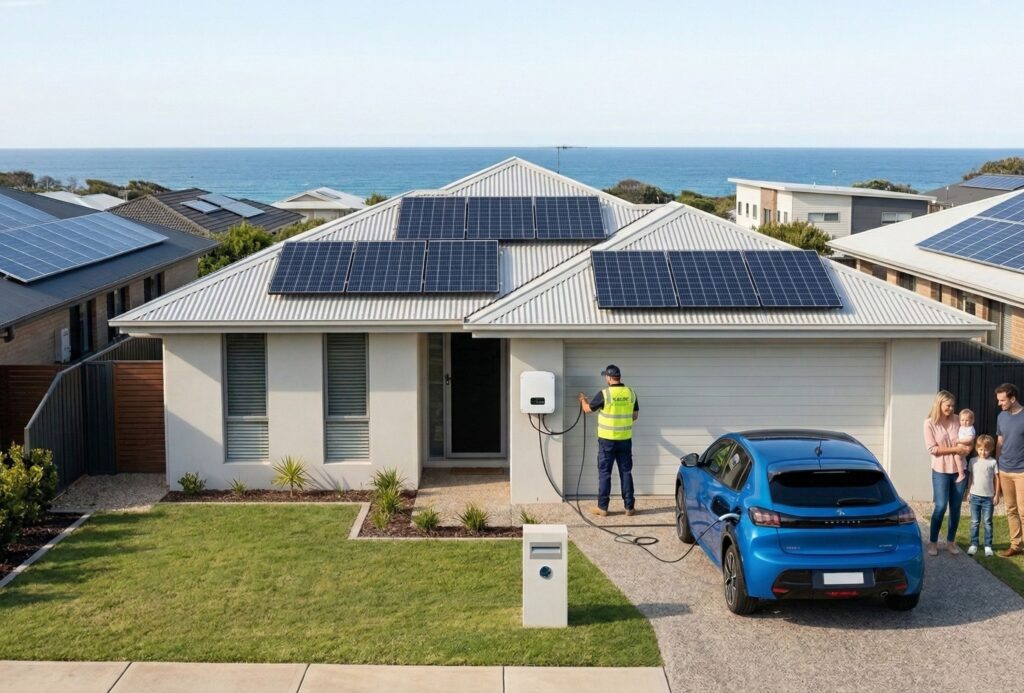
The growing popularity of electric vehicles adds another significant demand. A Level 2 EV charger can draw a high, continuous load for many hours, typically consuming **between 7 kW and 22 kW**. If your car is charging when the air conditioner kicks in, the combined power draw can easily exceed your home’s capacity. If your AC is not on a dedicated circuit, it is directly competing for power, which leads to severe voltage drops and frequent tripping of safety switches.
What Can Sunshine Coast Homeowners Safely Check if Lights Dim?
If you notice your lights dimming, there are a few safe observations you can make to gather more information before calling a professional. These steps can help you understand the nature of the issue and provide useful details to your electrician. It is important to remember that any hands-on troubleshooting of wiring or switchboards should be left to a licensed professional.
Your primary role is to be a good observer. By paying attention to the specifics of the dimming and any other related symptoms, you can help determine the severity of the problem and know when it is time to stop observing and call for help.
Observing Your Lights and Appliances
Before making any calls, take a moment to observe what is happening when the lights dim when the air conditioner starts. Make a mental note of these details:
-
Note the duration and intensity: Is it a quick, split-second flicker, or is it a prolonged and severe dimming that lasts for several seconds?
-
Which lights are affected?: Does it happen in just one room, throughout the whole house, or only with certain types of lights, like older halogen bulbs?
-
Check other appliances: Notice if your television reboots, your computer glitches, or any other sensitive electronics seem to react when the air conditioner starts.
-
Listen for sounds: Pay attention to any unusual sounds. Does the air conditioner compressor make a loud groaning or straining sound as it tries to start? Do you hear any buzzing or crackling from the switchboard?
-
Check the switchboard: Look to see if a circuit breaker or safety switch has tripped. If it has, you can try resetting it once. If it trips again immediately, do not touch it and call an electrician.
When Should You Definitely Call a Licensed Electrician?
Some symptoms should never be ignored and require an immediate call to a licensed electrician. For your safety, contact a professional right away if you notice any of the following:
-
Persistent or severe dimming: If the lights remain dim for an extended period or flicker aggressively, it is a clear sign of an overloaded system or a significant electrical fault.
-
Frequent tripping: If your safety switches or circuit breakers trip often when the AC starts, it indicates a serious fault that needs to be addressed.
-
Burning smells or arcing: Any unusual smells, especially a burning plastic odour, or any visible sparks from outlets or the switchboard are signs of an emergency.
-
Hot switchboard: If any part of your switchboard feels warm or hot to the touch, turn off the main power if you can do so safely and call for immediate help.
-
Dimming affects multiple homes: If you know your neighbours are also experiencing issues, it could point to a problem with the utility provider’s equipment. You should report it to Energex and also have an electrician inspect your property.
-
Peace of mind: If you are ever unsure or concerned about an electrical issue, it is always the safest choice to call a professional for an inspection.
How Do Electricians Diagnose AC-Related Dimming Lights?
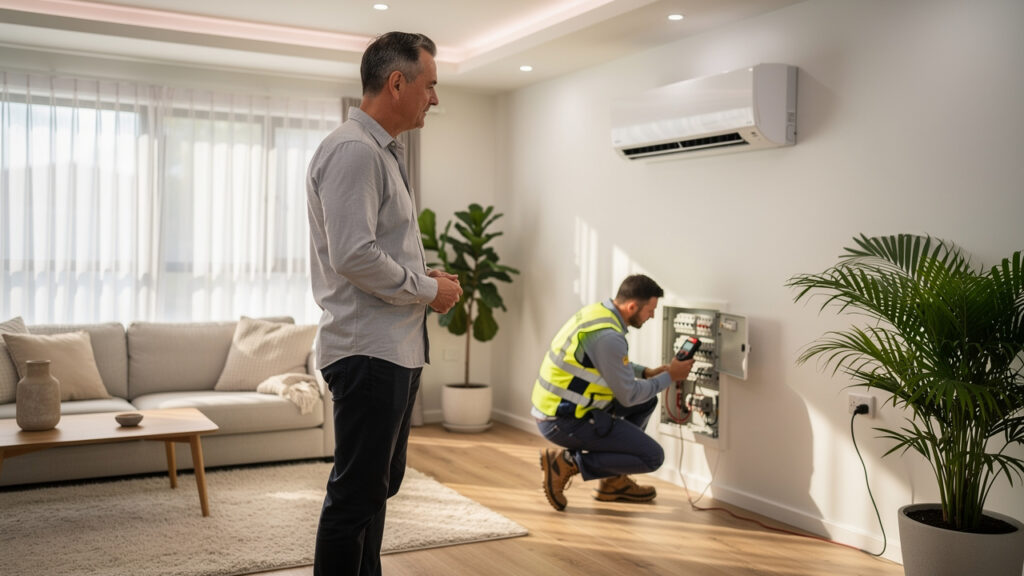
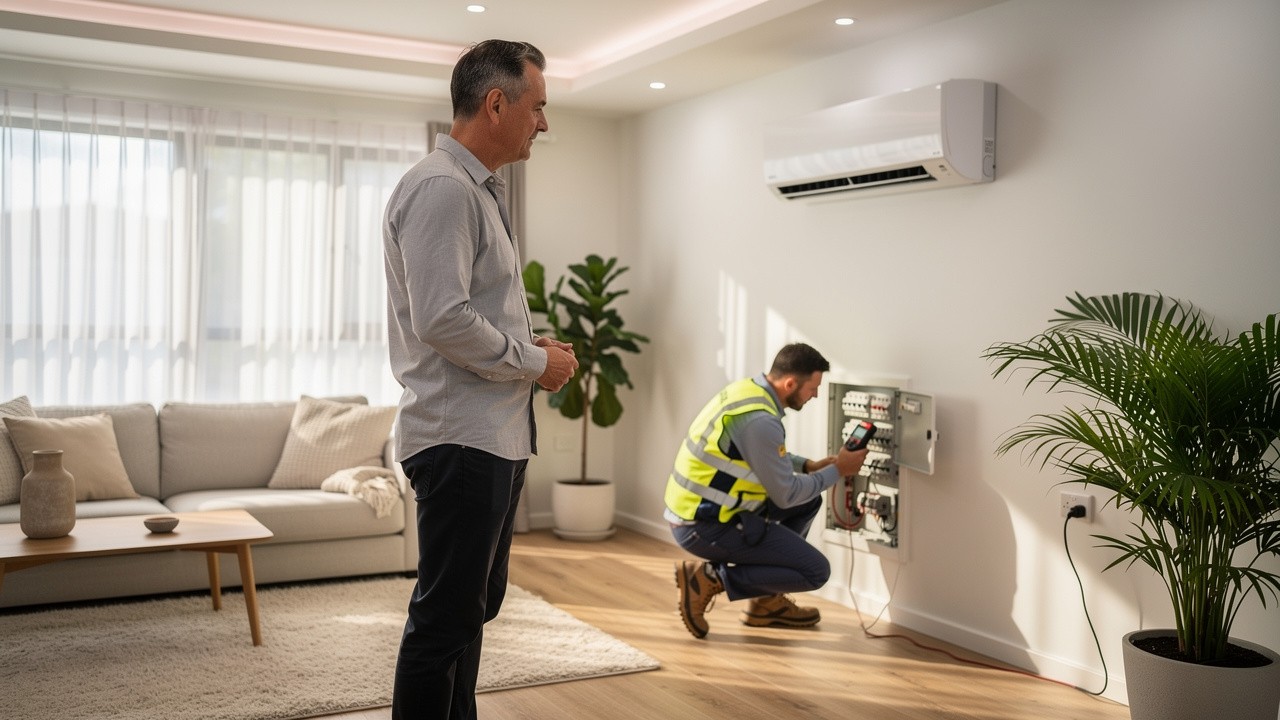
When you call a licensed electrician to investigate dimming lights, they use a systematic diagnostic process to find the exact cause. This involves more than just a quick look; professionals use specialised testing equipment to measure your system’s performance and identify any hidden faults. A thorough assessment covers everything from the point where power enters your property to the air conditioning unit itself.
This professional approach makes sure that the root cause of the problem is found, not just the symptoms. For instance, the team at Sunshine Coast Projects & Electrical brings over 20 years of local experience to every diagnostic, making sure we understand the specific energy needs and grid characteristics of the Sunshine Coast.
“We often find that what seems like a simple dimming light problem can trace back to anything from an ageing capacitor to an undersized main supply. Our job is to pinpoint the exact issue using precision tools and deep knowledge of electrical systems.” — Sarah Chen, Lead Diagnostic Electrician at Sunshine Coast Projects & Electrical.
What Specific Tests Do Professionals Conduct?
A licensed electrician will perform a series of tests to accurately diagnose the reason why your lights dim when the air conditioner starts. These professional procedures provide a clear picture of your electrical system’s health.
-
Maximum Demand Calculations: The electrician will first assess the total potential electrical load of your property. This is especially important for homes with recent additions like EV chargers or pool heaters, as it determines if your incoming mains supply has enough capacity.
-
Load Testing with a Clamp Meter: By attaching a clamp meter to the wiring at your switchboard, an electrician can measure the exact amperage being drawn when your air conditioner starts. A modern residential AC unit might draw an inrush current of **40-60 amps** compared to a running load of **10-15 amps**. This test confirms if the inrush current is excessive compared to the manufacturer’s specifications.
-
Voltage Drop Tests: Using a multimeter, the technician measures the voltage at both the switchboard and the air conditioning unit during startup. This quantifies the severity of the voltage drop and helps determine if it falls outside the acceptable limits set by Australian Standards.
-
Thermal Imaging: An infrared camera is used to scan the switchboard and other connections for ‘hot spots’. These hot spots reveal loose or high-resistance connections that are generating dangerous heat and causing voltage drops, a vital safety check to prevent potential electrical fires.
-
Capacitance Testing: The electrician will safely test the start and run capacitors in your air conditioning unit. A direct test can confirm if a capacitor is failing and causing the compressor to “hard start,” which is a very common cause of severe dimming.
-
Visual Inspections: A thorough visual check of all wiring, connections, and switchboard components is performed to look for signs of corrosion, wear, or damage, which are common issues in coastal environments like the Sunshine Coast.
What Are the Best Ways to Address Lights Dimming When the AC Starts?
Once the cause of your dimming lights has been diagnosed, there are several effective and lasting ways to address this. These can range from a simple component replacement to a major system upgrade, depending on the issue. Upgrading your switchboard and installing dedicated circuits are foundational fixes for handling modern electrical loads safely.
For more significant power demands, specific remedies like installing a hard start kit or upgrading to three-phase power can target AC-related dimming and future-proof your property. An experienced electrician can recommend the best approach for your home’s specific needs.
Switchboard Upgrades and Dedicated Circuits: The Foundation of Reliable Power
Modernising your home’s main electrical infrastructure is often the most effective way to resolve dimming issues, and the Dehumidifier – 5DHUM098/5DHUM120 installation guidelines from Trane Technologies illustrate why proper electrical infrastructure is critical when installing high-draw HVAC equipment. A switchboard upgrade involves replacing old ceramic fuses or outdated circuit breakers with a modern system featuring RCDs and RCBOs, which are designed to handle modern heavy electrical loads safely. This makes sure your switchboard can manage the initial power surge from a large air conditioner without causing a significant voltage drop.
Another key approach is installing a dedicated circuit for your air conditioner. This provides a separate, direct line of power from the switchboard to your AC unit. By isolating the air conditioner’s heavy power draw, you prevent it from straining your home’s shared circuits, which improves overall electrical safety and performance. Sunshine Coast Projects & Electrical specialises in switchboard inspections and upgrades, to make sure your property meets current Australian Electrical Standards (AS/NZS 3000).
Considering Three-Phase Power or an AC Hard Start Kit?
For properties with very high power demands, more advanced remedies may be necessary. If you have a large ducted air conditioning system, an EV charger, and other heavy loads, upgrading from single-phase to a strong three-phase power system might be the best long-term approach. Three-phase power can deliver up to **three times the capacity** of a single-phase supply, alleviating bottlenecks. Think of it like upgrading from a single-lane road to a three-lane highway for your electricity.
A more targeted and cost-effective improvement for a struggling air conditioner is a hard start kit. This device is installed directly in your AC unit and gives the compressor a powerful, instantaneous jolt of electricity at startup. This reduces the duration of the inrush current, which in turn reduces the voltage drop and extends the life of your compressor. Our team at Sunshine Coast Projects & Electrical expertly handles three-phase power installations and can advise on the best approach for your specific needs.
Upgrading to Modern Inverter AC or Better LED Lighting
Sometimes, technology upgrades can help mitigate the visible effects of dimming. Modern inverter air conditioners are designed to gradually ramp up the compressor’s speed instead of turning on at full power. This “soft start” eliminates the massive inrush current spike, meaning inverter units rarely cause lights to dim and are also much more energy-efficient, potentially reducing energy consumption by **up to 30-50%**.
You can also consider upgrading your lighting. Cheap, low-quality LED lights have sensitive drivers that can flicker or dim dramatically during even minor voltage fluctuations. High-quality LEDs, on the other hand, have well-built drivers that maintain a stable light output. While this does not fix an underlying electrical fault, modern AC technology and quality lighting can drastically improve your living experience.
Keeping Your Sunshine Coast Home’s Electrics Safe and Sound
Dimming lights are more than just a minor annoyance; they are a signal from your electrical system that should not be ignored. Being proactive about your home’s electrical health is the best way to ensure safety, protect your expensive appliances, and maintain a reliable power supply for years to come.
Whether the approach is a simple repair or a comprehensive upgrade, addressing the root cause of the problem is always the right decision. If you are concerned about your home’s electrical system, trust the experts at Sunshine Coast Projects & Electrical for an honest diagnosis and reliable electrical services.
Contact us today for a free, no-obligation quote for your property’s electrical health and to give you peace of mind this summer.
Frequently Asked Questions
Question: Is it normal for lights to dim momentarily when my air conditioner starts?
A brief, subtle dimming that lasts for less than a second is often normal, particularly with older, non-inverter air conditioners. This is caused by the “inrush current” the AC compressor draws for a quick burst of power to start. However, if the dimming is prolonged, severe, or happens frequently, it usually indicates an underlying electrical issue that needs professional assessment.
Question: Can dimming lights damage my appliances or air conditioner?
While minor, momentary voltage drops are generally harmless, severe or prolonged “brownouts” can damage sensitive electronics like computers and smart TVs by stressing their internal power supplies. For your air conditioner, this condition can lead to “hard starting,” where the compressor struggles to turn on. This can cause the motor to overheat and lead to premature failure, shortening its lifespan by potentially **up to 20-30%**.
Question: What is an “overloaded circuit” and how does it relate to dimming lights?
An overloaded circuit happens when too many appliances try to draw more power than the circuit’s wiring and breaker are designed to handle safely. When a powerful air conditioner starts up on a circuit that is already heavily loaded, the combined demand causes a significant voltage drop, making lights dim. This can also cause the circuit breaker to trip as a safety measure.
Question: Do older homes on the Sunshine Coast have more issues with dimming lights?
Yes, older homes often have more pronounced issues with dimming lights. Many were built with wiring and switchboards that were not designed for the heavy electrical demands of modern life, including large air conditioners, induction cooktops, and EV chargers. The original consumer mains cable from the street may be undersized, creating a bottleneck that makes voltage drops much more noticeable when a large appliance starts.
Question: What’s the benefit of a “dedicated air conditioner circuit”?
A dedicated circuit is an independent power line that runs directly from your switchboard to the air conditioner. This gives the AC its own power supply, preventing it from drawing power away from other household circuits, like those for your lights. This isolation significantly reduces voltage drops and dimming. It also makes sure the air conditioner operates safely and efficiently without the risk of overloading shared circuits.
Question: Should I call an electrician or an an air conditioning technician first?
Because dimming lights are an electrical symptom, your first call should be to a licensed electrician. They can professionally diagnose whether the issue is with your home’s wiring, switchboard, or overall power supply. An electrician can also test the electrical components of the AC unit, like the start capacitor. If the fault is confirmed to be purely mechanical within the AC, they may then recommend an air conditioning technician. Sunshine Coast Projects & Electrical can perform a comprehensive fault-finding inspection to find the exact cause.