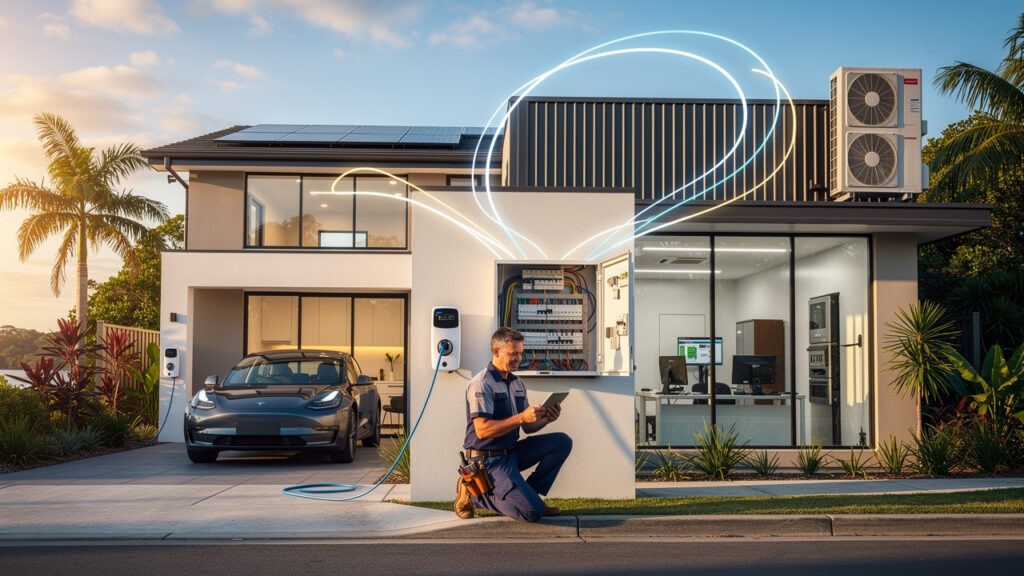
For Sunshine Coast homeowners and business owners, understanding single phase vs 3 phase power is essential for modern living. Single-phase is the standard for most homes, suitable for everyday appliances. Three-phase power offers a more stable and powerful supply for high energy demands, like large air conditioning, EV charging, or solar systems. This guide will help you determine the best power option for your property’s current and future needs.
Let’s explore which system is the right fit for your needs.
Key Takeaways
-
Single-phase power is common for basic homes; three-phase power is for higher energy demands.
-
Upgrading to three-phase supports large appliances, solar, and fast EV charging.
-
Knowing your current power supply is important for future renovations or additions.
-
Sunshine Coast Projects & Electrical offers expert assessments and upgrades.
-
A three-phase upgrade can improve property value and long-term energy efficiency.
Jump to section
- What’s The Difference Between Single-Phase And Three-Phase Power On The Sunshine Coast?
- How Can You Tell If Your Sunshine Coast Property Has Single Or Three-Phase Power?
- Do Sunshine Coast Homes & Renovations Need Three-Phase Power?
- Is Three-Phase Power Essential For Sunshine Coast Businesses?
- What’s Involved In Upgrading To Three-Phase Power On The Sunshine Coast?
- Is Upgrading To Three-Phase Power A Worthwhile Investment For Your Property?
- Powering Your Property For Today And Tomorrow
- Frequently Asked Questions
What’s The Difference Between Single-Phase And Three-Phase Power On The Sunshine Coast?
The core distinction between single-phase and three-phase power lies in how alternating current (AC) is delivered to your property. Think of single-phase as a single-lane road for electricity, while three-phase is a three-lane highway, offering a greater volume and a smoother flow of power. Understanding this difference is essential for any Sunshine Coast property owner planning a renovation, installing new high-demand equipment, or simply wanting to future-proof their home or business.
Single-phase power is the standard supply for most existing homes, providing enough electricity for typical lighting and appliances. Three-phase power, traditionally used for commercial and industrial sites, is now becoming increasingly necessary for modern residential properties. The shift is driven by the rise of power-hungry appliances, the popularity of large solar systems, and the growing number of electric vehicles on our roads.
What Are The Key Differences At A Glance?
| Feature | Single-Phase Power | Three-Phase Power |
|---|---|---|
| Active Wires | One | Three |
| Voltage (between active & neutral) | 230 volts (often 240V) | 230 volts (often 240V) |
| Voltage (between active wires) | Not applicable | 400 volts (often 415V) |
| Power Delivery | Single sine wave; momentary drops to zero (100 times/sec) | Three offset sine waves; continuous, smooth power delivery |
| Typical Capacity | 63-80 amps at main switchboard | Much higher (e.g., 3 x 63-80 amps per phase) |
| Typical Uses | Standard household appliances, lighting | Large air conditioning, EV chargers, workshops, commercial equipment, large pool pumps, advanced solar systems |
| Pros | Simple, common, sufficient for basic needs | Stable, powerful, efficient for large motors, high capacity |
| Limitations | Limited capacity, can overload with multiple heavy appliances, lower solar export | More complex installation, higher initial upgrade cost |
| When to Consider | Most existing homes with standard electrical needs | New builds, major renovations, properties with high demand, future expansion plans |
What Is Single-Phase Power And How Does It Work?
Single-phase power is the most common electrical connection found in Australian homes, particularly older properties on the Sunshine Coast. It works using a simple circuit with one “active” wire that carries the current, a “neutral” wire to complete the circuit, and an “earth” wire for safety. This setup delivers a nominal voltage of 230 volts (often still called 240V), which is perfectly adequate for running everyday household items.
The power in a single-phase system is delivered in a single sine wave, a fundamental distinction explored in the Three-Phase Power System and Three-Phase Transformers reference — meaning the voltage peaks and falls, momentarily dropping to zero 100 times every second. For most uses, like powering your television, refrigerator, or lights, this fluctuation is completely unnoticeable. However, this single-wave delivery has its limits. Most residential single-phase supplies are capped at 63 to 80 amps at the main switchboard. When you try to run multiple heavy-load appliances at once, like a large air conditioner and an induction cooktop, you might experience flickering lights or trip your main circuit breaker.
What Is Three-Phase Power And Why Is It More Stable?
Three-phase power is a more powerful and stable method of electricity delivery. It uses three separate active wires, a single neutral wire, and an earth wire. This configuration delivers 230V between any single active wire and the neutral, but it can also provide 400 volts (often called 415V) between any two of the active wires. This higher voltage capacity is ideal for running heavy-duty machinery and large appliances.
The real advantage of three-phase power is its continuous power delivery. The three distinct power waves are offset from each other, so as one wave is dipping, another is peaking. This eliminates the momentary power drops found in single-phase systems, resulting in a smooth, consistent flow of electricity. As we at Sunshine Coast Projects & Electrical often explain, if single-phase is a main road, three-phase is a three-lane highway. It distributes the electrical load evenly, allowing for a much higher total capacity and more efficient operation of large electric motors, such as those in ducted air conditioners or pool pumps.
How Can You Tell If Your Sunshine Coast Property Has Single Or Three-Phase Power?
Identifying your property’s power supply is an important first step before planning any significant electrical work, renovations, or appliance installations. For Sunshine Coast property owners, there are a few straightforward and safe methods to determine if you have a single or three-phase connection. The most reliable ways involve a quick inspection of your main electrical switchboard and the electricity meter, which can usually tell you everything you need to know.
If you inspect these components and still feel unsure, it’s always best to get a professional opinion. A licensed electrician can provide a definitive answer and assess whether your current setup meets your future needs. This prevents costly assumptions and makes sure your electrical system remains safe and compliant.
How Can I Check My Main Switchboard And Electricity Meter?
You can typically identify your power supply by looking at a few key components in your meter box:
-
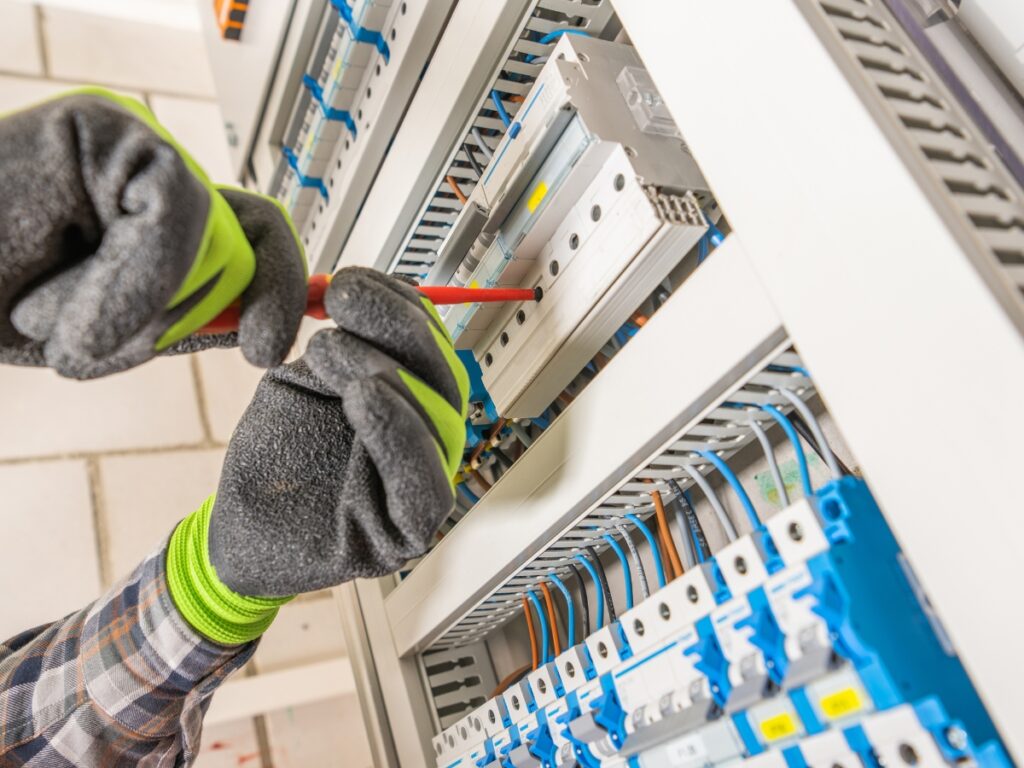
Look at the Main Switch: Open your switchboard and find the switch labelled “Main Switch.” If it’s a single, narrow breaker switch (one pole), your property has a single-phase supply. If the main switch is wide and consists of three separate breakers linked together with a single toggle bar (a three-pole switch), you have a three-phase supply.
-
Examine Your Electricity Meter: The face of your electricity meter often has text indicating the type of connection. A single-phase meter might display “1 Phase 2 Wire,” while a three-phase meter will typically be labelled “3 Phase 4 Wire.”
-
Count the Service Fuses: At the point where power enters your property, there are service fuses. A single fuse indicates a single-phase connection. Three identical fuses sitting side-by-side confirm a three-phase connection.
Why Should I Know My Property’s Power Supply Type?
Knowing whether your property has single or three-phase power is essential for practical planning and safety. This knowledge informs what kind of appliances you can install, what upgrades you might need, and how to avoid overloading your system. Understanding your electrical capacity is the foundation for making smart decisions about renovations, especially on the Sunshine Coast where high-demand amenities are common.
For instance, if you’re planning a kitchen renovation with a large induction cooktop and double ovens, you need to know if your supply can handle the electrical load. Similarly, installing a powerful ducted air conditioning system, a large solar array, or a fast EV charger all depend on your phase type. Sunshine Coast Projects & Electrical offers expert electrical health checks to assess your current system and advise on the best path forward, making sure any new additions are both safe and compliant.
Do Sunshine Coast Homes & Renovations Need Three-Phase Power?
For many modern Sunshine Coast homes, the answer is increasingly yes. While single-phase power has been the standard for decades, our lifestyles have evolved, and so have our electricity demands. Large-scale renovations, luxury appliance fit-outs, and the push toward an all-electric future mean that a standard single-phase system is often pushed beyond its safe operating limits.
An upgrade to three-phase power is no longer just for commercial properties; it’s a practical investment in future-proofing your home. It provides the capacity to run high-demand systems smoothly and simultaneously, opens up possibilities for the full potential of renewable energy options like solar, and supports the rapid charging needs of electric vehicles. This makes it an essential consideration for anyone building a new home or undertaking a major renovation on the coast.
When Is Single-Phase Power Not Enough For My Home?
A single-phase supply can quickly become a bottleneck in a modern home, leading to frustrating issues like tripping breakers and flickering lights. You should consider an upgrade if you are planning to install any of the following:
-
High-Capacity Ducted Air Conditioning: The hot, humid summers on the Sunshine Coast make ducted air conditioning a popular choice. Large systems, especially those over 15kW, require a massive surge of power to start their compressors. A three-phase supply makes sure they run smoothly without placing excessive strain on your electrical system.
-
Pools, Spas, and Electric Heating: The combination of a large pool pump, a powerful electric heat pump for year-round swimming, and spa jets creates a significant and continuous electrical load that can easily overwhelm a single-phase connection.
-
Luxury Kitchens and Induction Cooktops: A dream kitchen renovation often includes high-draw appliances. A large induction cooktop running multiple zones, combined with double wall ovens and a steam oven, can exceed the capacity of a standard supply, especially during busy meal preparations.
-
Granny Flats or Dual Living: Adding a second dwelling to your property effectively doubles the base electrical demand. Running a granny flat from a single-phase supply is a recipe for frequent overloads. For these situations, Sunshine Coast Projects & Electrical can design custom-made solutions to meet your specific load requirements.
How Does Three-Phase Power Boost My Solar And EV Charging Capabilities?
Upgrading to three-phase power has a significant impact on your ability to adopt green technologies, making your home more sustainable and efficient. It directly influences both your solar energy potential and how quickly you can charge an electric vehicle.
For solar systems, local network providers like Energex place strict limits on how much excess energy you can export to the grid from a single-phase connection, typically capping it at 5kW. This means even if you install a 10kW system, you may be wasting potential generation. A three-phase connection allows for much higher export limits, often 5kW per phase for a total of 15kW, drastically improving the return on your solar investment.
When it comes to Electric Vehicle (EV) charging, the difference is just as stark.
-
Single-Phase Charging: A dedicated charger on a single-phase supply is limited to about 7.4kW. This provides around 40 kilometres of range per hour of charging, which is fine for overnight top-ups.
-
Three-Phase Charging: A three-phase supply allows for fast charging capabilities of up to 22kW. This can add up to 120 kilometres of range per hour, which is essential for families with multiple EVs or those needing a quick turnaround. Sunshine Coast Projects & Electrical provides professional, hardwired Level 2 EV charger installations, making sure your system handles the sustained power draw safely and efficiently.
Is Three-Phase Power Essential For Sunshine Coast Businesses?
For almost any commercial or industrial operation on the Sunshine Coast, three-phase power is not a luxury—it is a fundamental requirement for operational success. Business environments have energy demands that far exceed what a single-phase connection can provide. Relying on an underpowered system can lead to equipment damage, inefficient performance, and costly operational downtime.
From workshops running heavy machinery to cafes with high-capacity kitchen equipment, a strong three-phase supply is the backbone that makes sure everything runs smoothly and safely. It provides the consistent, high-capacity power needed to drive commercial equipment, maintain climate control in large spaces, and prevent nuisance tripping during peak business hours. This makes it a non-negotiable for any serious commercial fit-out or industrial facility.
How Does Three-Phase Power Aid Heavy Machinery And Commercial Equipment?
Businesses that rely on equipment with large electric motors cannot function effectively without three-phase power. This includes manufacturing plants, automotive workshops, and commercial laundries. Three-phase motors are inherently more efficient, powerful, and durable than their single-phase counterparts. They run cooler, experience less vibration, and don’t require failure-prone starting capacitors.
Attempting to run industrial lathes, heavy-duty vehicle hoists, large air compressors, or commercial refrigeration on a single-phase supply is inefficient and dangerous. It leads to poor performance and places immense stress on the motors, causing premature failure and expensive repairs. A three-phase connection provides the clean, reliable power necessary to protect these valuable assets and keep the business running.
How Does Three-Phase Power Provide Stability For Commercial Kitchens And HVAC Systems?
In a busy commercial kitchen, a stable power supply is critical. High-draw appliances like commercial espresso machines, large combi-ovens, walk-in cool rooms, and industrial dishwashers all need to operate simultaneously without issue. A three-phase system distributes this immense load evenly, preventing circuit breakers from tripping during the lunch rush and making sure all equipment maintains optimal operating temperature.
Similarly, providing effective climate control for large retail stores, office buildings, or warehouses requires heavy-duty HVAC systems. These units depend on the smooth, sustained power delivery of a three-phase connection to operate their large fans and compressors efficiently. Sunshine Coast Projects & Electrical delivers strong commercial fit-outs and comprehensive switchboard upgrades, making sure your business is compliant, safe, and powered for productivity.
What’s Involved In Upgrading To Three-Phase Power On The Sunshine Coast?
Upgrading your property from a single-phase to a three-phase supply is a significant infrastructure project that must be handled by licensed professionals. The process requires careful planning, a detailed assessment of your power needs, and close coordination with the local network provider, Energex. It’s more than just flicking a bigger switch; it involves upgrading the core electrical cabling that connects your property to the street’s power grid.
The upgrade makes sure your property has a safe, reliable, and high-capacity electrical foundation capable of meeting modern demands. From handling the initial paperwork to installing the final components, a qualified electrician manages the entire project to make sure it meets all Australian Standards and local regulations.
What Is The Step-By-Step Upgrade Process?
Transitioning to three-phase power follows a structured sequence to make sure of safety and compliance:
-
Assessment & Load Calculation: The process begins with a site visit. Sunshine Coast Projects & Electrical performs a thorough assessment to calculate your current and future maximum electricity demand, which determines the correct size for the new wiring.
-
Network Approval: An Electrical Work Request (EWR) is submitted to Energex. They must approve the connection and confirm the local grid can support the increased load. Our team handles all this essential paperwork for you.
-
Upgrading Consumer Mains: The main cable running from the street pole or underground pillar to your property must be completely replaced with a new, thicker four-core cable capable of carrying the three phases.
-
Switchboard Upgrade: Your existing single-phase switchboard is replaced with a new, larger three-phase board. This includes installing a new three-pole main switch and modern RCD safety switches on all circuits for complete protection.
-
Metering & Energisation: Once the physical work is complete, a new three-phase smart meter is installed. The entire system is then tested, certified, and safely re-energised. You should anticipate a planned power outage for most of a working day while the upgrade is performed.
Why Choose A Licensed Sunshine Coast Electrician For Your Upgrade?
An electrical upgrade of this scale is not a DIY job. It requires deep technical knowledge and a thorough understanding of local regulations to make sure it is performed safely and correctly. Choosing a qualified and experienced local electrician is essential for peace of mind.
With Sunshine Coast Projects & Electrical, you are partnering with a team that has over 20 years of local experience, led by Accredited Master Electrician Charlie Doblo. We make sure all work adheres strictly to Australian Standards and provide electrical safety certificates upon completion. All our power upgrades are backed by a 12-month workmanship guarantee, and we offer free advice with transparent, obligation-free quotes, so you know exactly what to expect.
Is Upgrading To Three-Phase Power A Worthwhile Investment For Your Property?
Viewing a three-phase upgrade purely as a cost overlooks its significant long-term value. While it requires an upfront investment, it should be considered a strategic improvement that increases your property’s safety, functionality, and market value. It is an investment that pays dividends through improved energy efficiency, greater appliance longevity, and the ability to embrace modern technologies without limitation.
By future-proofing your property, you make sure it can handle the increasing electrical demands of the future. Whether it’s for a growing family, a thriving business, or simply to accommodate the next generation of smart home technology, a three-phase connection provides a strong foundation that will serve you well for decades to come.
What Are The Cost Considerations And Long-Term Savings For An Upgrade?
The initial cost of a three-phase upgrade can vary widely. Factors include the distance from the street to your switchboard, whether your power is supplied via overhead or underground lines, and the condition of your existing switchboard. For example, older switchboards may contain asbestos, requiring specialised and safe removal.
However, this upfront cost is often offset by long-term savings. Three-phase power allows large motors in air conditioners and pool pumps to run more efficiently, reducing electrical stress and extending their lifespan.
“Energy efficiency is key to reducing costs, and a balanced three-phase system helps achieve this by minimising wasted energy and enabling larger, more effective solar systems that can drastically reduce your power bills.”
– Department of Climate Change, Energy, the Environment and Water (dcceew.gov.au)
How Can Three-Phase Power Future-Proof My Sunshine Coast Home Or Business?
In a world of ever-increasing electrification, a three-phase power supply is the ultimate way to future-proof your property. It provides the capacity to support the high-density energy needs of tomorrow, today. A home or business with modern electrical infrastructure is significantly more attractive to prospective buyers, directly increasing your property’s valuation.
This upgrade allows you to accommodate multiple electric vehicles, sophisticated smart home systems, and advanced climate control without worrying about system strain, flickering lights, or constantly tripping safety switches. For a business, it guarantees you have the power you need to operate without interruption, protecting your productivity and profitability. It prepares your property for a future where high-capacity electrical power is not a luxury, but a necessity.
Powering Your Property For Today And Tomorrow
Choosing between single phase vs 3 phase power is an important decision for any Sunshine Coast property owner. While single-phase is adequate for basic needs, a three-phase supply provides the strong, reliable, and high-capacity power required for modern living and successful business operations. It’s the key to running large appliances smoothly, maximising your solar investment, and charging electric vehicles rapidly.
Making the right choice makes sure your property is not just powered for today but is ready for the energetic demands of tomorrow. For expert advice and a seamless upgrade process, it’s essential to partner with experienced professionals.
If you’re considering an upgrade or are unsure about your property’s needs, contact Sunshine Coast Projects & Electrical. We offer a free, obligation-free quote and can provide the specific advice you need to make an informed decision. Book a licensed Sunshine Coast electrician for a power supply assessment, switchboard check, or upgrade advice today.
Frequently Asked Questions
Question: How Much Does It Cost To Upgrade To Three-Phase Power On The Sunshine Coast?
The cost to upgrade to three-phase power varies significantly depending on your property’s specific circumstances. Key factors include the distance from the street network to your switchboard, whether the mains are overhead or underground, and the condition of your existing switchboard. After a thorough site assessment, Sunshine Coast Projects & Electrical provides a free, obligation-free quote with fixed, upfront pricing, so there are no surprises.
Question: How Long Does A Typical Three-Phase Power Upgrade Take?
The physical installation work on-site usually takes a full working day, during which your power will need to be disconnected for safety. However, the entire process from start to finish can take several weeks. This timeline includes the time required for Energex to process and approve the network application. Sunshine Coast Projects & Electrical manages all the necessary coordination and paperwork to make sure the process is as smooth and efficient as possible.
Question: Can I Install A Large Solar System With Single-Phase Power?
Yes, you can install a large solar panel array on a single-phase property, but your ability to export excess energy back to the grid will be limited. On the Sunshine Coast, network providers typically cap solar export at 5kW for single-phase connections. This can affect your return on investment. Upgrading to three-phase power allows for significantly larger inverter capacities and higher export limits, making your solar investment far more effective.
Question: Do I Need Three-Phase Power For My EV Charger?
For standard overnight charging of a single electric vehicle, a professionally installed single-phase Level 2 charger (providing up to 7.4kW) is usually sufficient. However, if you need faster charging speeds, have more than one EV, or want to maximise the use of your solar energy, a three-phase supply is highly recommended. It allows for chargers up to 22kW, dramatically reducing charging times. Sunshine Coast Projects & Electrical offers expert, hardwired EV charger installations specific to your vehicle and property.
Question: Will Upgrading To Three-Phase Power Affect My Electricity Bill?
The upgrade itself doesn’t change the per-unit rate you pay for electricity. However, it can lead to long-term savings in other ways. Three-phase power allows large appliances and motors to run more efficiently, which can reduce overall energy consumption. Most importantly, it opens up possibilities for a much larger solar system with higher export capabilities, which can significantly reduce or even eliminate your electricity bills.