Many Sunshine Coast office and retail fit-outs leave the electrical planning until the last minute, then pay for it in stress, cost and downtime. A clear electrical checklist for a commercial fit-out should cover switchboard capacity, RCDs, outlet and data layouts, lighting design, emergency and exit lighting, HVAC and equipment loads, testing, documentation and future capacity. When those items sit in one organised list, decisions are easier and surprises are fewer.
Without that structure, business owners juggle layout changes, late quotes and nervous staff working around extension leads and dark corners. Decision fatigue sets in, and every extra variation feels harder than the last.
This guide walks through a practical electrical checklist for Sunshine Coast offices and shops, from early planning and compliance through to energy efficiency, EV charging readiness and long-term maintenance. You will also see how Sunshine Coast Projects & Electrical, led by Accredited Master Electrician Charlie Doblo, approaches fit-outs around Maroochydore, Birtinya, Caloundra, Mooloolaba, Noosa and Kawana.
Ready to move from vague ideas to a clear plan that protects safety, budget and trading hours? Keep reading for a step-by-step office and retail electrical checklist you can use before any walls or ceilings close up.
Key Takeaways
- Safety, compliance and duty of care sit at the heart of any commercial electrical checklist. A structured list keeps Queensland legislation, AS/NZS 3000 wiring rules and Work Health and Safety duties front of mind. That means fewer nasty surprises during inspections or insurance claims.
- Planning power, lighting, data cabling and network infrastructure before walls go up saves serious money. When outlets, switchboards and cable routes are locked in early, builders avoid rework and your team avoids ugly extension leads and cable clutter.
- Staged, well-scoped works reduce downtime and stress for staff and customers. Careful sequencing and after-hours work around Sunshine Coast trading patterns keeps tills ringing while upgrades roll out in the background.
- Smart electrical design cuts energy bills for the life of the lease. Efficient lighting, zoning, timers, modern air conditioning power supplies and well-planned switchboards keep running costs down, which matters when margins are tight for offices, cafes and retailers.
- Future-proof planning for growth, EV charging, extra data, security and new technology avoids repeat fit-outs. Extra capacity in switchboards, spare conduits and space for solar or batteries mean the electrical checklist still works when the business expands.
Why An Electrical Checklist Matters For Sunshine Coast Commercial Fit-Outs
An electrical checklist for Sunshine Coast commercial fit-outs protects people, cash flow and brand reputation by lining up every power, lighting, HVAC and data decision before work begins. It helps business owners in Maroochydore, Kawana or Noosa see the whole picture rather than reacting to problems on site.
When electrical planning is rushed, the most common pain points are underpowered switchboards, not enough outlets, poor lighting, missing data cabling and no allowance for air conditioning power requirements or security systems. Each gap leads to more holes in finished walls, extra time on ladders and unexpected invoices. For a busy strip in Mooloolaba or a medical suite in Birtinya, even one lost trading day hits revenue hard. According to Safe Work Australia, exposure to electricity is a recurring cause of serious workplace incidents, so safety shortcuts also carry real human risk.
“Electrical work in commercial buildings must be planned, installed and maintained to protect both workers and the public.”
— Queensland Electrical Safety Office
The Hidden Costs Of Poor Electrical Planning In Fit-Outs
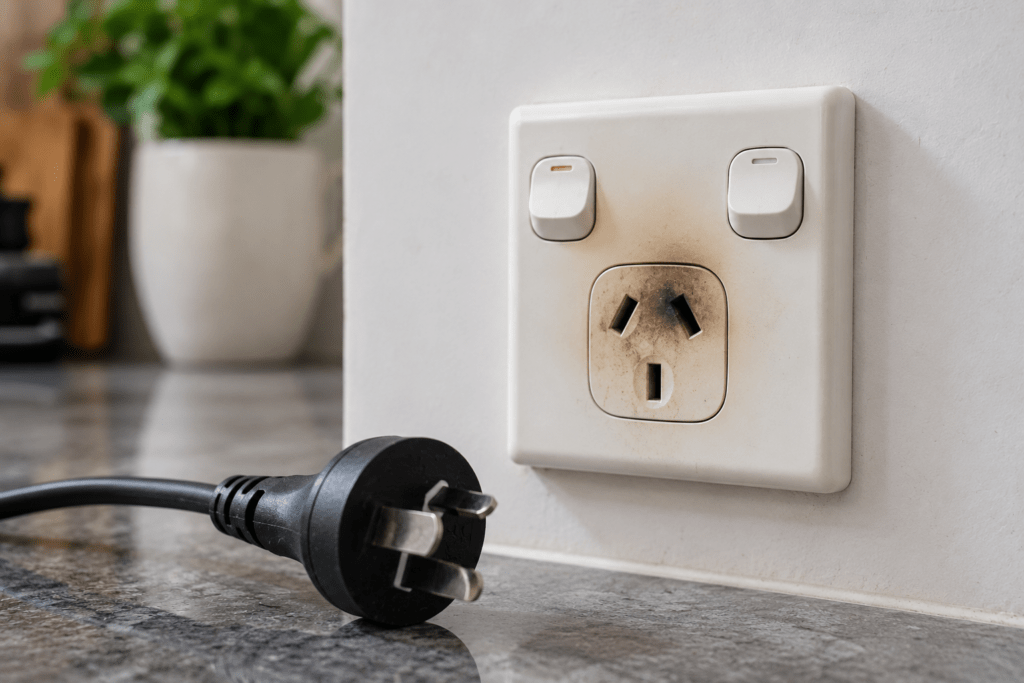
Poor planning quietly drains money from a fit-out. A shop that discovers its old switchboard cannot support extra air conditioning, display fridges or new EV chargers must suddenly pay for a board upgrade, new cabling and extra downtime. Offices that forget extra general-purpose outlets near workstations end up covered in powerboards and trip hazards.
Reworking ceilings to add emergency and exit lighting or moving a reception desk after power and data points are installed is even worse. In busy centres around Caloundra or Noosa Junction, noisy and dusty rectification work can drive customers away and frustrate neighbours. Staff productivity also suffers when lighting is dim or harsh, meetings run in echoey rooms with no AV or network points, and temporary leads block walkways.
A clear electrical checklist at concept stage reduces those decisions to a series of calm, early choices instead of frantic last-minute calls. It also gives builders, project managers and commercial property managers a shared reference so they can coordinate trades and avoid rework.
How A Commercial Electrical Checklist Supports Safety, Compliance And Peace Of Mind
A commercial electrical checklist ties everyday fit-out decisions back to legal duties for PCBUs, landlords, builders and property managers, and studies such as the Fire risk of electrical installations research demonstrate how gaps in planning can escalate into serious safety failures. It prompts checks for RCD coverage, safe cable routes, test and tag needs, switchboard condition, and emergency lighting schedules before anyone signs off drawings.
That structure keeps projects aligned with Queensland’s Electrical Safety Act, Work Health and Safety laws and Australian Standards such as AS/NZS 3000. According to the Queensland Government, safety switches should be tested regularly in workplaces, so adding those tasks to the checklist also helps long-term maintenance.
Sunshine Coast Projects & Electrical uses detailed commercial electrical inspection checklists on every office and retail job, which gives owners clear test results, photos and compliance documents for insurers, auditors and body corporate managers. That record-keeping reduces the mental load on business owners and cuts the risk of nasty surprises after an incident or audit.
Step-By-Step Commercial Electrical Fit-Out Checklist (Office And Retail)
This step-by-step commercial electrical checklist walks Sunshine Coast office and retail projects from early planning through to testing and handover. It turns a long list of decisions into clear stages you can tick off with your electrician and builder.
At a high level, the stages are pre-design planning, detailed design and documentation, rough-in and fit-off, testing and commissioning, then ongoing maintenance. Each stage benefits from written checklists such as an electrical safety inspection checklist or electrical quality control checklist so nothing slips between trades. For property managers juggling multiple tenancies, one common format across sites in Kawana, Birtinya and Maroochydore also keeps records simple.
Pre-Design Clarify Business Needs, Loads And Future Growth
Pre-design planning is where the electrical checklist should begin for any Sunshine Coast fit-out. At this stage, you confirm what the space needs to do for staff and customers, and how that might change within the lease term.
Key questions to work through with your electrician:
- Is the tenancy office, retail, hospitality, medical or mixed use?
- How many staff will use the space at peak times?
- What are the weekday and weekend trading hours?
- Will there be commercial fridges, cooking equipment, medical gear, IT racks, security systems, access control, CCTV or large signage that demand three-phase power?
- What air conditioning load is expected, and where will units and isolators be located?
- Do you need power and data to support EV charging bays or visitor charging in future?
Discuss future growth while walls are still just lines on a plan. A new office in Caloundra might start with ten staff but plan cabling and switchboard capacity for twenty, plus future EV chargers in the basement. A Kawana retailer may begin with one POS lane but allow space for more counters and self-serve units later.
Building an electrical preventive maintenance checklist into the initial scope also means regular RCD tests, visual inspection of electrical equipment, thermal scans and switchboard checks are considered before anything breaks. That sort of plan reduces decision fatigue over the life of the tenancy because inspections and upgrades follow a schedule rather than crisis mode.
Design And Documentation Map Power, Lighting, Data And Services
Once needs are clear, the electrical checklist moves into drawings and documents. A room-by-room schedule lists:
- Power outlets and dedicated circuits
- Data cabling and network infrastructure (Cat6 or higher, Wi‑Fi access points, patch panels)
- Security and access control (CCTV power, card readers, intercoms)
- Mechanical and HVAC power (indoor units, condensers, ventilation fans)
- Special circuits for desks, boardrooms, POS areas, kitchenettes, signage and tenancy metering
An office electrical inspection later on will compare the finished result to this list.
Next comes a reflected ceiling plan with general lighting, feature lighting, emergency and exit lights all marked. According to Energy.gov.au, lighting can account for around a quarter of energy use in some commercial buildings, so smart layout and efficient fittings make a real difference to bills.
Other documents to confirm at this stage:
- Switchboard single-line diagrams and circuit schedules
- Load calculations for HVAC, EV chargers and specialist equipment
- An electrical room inspection checklist for switchrooms and risers
- Fire penetration details and separation for cables where required
These items complete the documentation for commercial building electrical inspection and approvals. Sunshine Coast Projects & Electrical supplies these drawings and reports for council, landlords, Energex and future maintenance teams, which keeps everyone working from the same reliable information and reduces confusion during construction.
What Must Be On Your Electrical Safety And Compliance Checklist?
An electrical safety and compliance checklist for Sunshine Coast businesses covers switchboards, RCDs, cables, emergency lighting, test and tag, documentation and inspection intervals. It pulls legal and safety items into one place so owners, tenants and facility managers share the same expectations.
While every tenancy is different, Queensland businesses commonly need entries covering:
- Safety switch coverage and test intervals
- Circuit labelling and identification
- Clear access to switchrooms and distribution boards
- Exit and emergency lighting performance and test logs
- Test and tag records for portable appliances
- Procedures for faults, isolation and incident reporting
A clear electrical compliance checklist for Australia-wide standards also records who did what work, on which date, and under which licence and insurance. That paper trail is vital when you change tenants, sell the business or need to prove compliance to an insurer.
Switchboards, RCDs And Commercial Electrical Inspection Requirements
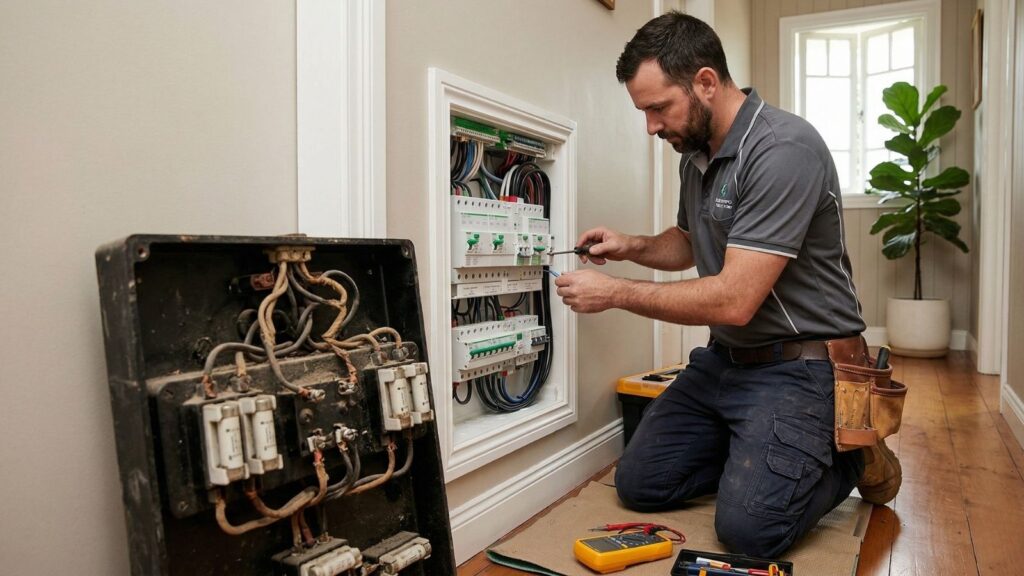
Switchboards sit near the top of any commercial electrical inspection checklist. Items include physical condition, clear labelling, correct main switches, neat cabling and no storage blocking access. Older boards in Mooloolaba or Noosa shopfronts often still use outdated breakers or lack RCDs, which can fail current requirements for commercial electrical compliance on the Sunshine Coast — a concern reinforced by the Review of Operating Conditions, diagnostic methods and technical condition assessment research for improving reliability and maintenance strategy for electrical installations.
The checklist should ask:
- Do all relevant socket outlet circuits have RCD protection?
- Are three-phase loads balanced and clearly labelled?
- Is there spare capacity for future equipment, new circuits and EV chargers?
- Are surge protection devices installed where appropriate?
WorkSafe Queensland notes that safety switches can trip in as little as 30 milliseconds in a fault, which shows how valuable proper coverage is for shock protection (Queensland Government). Items for an electrical room inspection checklist include ventilation, lighting, lockable doors, warning signage and sealed penetrations so fire and smoke cannot spread easily. Sunshine Coast Projects & Electrical often recommends staged switchboard upgrades so businesses can stay open while improving safety.
Emergency And Exit Lighting And Workplace Safety Obligations
Emergency and exit lighting are mandatory in most commercial fit-outs, so they deserve their own part of the electrical safety checklist. Checks include:
- Correct locations over doors and along escape paths
- Visibility of exit signs from all directions
- Battery performance during simulated outages
- Labelling, circuit identification and test switches
AS/NZS 2293 requires regular function and duration tests, commonly every six and twelve months, which means test records must be part of the electrical maintenance checklist (Standards Australia).
The checklist should also cover how these fittings integrate with the rest of the lighting system when power fails. That matters when a crowded Kawana retail centre or cafe in Mooloolaba suddenly goes dark. Sunshine Coast Projects & Electrical schedules emergency lighting tests outside key trading hours where possible and keeps digital logs for property managers who look after several buildings.
How To Design Power, Lighting And Data For Productive, Profitable Spaces
Designing power, lighting and data around a structured electrical checklist turns empty tenancy shells into workplaces that feel calm, organised and efficient. Good design helps staff focus, keeps customers comfortable and reduces daily irritations such as noise, glare and mess.
Psychology plays a role here. When power and data points are exactly where people need them, staff make fewer small decisions each day about adapters, charging and meeting room setups. Clear cable management also lowers background stress by removing visual clutter and trip hazards. According to Safe Work Australia, slips, trips and falls remain one of the main causes of workplace injury, so tidy layouts matter for more than looks.
Office Fit-Out Electrical Standards And Productivity Considerations
Office electrical inspection items focus on how well the space supports deep work, collaboration and technology. Each workstation needs enough outlets for monitors, laptops, chargers, docking stations and task lighting, without chains of powerboards. Separate circuits for IT racks, printers and kitchenettes can prevent nuisance tripping when everything runs at once.
Key elements for Sunshine Coast offices in areas such as Maroochydore CBD or Birtinya:
- Workstation power and data: floor boxes, skirting duct or cable trays planned with furniture layouts
- Meeting rooms: in-table power, HDMI and USB-C, data points for video conferencing, dimmable lighting
- Quiet rooms and focus spaces: comfortable lighting levels, minimal fan and equipment noise
- Server and comms rooms: dedicated circuits, UPS connections, controlled cooling and access control
Lighting affects focus and fatigue. Cooler white light generally suits open plan areas and meeting rooms, while warmer tones feel better in breakout spaces. Dimmers or multiple lighting scenes help staff adapt rooms for presentations or video calls. Reliable data cabling to patch panels, Wi‑Fi access points and meeting room AV gear should appear on the electrical checklist right beside power outlets. Sunshine Coast Projects & Electrical recently applied this approach in a Birtinya professional services office, with dedicated circuits for servers, neatly labelled patch panels and carefully placed floor boxes under meeting tables.
Retail And Hospitality Lighting Power And Customer Experience
Retail fit-outs live or die by electrical choices at checkout, display zones and back-of-house areas. A retail fit-out electrical compliance checklist should confirm safe, convenient locations for:
- POS devices and EFTPOS terminals
- Fridges, freezers and food warmers
- Barista machines and dishwashers
- Illuminated shopfront and pylon signage
- Background music systems and display screens
Separate circuits for kitchen or bar equipment reduce the risk of front-of-house blackouts during peak coffee times.
Lighting design shapes how products look and how long customers stay, and the Energy efficiency of quasi-monochromatic LEDs for road lighting under mesopic vision demonstrates how targeted light spectrum choices significantly affect perceived brightness and energy use — principles that apply equally to retail environments. For a boutique store in Noosa or a cafe in Mooloolaba, warm, layered lighting also makes photos look better on social media and encourages customers to linger.
Ergonomic layout is part of the checklist as well, keeping leads away from queues and circulation paths so crowds feel safe and relaxed. Security and CCTV power points should be positioned to protect cash handling areas, entrances and stock rooms without creating clutter.
Energy Efficiency, EV Readiness And Future-Proofing Your Commercial Premises
Energy efficiency and EV readiness belong in the electrical checklist from the first sketch, not as extras after handover. Smart choices in lighting, controls, HVAC supply and on-site generation can cut operating costs for the full life of the lease.
At the same time, more staff and customers are arriving in electric vehicles, and many Sunshine Coast buildings now host solar PV systems. The electrical checklist can double as an electrical preventive maintenance checklist and an electrical commissioning checklist when new gear such as chargers or batteries is added later. Planning once and documenting well prevents constant rework and protects long-term business operations.
Energy-Efficient Lighting Controls And Power Management
Lighting and HVAC are usually the biggest electrical loads in offices and shops. According to Energy.gov.au, LED lighting can use about 75 percent less energy than older halogen lamps while lasting many times longer, so upgrades often pay back quickly. During a fit-out, choosing LED panels, track lights and downlights with the right colour temperature reduces both energy use and eye strain.
Smart controls also belong on the electrical checklist:
- Zoning allows parts of a floor to switch off after hours
- Occupancy sensors keep storerooms, meeting rooms and toilets from wasting power
- Timers and smart switches can shut down signage or display lighting outside set hours
- Sub-metering can track usage for tenants or departments and highlight savings
Sunshine Coast Projects & Electrical often pairs these measures with surge protection and power quality checks, which helps protect sensitive IT and POS equipment during summer storms. That extra resilience reduces unplanned downtime and call-outs.
EV Charging Solar Batteries And Long-Term Electrical Capacity
EV charging and solar integration can change how a tenancy uses power, so they must appear clearly in the electrical checklist. The first questions cover supply capacity and switchboard space for EV chargers, both now and in future stages. Conduits laid during fit-out make later charger installs far cheaper than retrofitting full cable runs in a live car park.
Solar and batteries can flatten daytime demand for offices and retailers that trade mainly in daylight hours. The Clean Energy Council reports that around one in three Australian homes now have solar PV, and commercial rooftops are growing quickly as well.
When adding systems later, an electrical commissioning checklist and a final electrical inspection checklist confirm that new inverters, isolators and backup circuits work safely with the existing fit-out. Sunshine Coast Projects & Electrical often prepares spare board capacity, labelled conduits and clear diagrams in new Maroochydore and Kawana office buildings so owners can add EV chargers, solar and batteries without ripping ceilings apart.
Common Electrical Mistakes, Cost Traps And How Sunshine Coast Projects & Electrical Helps You Avoid Them
Many Sunshine Coast businesses repeat the same electrical mistakes during fit-outs, which leads to cost blowouts, stress and compliance worries. A clear electrical checklist and an experienced contractor reduce these risks.
The biggest traps relate to underestimating power and data needs, forgetting compliance items and leaving electrical planning until after joinery and mechanical designs. According to the Australian Energy Regulator, electricity prices for small businesses have risen in recent years, so inefficient layouts also hurt ongoing budgets. Sunshine Coast Projects & Electrical focuses on early planning, staged works and transparent quotes to keep these problems under control.
“The cheapest time to fix an electrical problem is while it’s still on paper.”
— Charlie Doblo, Sunshine Coast Projects & Electrical
Typical Fit-Out Electrical Mistakes And How To Prevent Them
Common mistakes business owners, builders and project managers should watch for:
- Relying on existing outlets and powerboards instead of planning enough general-purpose outlets and data points
- Ignoring switchboard capacity and RCD requirements until late in the project
- Skipping a pre-lease electrical inspection, especially in older premises around Caloundra and Mooloolaba
- Assuming the landlord manages emergency and exit lighting when the lease says otherwise
- Forgetting power requirements for security systems, access control, air conditioning upgrades and EV charging
A simple electrical checklist that lists outlet counts, data points, lighting types, HVAC loads and compliance items for every area prevents many of these issues. It also gives staff and contractors a clear reference, which reduces decision fatigue and arguments during construction.
How Sunshine Coast Projects & Electrical Plans Delivers And Maintains Safe Compliant Fit-Outs
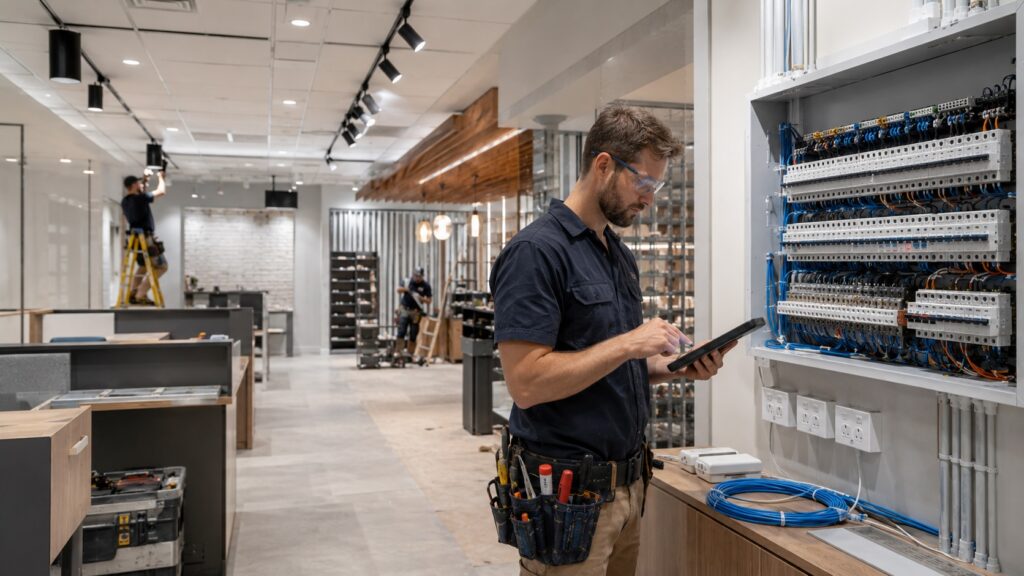
Sunshine Coast Projects & Electrical supports office and retail clients from concept through to handover and maintenance. The team works with business owners, commercial property managers, builders and designers to scope electrical needs early, provide itemised quotes and agree on staging that fits trading patterns.
Led by Charlie Doblo with more than 20 years of local experience, the company handles:
- Commercial office and retail electrical fit-outs
- Switchboard upgrades and mains upgrades
- Lighting design, emergency and exit lighting
- Air conditioning power supply, control wiring and isolators
- Data cabling, network infrastructure and communications rooms
- Security systems, CCTV and access control power
- EV charging and solar battery connections
Every project uses structured electrical inspection checklists, electrical quality control checklists and final electrical inspection checklists, so defects are caught and fixed before handover. Sunshine Coast Projects & Electrical also offers ongoing programs for test and tag, RCD tests and emergency lighting checks across multiple Sunshine Coast properties, backed by a 12‑month workmanship guarantee and 24/7 fault response.
Ready To Power Your Next Sunshine Coast Fit-Out The Right Way?
Using an electrical checklist for your commercial office or retail fit-out turns a risky project into a controlled process. It keeps safety, compliance, layout, energy use and future capacity in a single, easy-to-share document. That means safer workplaces, smoother projects, fewer surprises and simpler upgrades when the business grows.
Before you sign a lease or lock in designs, walk through the checklist in this guide with a licensed Sunshine Coast electrician. Sunshine Coast Projects & Electrical combines local knowledge, commercial focus and decades of experience to help businesses across Maroochydore, Birtinya, Caloundra, Mooloolaba, Noosa and Kawana. Visit sunshine-coast-electrician.com.au or call the team to book a commercial fit-out consultation or electrical safety inspection and start your project on solid ground.
Conclusion
Electrical work is one of the longest-lasting parts of any Sunshine Coast office or retail fit-out, so it pays to get it right the first time. A clear electrical checklist guides decisions about safety, compliance, power, lighting, data, energy use, security, HVAC and future upgrades in a calm, structured way.
By planning early, documenting clearly and building in capacity for EV charging, solar and future staff growth, business owners avoid many of the traps that lead to stress and lost revenue. Partnering with an experienced local contractor such as Sunshine Coast Projects & Electrical gives you practical guidance, neat workmanship and reliable support across the full life of your tenancy.
Frequently Asked Questions
When should I involve an electrician in a commercial fit-out?
A licensed commercial electrician should ideally be involved during the planning and design stage, before construction begins. Early input helps determine switchboard capacity, lighting layouts, power outlets, data cabling and future electrical requirements.
Planning electrical services early can reduce costly variations, minimise delays and help ensure the completed fit-out meets your operational needs.
What electrical items should every commercial fit-out include?
Every commercial fit-out should consider power outlets, lighting, switchboard capacity, safety switches (RCDs), data cabling, emergency and exit lighting where required, air conditioning power, security systems and sufficient capacity for future expansion.
The exact requirements depend on the type of business and the intended use of the premises.
Can an existing switchboard be reused during a fit-out?
Sometimes. A licensed electrician should inspect the existing switchboard to confirm it has adequate capacity, complies with current requirements and is suitable for the proposed electrical load.
If additional equipment, air conditioning or specialised machinery is being installed, a switchboard upgrade may be recommended.
How can I reduce downtime during a commercial electrical fit-out?
Careful planning is the key. Many businesses schedule electrical work outside normal trading hours or complete the project in stages to minimise disruption.
Working with an experienced commercial electrician helps coordinate electrical works with builders and other trades to keep the project moving efficiently.
Why is future electrical capacity important during a fit-out?
Allowing for future growth can reduce the need for expensive upgrades later. Additional switchboard capacity, spare conduits and well-planned cable routes make it easier to install extra equipment, workstations, EV chargers or security systems as the business expands.
This forward planning often saves both time and money over the life of the tenancy.
Do commercial fit-outs need emergency and exit lighting?
Many commercial premises require emergency and exit lighting to comply with building and workplace safety requirements. The exact requirements depend on the building classification, tenancy layout and applicable regulations.
A licensed electrician can determine what is required and ensure the installation is tested and maintained appropriately.
How often should commercial electrical systems be inspected?
The appropriate inspection frequency depends on the type of business, the electrical equipment in use and workplace risk. Regular inspections can identify wear, overloaded circuits or safety issues before they become major problems.
An electrician can recommend a maintenance schedule that suits your premises and operational requirements.