Key Takeaways
-
Safety switches protect against electric shock and fire by detecting earth leakage.
-
Faulty appliances are the most common cause of trips.
-
Moisture, storms, and old wiring are significant local factors.
-
Safe troubleshooting involves systematic appliance isolation.
-
Always call a licensed electrician for persistent or wiring-related faults.
Jump to section
- What Is Your Safety Switch and Why Does It Keep Tripping on the Sunshine Coast?
- What Commonly Causes Your Safety Switch to Trip on the Sunshine Coast?
- How Do I Safely Troubleshoot a Tripping Safety Switch?
- Beyond Appliances: Other Reasons for Repeated Tripping
- When Is It Time to Call a Licensed Electrician on the Sunshine Coast?
- Keeping Your Home Safe and Powered on the Sunshine Coast
- Frequently Asked Questions
What Is Your Safety Switch and Why Does It Keep Tripping on the Sunshine Coast?
Your safety switch is one of the most important protective devices in your switchboard. Its technical name is a Residual Current Device (RCD), and its only job is to save lives. It constantly monitors the flow of electricity in a circuit, checking that the amount of power going out is the same as the amount coming back — a principle central to the Leveraging an Integrated Information framework used in modern built-environment safety systems. If it detects even a tiny imbalance, meaning some electricity is “leaking” out, it shuts the power off in milliseconds. This leakage could be travelling through a faulty appliance, damaged wiring, or, most dangerously, a person.
When your safety switch keeps tripping, it is not faulty; it is working perfectly. It has detected a potential hazard and acted to protect you and your family from electric shock. It is important not to confuse a safety switch with a circuit breaker. A circuit breaker is designed to protect your appliances and wiring from overloads, like when you plug too many things into one circuit. A safety switch is designed to protect people. A modern switchboard installed by a professional electrician will have both to make sure complete protection.
What Commonly Causes Your Safety Switch to Trip on the Sunshine Coast?
Understanding the main reasons for a safety switch tripping Sunshine Coast properties face is the first step to a solution. The cause is often simpler than you might think, frequently relating to a single appliance or environmental factors unique to our coastal lifestyle. From kitchen gadgets to the humid climate, several culprits could be interrupting your power. Identifying these common triggers can help you resolve the issue faster and prevent future disruptions.
The majority of trips are caused by everyday items you use in your home or business. However, issues with your property’s fixed wiring or even local weather can also be to blame. By exploring these possibilities, you can narrow down the source of the fault.
Are Faulty Appliances to Blame?
In nine out of ten cases, a tripping safety switch points to a faulty appliance. Everyday items like kettles, toasters, refrigerators, washing machines, and power tools can develop internal faults over time. This does not mean the appliance is completely broken; it could be something as small as worn-out insulation or a failing heating element. These minor defects can cause a tiny amount of electricity to leak to the earth connection.
Modern safety switches are incredibly sensitive and are designed to trip when they detect a leak as small as 30 milliamps. This rapid response is what prevents electrocution, but it also means even a minor internal appliance fault will trigger it instantly. This applies to both residential homes and commercial premises where items like coffee machines and industrial fridges see heavy use.
Could It Be Due to Moisture and Our Humid Climate?
The Sunshine Coast’s beautiful subtropical climate comes with high humidity and heavy rainfall, which can cause real problems for electrical systems. Water is a great conductor of electricity, and moisture getting into electrical fittings is a very common cause for a safety switch to trip. This issue often appears after a big downpour or during particularly humid periods.
Vulnerable areas include outdoor power points, garden lighting, pool and spa equipment, and even poorly sealed bathroom exhaust fans. When water creates a bridge between the live electrical components and the earth connection, it causes an immediate earth leakage fault. If you notice your power trips consistently during or after wet weather, moisture ingress is the most likely suspect. Making sure outdoor fittings are properly weatherproofed is essential in our coastal environment.
Damaged Wiring & Pests in Coastal Homes
The fixed wiring within your walls and ceiling can also be a source of electrical faults. In older Queensland homes, wiring insulation can become brittle and degrade over time, exposing the live copper wire. Renovations and DIY projects can also lead to accidental damage if a nail or screw pierces a cable. These situations create a serious risk of electric shock and fire.
Our local wildlife can also cause trouble. Vermin like rats and mice are known to chew through wiring insulation in roof cavities, a common issue in many Sunshine Coast suburbs. Even a large ant infestation in your switchboard can create a conductive path that causes a short circuit. If your safety switch trips even when nothing is plugged in, the fault almost certainly lies within the wiring, demanding immediate attention from a licensed professional.
How Do I Safely Troubleshoot a Tripping Safety Switch?
When your power suddenly cuts out, you can often perform some safe, basic troubleshooting to identify the cause. This step-by-step process can help you determine if a faulty appliance is the culprit, potentially saving you the cost of an unnecessary emergency call-out. The key is to be methodical and to always prioritise safety. Remember, this process is for identifying appliance faults only. If you suspect the problem is with your home’s wiring or the switchboard itself, you must stop and call a professional.
Following these steps will help you isolate the issue in a controlled manner. It empowers you to manage the situation calmly and effectively. Always make sure the switchboard area is dry and clear before you begin.
Step 1: Isolate and Test Your Switchboard
Your first action is to go to your switchboard (sometimes called a fuse box). To check the safety switch itself, turn off all the individual circuit breakers connected to it. These are the smaller switches, usually lined up in a row. With all the circuits turned off, try to push the lever of the tripped safety switch back to the ‘ON’ position.
If the switch resets and stays on, it suggests the mechanism is working correctly, and the fault is likely in one of the circuits. You can proceed to the next step. However, if the switch immediately trips again even with no circuits active, or if the lever feels loose and won’t click into place, the switch itself has likely failed. In this case, do not proceed any further. It is time to call a licensed electrician from Sunshine Coast Projects & Electrical for a replacement.
Step 2: Unplug All Appliances Thoroughly
If the safety switch reset successfully in Step 1, the next move is to find out if an appliance is causing the fault. You must walk through your entire property and physically unplug every single appliance from the wall socket. It is not enough to just turn the switch off at the power point; the plug must be completely removed to break the earth connection.
Be thorough and remember items that are often overlooked. This includes dishwashers under the sink, rangehoods in the kitchen, refrigerators, freezers, pool pumps, and any equipment plugged into outdoor power points. Once you are certain everything is unplugged, return to the switchboard. Turn all the individual circuit breakers back on, then reset the safety switch. If it stays on, you have confirmed the problem is one of your appliances. If it trips again with nothing plugged in, the fault is in your property’s fixed wiring, and you need to call an electrician immediately.
Step 3: Identify the Culprit Appliance with the “Radio Trick”
Now that you know an appliance is the cause, you need to find out which one. An easy and effective way to do this is the “radio trick.” Plug a portable radio into a power point that you know is working and turn the volume up so you can hear it clearly around the house.
Begin plugging your appliances back in, one by one, and turn each one on after you plug it in. Go about this process slowly and methodically. The moment you plug in and switch on the faulty appliance, the safety switch will trip, the power will cut out, and the radio will go silent. The last item you connected is the source of your problem. Unplug this faulty appliance and leave it disconnected. You can then reset the safety switch to restore power to the rest of your home. The faulty item should be professionally repaired or replaced.
Beyond Appliances: Other Reasons for Repeated Tripping
While appliances are the most common offenders, sometimes the root cause of a tripping safety switch is more complex. Issues can stem from your property’s core electrical infrastructure, especially in older homes, or from the increasing demands of modern technology. Understanding these deeper potential problems is important, as they almost always require professional diagnosis and repair. These situations go beyond simple troubleshooting and involve the safety and integrity of your entire electrical system.
From aging switchboards that cannot keep up with today’s power needs to the installation of high-draw equipment, several factors can contribute to persistent electrical faults.
Are Old Switchboards and Wiring a Problem for Queensland Homes?
Yes, outdated electrical infrastructure is a significant issue in many older Sunshine Coast properties. Homes built decades ago often have switchboards with old ceramic fuses or a limited number of safety switches that do not meet current Australian Standards. This older wiring and equipment were not designed to handle the electrical load of a modern household filled with numerous gadgets and high-powered appliances.
Deteriorating wiring insulation is a common problem in older Queenslander homes, leading to earth leakage faults. The original switchboard may also lack the capacity for today’s needs, causing overloads and what is known as “nuisance tripping.” Upgrading to a modern switchboard with individual RCBOs (a combined safety switch and circuit breaker) on every circuit is the best long-term solution. Sunshine Coast Projects & Electrical can provide a comprehensive switchboard upgrade to improve your home’s safety and reliability.
What About New Tech Like EV Chargers and Air Conditioning?
The growing popularity of high-powered technology like Electric Vehicle (EV) chargers and large, modern air conditioning systems places significant demands on a home’s electrical system. These devices draw a heavy and continuous electrical load, often for hours at a time. A standard power circuit and an older safety switch are simply not designed to handle this sustained draw.
Plugging an EV charger or a powerful new air conditioner into an existing, shared circuit will almost certainly lead to frequent tripping. These technologies require their own dedicated circuit installed by a qualified electrician. For EV charging, specialised Type A or Type B RCDs are needed to handle the specific type of electrical current they use. Sunshine Coast Projects & Electrical specialises in assessing your home’s capacity and correctly installing dedicated circuits for all your modern tech needs.
The Impact of Extreme Weather and Storms
Severe electrical storms are a regular feature of life on the Sunshine Coast, and they can directly impact your power. A nearby lightning strike can send a massive power surge through the electricity grid. When this surge reaches your home, your safety switch will trip as a protective measure to stop the erratic voltage from damaging your wiring and sensitive electronic devices. In this case, the switch is doing a vital job. It is always wise to unplug valuable electronics like computers and televisions during a severe storm warning.
When Is It Time to Call a Licensed Electrician on the Sunshine Coast?
While you can safely check for appliance faults, many situations require the expertise of a professional. Attempting DIY electrical work is not only extremely dangerous but also illegal in Australia and can void your home insurance. You must call a licensed electrician if you notice any of the following red flags:
-
Persistent Tripping: The safety switch continues to trip even when every single appliance has been unplugged from the walls.
-
Burning Smells or Noises: Any unusual burning odours, or buzzing and crackling sounds coming from your switchboard, power points, or light fittings.
-
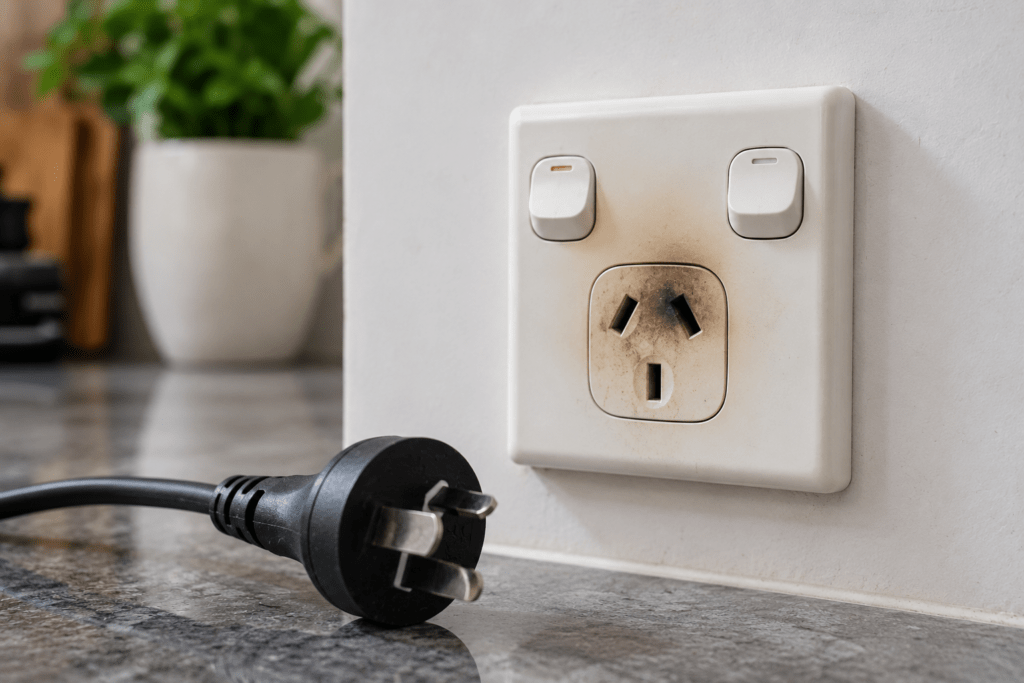
Visible Damage: You can see scorching, black marks, or other physical damage on wiring, outlets, or switchboard components.
-
Water Damage: There are any signs of moisture, condensation, or water ingress near electrical installations, especially after heavy rain.
-
Mechanical Failure: The safety switch lever feels loose, won’t stay in the ‘ON’ position, or is difficult to reset.
-
Complex Installations: You are planning a major renovation, a commercial fit-out, or need to install an EV charger.
For these issues, you need a trusted local expert. Sunshine Coast Projects & Electrical provides systematic fault finding, 24/7 emergency electrical repairs, and premium switchboard upgrades. With over 20 years of local experience and a 12-month guarantee on all workmanship, you can have peace of mind knowing your property is safe and compliant with Australian Wiring Rules (AS/NZS 3000). Contact us for free 24-hour phone advice or a professional assessment.
Keeping Your Home Safe and Powered on the Sunshine Coast
A tripping safety switch should be seen as a crucial safety indicator, not just a frustrating annoyance. By understanding the common causes and knowing how to perform safe troubleshooting, you can manage minor issues effectively. However, it is essential to recognise when a problem requires the skill of a licensed professional. For any complex or persistent electrical faults, always rely on an expert. Contact Sunshine Coast Projects & Electrical to keep your home safe, compliant, and reliably powered.
[/vc_column_text][/vc_column][/vc_row] The amount you can save depends on your home’s current electricity use, the upgrades selected and how your household uses energy. Replacing inefficient lighting with LEDs can substantially reduce lighting-related electricity consumption, while a correctly designed solar system may offset a large portion of daytime grid usage. Smart controls, efficient air conditioning and better energy-use habits can provide further savings. A personalised assessment is the best way to estimate the likely return for your Mountain Creek home. Not every home requires a switchboard upgrade, but the existing board must be assessed before installing solar, an EV charger or other high-demand electrical equipment. Older switchboards may lack spare capacity, suitable circuit protection or modern safety switches. If an upgrade is required, it helps ensure the new equipment can be connected safely and that the electrical system can manage the additional load in accordance with current requirements. Yes, particularly when they are configured around the way your household uses each room. Smart thermostats and air conditioning controls can reduce unnecessary cooling by adjusting temperatures, schedules and operating times. Smart lighting can use timers, dimming, motion sensors and remote controls to prevent lights being left on when they are not needed. The greatest savings generally come from combining smart technology with efficient appliances and sensible energy-use habits. Installation time depends on the type and scale of the project. A straightforward LED lighting upgrade may be completed within a day, while a residential switchboard upgrade will often require several hours or most of a working day. Solar, battery, smart-home or air conditioning projects may take longer because they can involve system design, approvals, electrical modifications and commissioning. Sunshine Coast Projects & Electrical can provide a clearer timeframe after inspecting the property.Frequently Asked Questions
How much can energy-efficient electrical upgrades reduce my power bills?
Do I need a switchboard upgrade before installing solar panels or smart technology?
Are smart thermostats and smart lighting effective for saving energy?
How long do energy-efficient electrical upgrades take to install?
Key Takeaways
-
Safety switches protect against electric shock and fire by detecting earth leakage.
-
Faulty appliances are the most common cause of trips.
-
Moisture, storms, and old wiring are significant local factors.
-
Safe troubleshooting involves systematic appliance isolation.
-
Always call a licensed electrician for persistent or wiring-related faults.
Jump to section
- What Is Your Safety Switch and Why Does It Keep Tripping on the Sunshine Coast?
- What Commonly Causes Your Safety Switch to Trip on the Sunshine Coast?
- How Do I Safely Troubleshoot a Tripping Safety Switch?
- Beyond Appliances: Other Reasons for Repeated Tripping
- When Is It Time to Call a Licensed Electrician on the Sunshine Coast?
- Keeping Your Home Safe and Powered on the Sunshine Coast
- Frequently Asked Questions
What Is Your Safety Switch and Why Does It Keep Tripping on the Sunshine Coast?
Your safety switch is one of the most important protective devices in your switchboard. Its technical name is a Residual Current Device (RCD), and its only job is to save lives. It constantly monitors the flow of electricity in a circuit, checking that the amount of power going out is the same as the amount coming back — a principle central to the Leveraging an Integrated Information framework used in modern built-environment safety systems. If it detects even a tiny imbalance, meaning some electricity is “leaking” out, it shuts the power off in milliseconds. This leakage could be travelling through a faulty appliance, damaged wiring, or, most dangerously, a person.
When your safety switch keeps tripping, it is not faulty; it is working perfectly. It has detected a potential hazard and acted to protect you and your family from electric shock. It is important not to confuse a safety switch with a circuit breaker. A circuit breaker is designed to protect your appliances and wiring from overloads, like when you plug too many things into one circuit. A safety switch is designed to protect people. A modern switchboard installed by a professional electrician will have both to make sure complete protection.
What Commonly Causes Your Safety Switch to Trip on the Sunshine Coast?
Understanding the main reasons for a safety switch tripping Sunshine Coast properties face is the first step to a solution. The cause is often simpler than you might think, frequently relating to a single appliance or environmental factors unique to our coastal lifestyle. From kitchen gadgets to the humid climate, several culprits could be interrupting your power. Identifying these common triggers can help you resolve the issue faster and prevent future disruptions.
The majority of trips are caused by everyday items you use in your home or business. However, issues with your property’s fixed wiring or even local weather can also be to blame. By exploring these possibilities, you can narrow down the source of the fault.
Are Faulty Appliances to Blame?
In nine out of ten cases, a tripping safety switch points to a faulty appliance. Everyday items like kettles, toasters, refrigerators, washing machines, and power tools can develop internal faults over time. This does not mean the appliance is completely broken; it could be something as small as worn-out insulation or a failing heating element. These minor defects can cause a tiny amount of electricity to leak to the earth connection.
Modern safety switches are incredibly sensitive and are designed to trip when they detect a leak as small as 30 milliamps. This rapid response is what prevents electrocution, but it also means even a minor internal appliance fault will trigger it instantly. This applies to both residential homes and commercial premises where items like coffee machines and industrial fridges see heavy use.
Could It Be Due to Moisture and Our Humid Climate?
The Sunshine Coast’s beautiful subtropical climate comes with high humidity and heavy rainfall, which can cause real problems for electrical systems. Water is a great conductor of electricity, and moisture getting into electrical fittings is a very common cause for a safety switch to trip. This issue often appears after a big downpour or during particularly humid periods.
Vulnerable areas include outdoor power points, garden lighting, pool and spa equipment, and even poorly sealed bathroom exhaust fans. When water creates a bridge between the live electrical components and the earth connection, it causes an immediate earth leakage fault. If you notice your power trips consistently during or after wet weather, moisture ingress is the most likely suspect. Making sure outdoor fittings are properly weatherproofed is essential in our coastal environment.
Damaged Wiring & Pests in Coastal Homes
The fixed wiring within your walls and ceiling can also be a source of electrical faults. In older Queensland homes, wiring insulation can become brittle and degrade over time, exposing the live copper wire. Renovations and DIY projects can also lead to accidental damage if a nail or screw pierces a cable. These situations create a serious risk of electric shock and fire.
Our local wildlife can also cause trouble. Vermin like rats and mice are known to chew through wiring insulation in roof cavities, a common issue in many Sunshine Coast suburbs. Even a large ant infestation in your switchboard can create a conductive path that causes a short circuit. If your safety switch trips even when nothing is plugged in, the fault almost certainly lies within the wiring, demanding immediate attention from a licensed professional.
How Do I Safely Troubleshoot a Tripping Safety Switch?
When your power suddenly cuts out, you can often perform some safe, basic troubleshooting to identify the cause. This step-by-step process can help you determine if a faulty appliance is the culprit, potentially saving you the cost of an unnecessary emergency call-out. The key is to be methodical and to always prioritise safety. Remember, this process is for identifying appliance faults only. If you suspect the problem is with your home’s wiring or the switchboard itself, you must stop and call a professional.
Following these steps will help you isolate the issue in a controlled manner. It empowers you to manage the situation calmly and effectively. Always make sure the switchboard area is dry and clear before you begin.
Step 1: Isolate and Test Your Switchboard
Your first action is to go to your switchboard (sometimes called a fuse box). To check the safety switch itself, turn off all the individual circuit breakers connected to it. These are the smaller switches, usually lined up in a row. With all the circuits turned off, try to push the lever of the tripped safety switch back to the ‘ON’ position.
If the switch resets and stays on, it suggests the mechanism is working correctly, and the fault is likely in one of the circuits. You can proceed to the next step. However, if the switch immediately trips again even with no circuits active, or if the lever feels loose and won’t click into place, the switch itself has likely failed. In this case, do not proceed any further. It is time to call a licensed electrician from Sunshine Coast Projects & Electrical for a replacement.
Step 2: Unplug All Appliances Thoroughly
If the safety switch reset successfully in Step 1, the next move is to find out if an appliance is causing the fault. You must walk through your entire property and physically unplug every single appliance from the wall socket. It is not enough to just turn the switch off at the power point; the plug must be completely removed to break the earth connection.
Be thorough and remember items that are often overlooked. This includes dishwashers under the sink, rangehoods in the kitchen, refrigerators, freezers, pool pumps, and any equipment plugged into outdoor power points. Once you are certain everything is unplugged, return to the switchboard. Turn all the individual circuit breakers back on, then reset the safety switch. If it stays on, you have confirmed the problem is one of your appliances. If it trips again with nothing plugged in, the fault is in your property’s fixed wiring, and you need to call an electrician immediately.
Step 3: Identify the Culprit Appliance with the “Radio Trick”
Now that you know an appliance is the cause, you need to find out which one. An easy and effective way to do this is the “radio trick.” Plug a portable radio into a power point that you know is working and turn the volume up so you can hear it clearly around the house.
Begin plugging your appliances back in, one by one, and turn each one on after you plug it in. Go about this process slowly and methodically. The moment you plug in and switch on the faulty appliance, the safety switch will trip, the power will cut out, and the radio will go silent. The last item you connected is the source of your problem. Unplug this faulty appliance and leave it disconnected. You can then reset the safety switch to restore power to the rest of your home. The faulty item should be professionally repaired or replaced.
Beyond Appliances: Other Reasons for Repeated Tripping
While appliances are the most common offenders, sometimes the root cause of a tripping safety switch is more complex. Issues can stem from your property’s core electrical infrastructure, especially in older homes, or from the increasing demands of modern technology. Understanding these deeper potential problems is important, as they almost always require professional diagnosis and repair. These situations go beyond simple troubleshooting and involve the safety and integrity of your entire electrical system.
From aging switchboards that cannot keep up with today’s power needs to the installation of high-draw equipment, several factors can contribute to persistent electrical faults.
Are Old Switchboards and Wiring a Problem for Queensland Homes?
Yes, outdated electrical infrastructure is a significant issue in many older Sunshine Coast properties. Homes built decades ago often have switchboards with old ceramic fuses or a limited number of safety switches that do not meet current Australian Standards. This older wiring and equipment were not designed to handle the electrical load of a modern household filled with numerous gadgets and high-powered appliances.
Deteriorating wiring insulation is a common problem in older Queenslander homes, leading to earth leakage faults. The original switchboard may also lack the capacity for today’s needs, causing overloads and what is known as “nuisance tripping.” Upgrading to a modern switchboard with individual RCBOs (a combined safety switch and circuit breaker) on every circuit is the best long-term solution. Sunshine Coast Projects & Electrical can provide a comprehensive switchboard upgrade to improve your home’s safety and reliability.
What About New Tech Like EV Chargers and Air Conditioning?
The growing popularity of high-powered technology like Electric Vehicle (EV) chargers and large, modern air conditioning systems places significant demands on a home’s electrical system. These devices draw a heavy and continuous electrical load, often for hours at a time. A standard power circuit and an older safety switch are simply not designed to handle this sustained draw.
Plugging an EV charger or a powerful new air conditioner into an existing, shared circuit will almost certainly lead to frequent tripping. These technologies require their own dedicated circuit installed by a qualified electrician. For EV charging, specialised Type A or Type B RCDs are needed to handle the specific type of electrical current they use. Sunshine Coast Projects & Electrical specialises in assessing your home’s capacity and correctly installing dedicated circuits for all your modern tech needs.
The Impact of Extreme Weather and Storms
Severe electrical storms are a regular feature of life on the Sunshine Coast, and they can directly impact your power. A nearby lightning strike can send a massive power surge through the electricity grid. When this surge reaches your home, your safety switch will trip as a protective measure to stop the erratic voltage from damaging your wiring and sensitive electronic devices. In this case, the switch is doing a vital job. It is always wise to unplug valuable electronics like computers and televisions during a severe storm warning.
When Is It Time to Call a Licensed Electrician on the Sunshine Coast?
While you can safely check for appliance faults, many situations require the expertise of a professional. Attempting DIY electrical work is not only extremely dangerous but also illegal in Australia and can void your home insurance. You must call a licensed electrician if you notice any of the following red flags:
-
Persistent Tripping: The safety switch continues to trip even when every single appliance has been unplugged from the walls.
-
Burning Smells or Noises: Any unusual burning odours, or buzzing and crackling sounds coming from your switchboard, power points, or light fittings.
-
Visible Damage: You can see scorching, black marks, or other physical damage on wiring, outlets, or switchboard components.
-
Water Damage: There are any signs of moisture, condensation, or water ingress near electrical installations, especially after heavy rain.
-
Mechanical Failure: The safety switch lever feels loose, won’t stay in the ‘ON’ position, or is difficult to reset.
-
Complex Installations: You are planning a major renovation, a commercial fit-out, or need to install an EV charger.
For these issues, you need a trusted local expert. Sunshine Coast Projects & Electrical provides systematic fault finding, 24/7 emergency electrical repairs, and premium switchboard upgrades. With over 20 years of local experience and a 12-month guarantee on all workmanship, you can have peace of mind knowing your property is safe and compliant with Australian Wiring Rules (AS/NZS 3000). Contact us for free 24-hour phone advice or a professional assessment.
Keeping Your Home Safe and Powered on the Sunshine Coast
A tripping safety switch should be seen as a crucial safety indicator, not just a frustrating annoyance. By understanding the common causes and knowing how to perform safe troubleshooting, you can manage minor issues effectively. However, it is essential to recognise when a problem requires the skill of a licensed professional. For any complex or persistent electrical faults, always rely on an expert. Contact Sunshine Coast Projects & Electrical to keep your home safe, compliant, and reliably powered.
[/vc_column_text][/vc_column][/vc_row]Frequently Asked Questions
How much can energy-efficient electrical upgrades reduce my power bills?
The amount you can save depends on your home’s current electricity use, the upgrades selected and how your household uses energy. Replacing inefficient lighting with LEDs can substantially reduce lighting-related electricity consumption, while a correctly designed solar system may offset a large portion of daytime grid usage.
Smart controls, efficient air conditioning and better energy-use habits can provide further savings. A personalised assessment is the best way to estimate the likely return for your Mountain Creek home.
Do I need a switchboard upgrade before installing solar panels or smart technology?
Not every home requires a switchboard upgrade, but the existing board must be assessed before installing solar, an EV charger or other high-demand electrical equipment. Older switchboards may lack spare capacity, suitable circuit protection or modern safety switches.
If an upgrade is required, it helps ensure the new equipment can be connected safely and that the electrical system can manage the additional load in accordance with current requirements.
Are smart thermostats and smart lighting effective for saving energy?
Yes, particularly when they are configured around the way your household uses each room. Smart thermostats and air conditioning controls can reduce unnecessary cooling by adjusting temperatures, schedules and operating times.
Smart lighting can use timers, dimming, motion sensors and remote controls to prevent lights being left on when they are not needed. The greatest savings generally come from combining smart technology with efficient appliances and sensible energy-use habits.
How long do energy-efficient electrical upgrades take to install?
Installation time depends on the type and scale of the project. A straightforward LED lighting upgrade may be completed within a day, while a residential switchboard upgrade will often require several hours or most of a working day.
Solar, battery, smart-home or air conditioning projects may take longer because they can involve system design, approvals, electrical modifications and commissioning. Sunshine Coast Projects & Electrical can provide a clearer timeframe after inspecting the property.
A safety switch tripping on the Sunshine Coast is more than an inconvenience; it is a vital warning sign. Your safety switch, also known as an RCD, often does its job by cutting power to protect you from an electrical fault. This guide helps you understand common causes of a safety switch tripping Sunshine Coast homes experience, how to troubleshoot safely, and when to call a licensed electrician.
This article will walk you through the common reasons your power keeps cutting out. We cover everything from faulty appliances and moisture damage to outdated wiring. You will also learn a safe, step-by-step process to identify the problem yourself.
Key Takeaways
-
Safety switches protect against electric shock and fire by detecting earth leakage.
-
Faulty appliances are the most common cause of trips.
-
Moisture, storms, and old wiring are significant local factors.
-
Safe troubleshooting involves systematic appliance isolation.
-
Always call a licensed electrician for persistent or wiring-related faults.
Jump to section
- What Is Your Safety Switch and Why Does It Keep Tripping on the Sunshine Coast?
- What Commonly Causes Your Safety Switch to Trip on the Sunshine Coast?
- How Do I Safely Troubleshoot a Tripping Safety Switch?
- Beyond Appliances: Other Reasons for Repeated Tripping
- When Is It Time to Call a Licensed Electrician on the Sunshine Coast?
- Keeping Your Home Safe and Powered on the Sunshine Coast
- Frequently Asked Questions
What Is Your Safety Switch and Why Does It Keep Tripping on the Sunshine Coast?
Your safety switch is one of the most important protective devices in your switchboard. Its technical name is a Residual Current Device (RCD), and its only job is to save lives. It constantly monitors the flow of electricity in a circuit, checking that the amount of power going out is the same as the amount coming back — a principle central to the Leveraging an Integrated Information framework used in modern built-environment safety systems. If it detects even a tiny imbalance, meaning some electricity is “leaking” out, it shuts the power off in milliseconds. This leakage could be travelling through a faulty appliance, damaged wiring, or, most dangerously, a person.
When your safety switch keeps tripping, it is not faulty; it is working perfectly. It has detected a potential hazard and acted to protect you and your family from electric shock. It is important not to confuse a safety switch with a circuit breaker. A circuit breaker is designed to protect your appliances and wiring from overloads, like when you plug too many things into one circuit. A safety switch is designed to protect people. A modern switchboard installed by a professional electrician will have both to make sure complete protection.
What Commonly Causes Your Safety Switch to Trip on the Sunshine Coast?
Understanding the main reasons for a safety switch tripping Sunshine Coast properties face is the first step to a solution. The cause is often simpler than you might think, frequently relating to a single appliance or environmental factors unique to our coastal lifestyle. From kitchen gadgets to the humid climate, several culprits could be interrupting your power. Identifying these common triggers can help you resolve the issue faster and prevent future disruptions.
The majority of trips are caused by everyday items you use in your home or business. However, issues with your property’s fixed wiring or even local weather can also be to blame. By exploring these possibilities, you can narrow down the source of the fault.
Are Faulty Appliances to Blame?
In nine out of ten cases, a tripping safety switch points to a faulty appliance. Everyday items like kettles, toasters, refrigerators, washing machines, and power tools can develop internal faults over time. This does not mean the appliance is completely broken; it could be something as small as worn-out insulation or a failing heating element. These minor defects can cause a tiny amount of electricity to leak to the earth connection.
Modern safety switches are incredibly sensitive and are designed to trip when they detect a leak as small as 30 milliamps. This rapid response is what prevents electrocution, but it also means even a minor internal appliance fault will trigger it instantly. This applies to both residential homes and commercial premises where items like coffee machines and industrial fridges see heavy use.
Could It Be Due to Moisture and Our Humid Climate?
The Sunshine Coast’s beautiful subtropical climate comes with high humidity and heavy rainfall, which can cause real problems for electrical systems. Water is a great conductor of electricity, and moisture getting into electrical fittings is a very common cause for a safety switch to trip. This issue often appears after a big downpour or during particularly humid periods.
Vulnerable areas include outdoor power points, garden lighting, pool and spa equipment, and even poorly sealed bathroom exhaust fans. When water creates a bridge between the live electrical components and the earth connection, it causes an immediate earth leakage fault. If you notice your power trips consistently during or after wet weather, moisture ingress is the most likely suspect. Making sure outdoor fittings are properly weatherproofed is essential in our coastal environment.
Damaged Wiring & Pests in Coastal Homes
The fixed wiring within your walls and ceiling can also be a source of electrical faults. In older Queensland homes, wiring insulation can become brittle and degrade over time, exposing the live copper wire. Renovations and DIY projects can also lead to accidental damage if a nail or screw pierces a cable. These situations create a serious risk of electric shock and fire.
Our local wildlife can also cause trouble. Vermin like rats and mice are known to chew through wiring insulation in roof cavities, a common issue in many Sunshine Coast suburbs. Even a large ant infestation in your switchboard can create a conductive path that causes a short circuit. If your safety switch trips even when nothing is plugged in, the fault almost certainly lies within the wiring, demanding immediate attention from a licensed professional.
How Do I Safely Troubleshoot a Tripping Safety Switch?
When your power suddenly cuts out, you can often perform some safe, basic troubleshooting to identify the cause. This step-by-step process can help you determine if a faulty appliance is the culprit, potentially saving you the cost of an unnecessary emergency call-out. The key is to be methodical and to always prioritise safety. Remember, this process is for identifying appliance faults only. If you suspect the problem is with your home’s wiring or the switchboard itself, you must stop and call a professional.
Following these steps will help you isolate the issue in a controlled manner. It empowers you to manage the situation calmly and effectively. Always make sure the switchboard area is dry and clear before you begin.
Step 1: Isolate and Test Your Switchboard
Your first action is to go to your switchboard (sometimes called a fuse box). To check the safety switch itself, turn off all the individual circuit breakers connected to it. These are the smaller switches, usually lined up in a row. With all the circuits turned off, try to push the lever of the tripped safety switch back to the ‘ON’ position.
If the switch resets and stays on, it suggests the mechanism is working correctly, and the fault is likely in one of the circuits. You can proceed to the next step. However, if the switch immediately trips again even with no circuits active, or if the lever feels loose and won’t click into place, the switch itself has likely failed. In this case, do not proceed any further. It is time to call a licensed electrician from Sunshine Coast Projects & Electrical for a replacement.
Step 2: Unplug All Appliances Thoroughly
If the safety switch reset successfully in Step 1, the next move is to find out if an appliance is causing the fault. You must walk through your entire property and physically unplug every single appliance from the wall socket. It is not enough to just turn the switch off at the power point; the plug must be completely removed to break the earth connection.
Be thorough and remember items that are often overlooked. This includes dishwashers under the sink, rangehoods in the kitchen, refrigerators, freezers, pool pumps, and any equipment plugged into outdoor power points. Once you are certain everything is unplugged, return to the switchboard. Turn all the individual circuit breakers back on, then reset the safety switch. If it stays on, you have confirmed the problem is one of your appliances. If it trips again with nothing plugged in, the fault is in your property’s fixed wiring, and you need to call an electrician immediately.
Step 3: Identify the Culprit Appliance with the “Radio Trick”
Now that you know an appliance is the cause, you need to find out which one. An easy and effective way to do this is the “radio trick.” Plug a portable radio into a power point that you know is working and turn the volume up so you can hear it clearly around the house.
Begin plugging your appliances back in, one by one, and turn each one on after you plug it in. Go about this process slowly and methodically. The moment you plug in and switch on the faulty appliance, the safety switch will trip, the power will cut out, and the radio will go silent. The last item you connected is the source of your problem. Unplug this faulty appliance and leave it disconnected. You can then reset the safety switch to restore power to the rest of your home. The faulty item should be professionally repaired or replaced.
Beyond Appliances: Other Reasons for Repeated Tripping
While appliances are the most common offenders, sometimes the root cause of a tripping safety switch is more complex. Issues can stem from your property’s core electrical infrastructure, especially in older homes, or from the increasing demands of modern technology. Understanding these deeper potential problems is important, as they almost always require professional diagnosis and repair. These situations go beyond simple troubleshooting and involve the safety and integrity of your entire electrical system.
From aging switchboards that cannot keep up with today’s power needs to the installation of high-draw equipment, several factors can contribute to persistent electrical faults.
Are Old Switchboards and Wiring a Problem for Queensland Homes?
Yes, outdated electrical infrastructure is a significant issue in many older Sunshine Coast properties. Homes built decades ago often have switchboards with old ceramic fuses or a limited number of safety switches that do not meet current Australian Standards. This older wiring and equipment were not designed to handle the electrical load of a modern household filled with numerous gadgets and high-powered appliances.
Deteriorating wiring insulation is a common problem in older Queenslander homes, leading to earth leakage faults. The original switchboard may also lack the capacity for today’s needs, causing overloads and what is known as “nuisance tripping.” Upgrading to a modern switchboard with individual RCBOs (a combined safety switch and circuit breaker) on every circuit is the best long-term solution. Sunshine Coast Projects & Electrical can provide a comprehensive switchboard upgrade to improve your home’s safety and reliability.
What About New Tech Like EV Chargers and Air Conditioning?
The growing popularity of high-powered technology like Electric Vehicle (EV) chargers and large, modern air conditioning systems places significant demands on a home’s electrical system. These devices draw a heavy and continuous electrical load, often for hours at a time. A standard power circuit and an older safety switch are simply not designed to handle this sustained draw.
Plugging an EV charger or a powerful new air conditioner into an existing, shared circuit will almost certainly lead to frequent tripping. These technologies require their own dedicated circuit installed by a qualified electrician. For EV charging, specialised Type A or Type B RCDs are needed to handle the specific type of electrical current they use. Sunshine Coast Projects & Electrical specialises in assessing your home’s capacity and correctly installing dedicated circuits for all your modern tech needs.
The Impact of Extreme Weather and Storms
Severe electrical storms are a regular feature of life on the Sunshine Coast, and they can directly impact your power. A nearby lightning strike can send a massive power surge through the electricity grid. When this surge reaches your home, your safety switch will trip as a protective measure to stop the erratic voltage from damaging your wiring and sensitive electronic devices. In this case, the switch is doing a vital job. It is always wise to unplug valuable electronics like computers and televisions during a severe storm warning.
When Is It Time to Call a Licensed Electrician on the Sunshine Coast?
While you can safely check for appliance faults, many situations require the expertise of a professional. Attempting DIY electrical work is not only extremely dangerous but also illegal in Australia and can void your home insurance. You must call a licensed electrician if you notice any of the following red flags:
-
Persistent Tripping: The safety switch continues to trip even when every single appliance has been unplugged from the walls.
-
Burning Smells or Noises: Any unusual burning odours, or buzzing and crackling sounds coming from your switchboard, power points, or light fittings.
-
Visible Damage: You can see scorching, black marks, or other physical damage on wiring, outlets, or switchboard components.
-
Water Damage: There are any signs of moisture, condensation, or water ingress near electrical installations, especially after heavy rain.
-
Mechanical Failure: The safety switch lever feels loose, won’t stay in the ‘ON’ position, or is difficult to reset.
-
Complex Installations: You are planning a major renovation, a commercial fit-out, or need to install an EV charger.
For these issues, you need a trusted local expert. Sunshine Coast Projects & Electrical provides systematic fault finding, 24/7 emergency electrical repairs, and premium switchboard upgrades. With over 20 years of local experience and a 12-month guarantee on all workmanship, you can have peace of mind knowing your property is safe and compliant with Australian Wiring Rules (AS/NZS 3000). Contact us for free 24-hour phone advice or a professional assessment.
Keeping Your Home Safe and Powered on the Sunshine Coast
A tripping safety switch should be seen as a crucial safety indicator, not just a frustrating annoyance. By understanding the common causes and knowing how to perform safe troubleshooting, you can manage minor issues effectively. However, it is essential to recognise when a problem requires the skill of a licensed professional. For any complex or persistent electrical faults, always rely on an expert. Contact Sunshine Coast Projects & Electrical to keep your home safe, compliant, and reliably powered.
Frequently Asked Questions
How much can energy-efficient electrical upgrades reduce my power bills?
The amount you can save depends on your home’s current electricity use, the upgrades selected and how your household uses energy. Replacing inefficient lighting with LEDs can substantially reduce lighting-related electricity consumption, while a correctly designed solar system may offset a large portion of daytime grid usage.
Smart controls, efficient air conditioning and better energy-use habits can provide further savings. A personalised assessment is the best way to estimate the likely return for your Mountain Creek home.
Do I need a switchboard upgrade before installing solar panels or smart technology?
Not every home requires a switchboard upgrade, but the existing board must be assessed before installing solar, an EV charger or other high-demand electrical equipment. Older switchboards may lack spare capacity, suitable circuit protection or modern safety switches.
If an upgrade is required, it helps ensure the new equipment can be connected safely and that the electrical system can manage the additional load in accordance with current requirements.
Are smart thermostats and smart lighting effective for saving energy?
Yes, particularly when they are configured around the way your household uses each room. Smart thermostats and air conditioning controls can reduce unnecessary cooling by adjusting temperatures, schedules and operating times.
Smart lighting can use timers, dimming, motion sensors and remote controls to prevent lights being left on when they are not needed. The greatest savings generally come from combining smart technology with efficient appliances and sensible energy-use habits.
How long do energy-efficient electrical upgrades take to install?
Installation time depends on the type and scale of the project. A straightforward LED lighting upgrade may be completed within a day, while a residential switchboard upgrade will often require several hours or most of a working day.
Solar, battery, smart-home or air conditioning projects may take longer because they can involve system design, approvals, electrical modifications and commissioning. Sunshine Coast Projects & Electrical can provide a clearer timeframe after inspecting the property.