Secondary dwelling electrical compliance on the Sunshine Coast means your granny flat must meet Queensland electrical safety laws, Australian Standards and smoke alarm rules before anyone moves in. A licensed electrician must design, install, test and certify the switchboard, wiring, RCDs, earthing and metering so the dwelling is safe and legally occupy-able.
Because a granny flat is a complete home, late electrical changes often lead to extra trenching, board upgrades and approval delays. From 1 January 2022, Queensland smoke alarm laws also apply in full to new and significantly renovated dwellings, including secondary dwellings, according to Queensland Fire and Emergency Services. Sorting these details early keeps your build moving and reduces the risk of costly rework.
This article explains how to plan approvals, wiring layouts, safety switches, smoke alarms, metering, EV readiness and final electrical certificates. You will also see how Sunshine Coast Electrician provides new home wiring, switchboard upgrades, electrical inspections, compliance testing and secondary dwelling electrical services to help locals design safe, compliant granny flats across the Sunshine Coast and surrounding areas.
Key Takeaways
-
Every Secondary Dwelling Is A Full Electrical Installation
A granny flat is treated like a complete home under Queensland rules. Secondary dwelling electrical compliance covers switchboards, wiring, safety switches, earthing and smoke alarms, not just a few extra power points. Shortcuts here can create real fire and shock risks. -
Plan Electrical And Approvals Before You Build
Council approvals, building classification and intended use influence metering, smoke alarms, switchboard capacity and wiring routes. Talking to a licensed Sunshine Coast electrician during design avoids costly rework later. Early plans also help your certifier and builder work from the same information. -
Safe Switchboards, RCDs And Smoke Alarms Are Non‑Negotiable
Modern switchboards with RCBOs, surge protection and clear labelling protect people and property. Interconnected photoelectric smoke alarms are mandatory in Queensland homes, including secondary dwellings. These devices only work properly when installed and tested by a licensed contractor. -
Metering And Load Design Depend On How The Granny Flat Will Be Used
Family use, long‑term rental and short‑stay accommodation often need different metering and load plans. Shared meters, separate meters and sub‑metering each have pros and cons. Good design keeps billing fair and prevents overloaded mains. -
Work Only With A Licensed, Locally Experienced Sunshine Coast Electrician
Queensland law bans DIY wiring in dwellings. A local contractor such as Sunshine Coast Electrician understands Energex and Sunshine Coast Council requirements. That combination keeps your project legal, insurable and ready for future additions like EV chargers and solar.
What Are The Core Secondary Dwelling Electrical Compliance Requirements In Queensland?
Core secondary dwelling electrical compliance requirements in Queensland bring together legal approvals, wiring standards and testing before connection. For a Sunshine Coast granny flat, this means treating the project as a full new home installation, not a simple extension from existing house circuits.
Regulatory Framework And Standards That Apply
Secondary dwellings sit inside the same main laws as any other Queensland home. Key instruments are the Electrical Safety Act 2002 and Electrical Safety Regulation, which control who can perform electrical work and how it must be tested, according to the Electrical Safety Office. These laws apply to new circuits, switchboard upgrades and complete granny flat fit‑outs.
Technically, the benchmark is AS/NZS 3000, often called the Wiring Rules. This standard sets cabling methods, earthing, maximum demand calculations and fault protection across Australia, and research into Electric Readiness in Residential energy codes confirms how these technical benchmarks underpin safe modern installations. It also requires 30 mA RCD protection on almost all final sub‑circuits in homes.
For building form, the National Construction Code (NCC) and Queensland Development Code classify most granny flats as Class 1a dwellings, managed by building certifiers and Sunshine Coast Council. This classification influences fire separation, smoke alarm coverage and how electrical penetrations are treated.
Network rules add another layer. Energex and Ergon Energy publish Service and Installation Rules that cover:
-
Meter panels and meter positions
-
Service cables and clearances
-
Maximum demand at the point of supply
-
Requirements for overhead and underground connections
Any change to mains, metering or phase count usually needs an Electrical Work Request and coordination with the distributor. Under this framework, all wiring must be carried out and certified by a licensed electrical contractor, so DIY wiring in a secondary dwelling is both unsafe and illegal.
“If you are not licensed, you must not do electrical work.”
— Queensland Electrical Safety Office
Why Secondary Dwellings Are Treated Like A Full Home Electrically
Even a compact granny flat usually has a kitchen, bathroom, laundry and fixed appliances, plus outdoor lighting or power. That layout looks very similar to a small house, so the safety risks are identical — a point reinforced by Second thoughts: Do secondary suites provide adequate housing research, which highlights that secondary dwellings must meet the same habitability and safety standards as primary residences. For that reason, RCDs, circuit breakers, surge protection, earthing and smoke alarms must all match current residential standards.
A typical secondary dwelling will have:
-
Lighting circuits for internal and external areas
-
Multiple general power circuits
-
Dedicated supplies for hot water and cooking
-
One or more air conditioners
-
Provision for EV charging, solar or future high‑load appliances
If this work is not completed to the Wiring Rules, owners can face:
-
Failed electrical or building inspections
-
Council or certifier concerns
-
Distributor refusals to connect or upgrade supply
-
Insurance problems if an incident occurs
Sunshine Coast Electrician treats every granny flat as a complete secondary dwelling electrical installation, not a quick add‑on. That approach helps keep occupants safe and reduces the chance of unpleasant surprises later, such as denied claims after a fire or electric shock incident.
How Should You Plan Electrical And Approvals For A Granny Flat On The Sunshine Coast?
Planning electrical work and approvals for a Sunshine Coast granny flat starts long before anyone runs a cable. Building classification, council permits and intended use all shape how secondary dwelling electrical compliance is achieved. Getting those answers clear at the start makes the rest of the project far smoother.
Approvals, Classification And Intended Use
Before any wiring begins, your designer or certifier needs to confirm how the project is classified. Under the NCC, most detached and attached granny flats fall under Class 1a housing, the same category as standard houses (Australian Building Codes Board). Sunshine Coast Council will also confirm whether the structure is a:
-
Secondary dwelling
-
Auxiliary unit
-
Dual occupancy
-
Ancillary building or studio
This classification affects:
-
Smoke alarm obligations
-
Fire separation and fire‑rated construction
-
How penetrations through fire and acoustic barriers are treated
-
Emergency lighting requirements in some cases
Intended use also matters. A flat for family only, a long‑term rental, an Airbnb‑style short stay or a commercial studio all place different demands on metering, documentation and, in some cases, additional safety measures.
Doing electrical work in an unapproved or informal dwelling can leave owners exposed to:
-
Council enforcement and possible rectification notices
-
Delays in obtaining final building approval
-
Awkward discussions with insurers if there is a fire or injury
Early Electrical Design With A Licensed Sunshine Coast Electrician
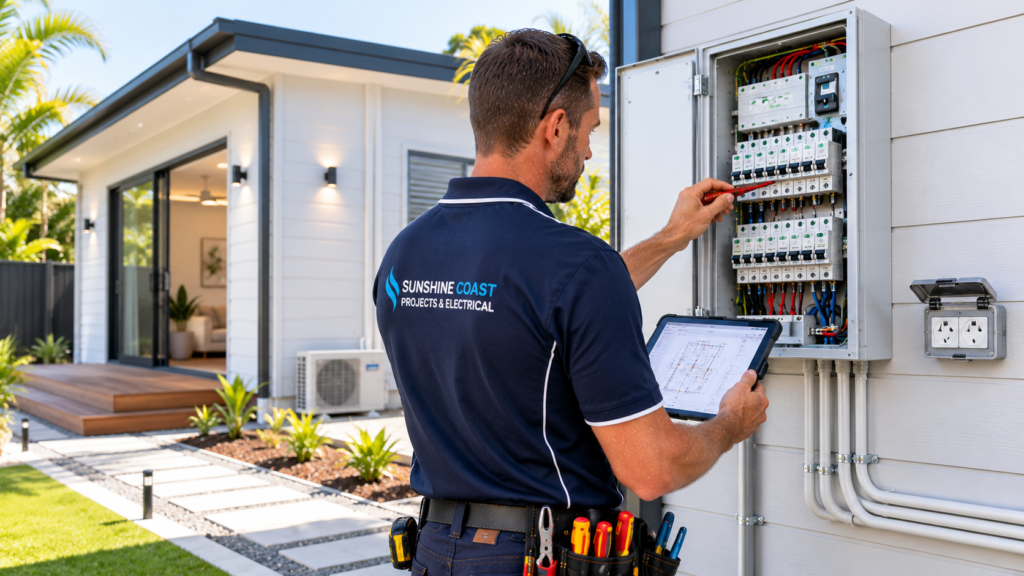
Early input from a licensed Sunshine Coast electrician helps align approvals, loads and budgets. Sunshine Coast Electrician typically starts with a site assessment of:
-
Existing consumer mains and point of attachment
-
Main switchboard capacity and condition
-
Likely maximum demand with the granny flat added
-
Proposed location of the secondary dwelling and trench routes
This review considers major loads such as:
-
Cooktop and oven (especially induction)
-
Electric hot water system or heat pump
-
Air conditioning units
-
Laundry appliances
-
Pool or spa equipment
-
Any likely EV charger or car park near the flat
Level 2 AC EV chargers can add around 7.2 kW on single phase or 11 kW on three‑phase supply (Clean Energy Council). That extra demand often influences whether you choose:
-
Shared or separate meters
-
A dedicated granny flat sub‑board
-
Single‑phase or three‑phase supply upgrades
-
Underground or overhead sub‑mains to the flat
During design, your electrician coordinates meter positions, clearances, conduit paths and slab penetrations with the builder and plumber so services do not clash.
Sunshine Coast Electrician prepares practical electrical plans and clear, obligation‑free quotes that suit Sunshine Coast conditions and Energex expectations. That planning work means fewer surprises during inspections and smoother progress toward final building approval.
Switchboards, RCDs, Circuits And Smoke Alarms: What Does A Compliant Secondary Dwelling Need?
A compliant secondary dwelling on the Sunshine Coast needs a modern switchboard or sub‑board, RCDs on all relevant circuits and hard‑wired, interconnected smoke alarms. Together, these devices manage faults, protect against electric shock and provide early warning in a fire.
Switchboards, Sub‑Boards And Safety Switches (RCDs)
In many properties, the main house switchboard supplies a sub‑main cable that feeds a dedicated granny flat sub‑board. This sub‑board holds:
-
Circuit breakers or RCBOs for all of the secondary dwelling circuits
-
A clearly labelled main switch
-
Surge protection devices where required
-
Space (spare ways) for future circuits
In smaller or attached dwellings, both homes may share a single main board, but separate main switches and clear labelling are still strongly recommended for safety and maintenance.
Sunshine Coast Electrician often upgrades ageing ceramic fuse boards to modern RCBO boards before adding a granny flat. Modern boards usually include surge protection devices to protect sensitive electronics, especially where solar inverters, EV chargers or smart home systems are present.
Queensland rules require RCD protection on all new final sub‑circuits in domestic premises (Electrical Safety Office), with typical trip ratings of 30 mA — an approach supported by research into Protecting residential electrical panels and service through model predictive control, which demonstrates the critical role of modern protection devices in managing residential electrical loads safely. Using RCBOs (combined RCD and circuit breaker) on each circuit helps minimise nuisance tripping and improves fault discrimination.
Correct cable sizing, over‑current protection and voltage drop control are also part of the design. Long runs to a backyard secondary dwelling may need larger sub‑main cables so breakers trip correctly and lights do not dim under load.
Clear labels such as “Granny Flat – Lights And Power” or “Secondary Dwelling – Air Conditioner” help during:
-
Fault finding
-
Emergency isolation
-
Future alterations or upgrades
Smoke Alarms, Lighting And Power Circuits
Queensland legislation requires photoelectric, hard‑wired smoke alarms with battery backup in:
-
Every bedroom
-
Hallways or paths of travel that connect bedrooms to exits
-
At least one per storey of a dwelling
All alarms within a dwelling must be interconnected so when one sounds, they all operate (Queensland Fire and Emergency Services). Secondary dwellings must follow this same pattern. In some layouts with shared roofs or combined structures, your certifier may ask for interconnection between main house and granny flat alarms as well.
A practical granny flat layout usually includes:
-
At least one lighting circuit for living areas and bedrooms (often two for redundancy)
-
Multiple general power circuits to avoid overloading power points
-
Dedicated circuits for oven, cooktop and hot water
-
Dedicated circuits for air conditioners
-
Circuits for outdoor lighting and external power outlets
Bathrooms, laundries, decks and outdoor areas need:
-
RCD protection
-
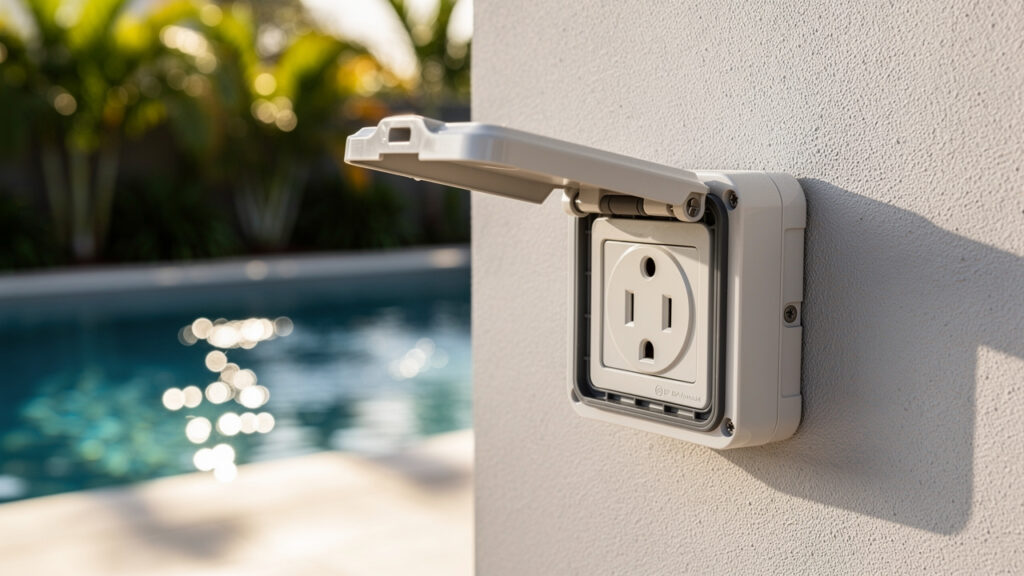
Appropriately rated IP‑rated fittings and weatherproof outlets
-
Correct placement of power points away from water sources
Sunshine Coast Electrician designs these circuits to balance safety, convenience and future plans. That might include spare ways in the sub‑board for another air conditioner, EV charger or shed supply so upgrades are easier later.
Metering, Load Capacity And EV‑Ready Design For Secondary Dwellings
Metering, load capacity and EV‑ready design determine how power flows between the main home and the granny flat. The choices you make here affect electricity bills, maximum demand on the service and how simple it is to add solar or EV charging later as part of your secondary dwelling electrical compliance.
Shared, Separate Or Sub‑Metered Power Supplies
Most Sunshine Coast properties with secondary dwellings use one of three supply options:
-
Single Shared Meter
-
Common where the flat is for family use and there is no need for separate billing
-
All power runs through one retail account
-
Still requires proper maximum demand calculations for both dwellings together
-
-
Separate Meter And NMI For The Granny Flat
-
Gives the granny flat its own electricity account
-
Landlords often prefer this for independent rentals, so energy costs sit directly with the tenant
-
Requires:
-
Adequate switchboard space
-
A suitable meter panel and enclosure
-
Correct segregation and labelling
-
Distributor approvals from Energex or Ergon Energy
-
-
-
Sub‑Metering
-
Uses owner‑installed sub‑meters downstream of the main meter to allocate costs between occupants
-
Still relies on a primary meter and account
-
Better suited for family arrangements or where formal retail separation is not required
-
Each approach has different paperwork requirements and physical layouts. Sunshine Coast Electrician helps owners compare those choices, then prepares electrical plans and Electrical Work Requests for the chosen configuration so the distributor, retailer and certifier are all aligned.
Maximum Demand, High‑Load Appliances And EV Chargers
Maximum demand calculations estimate the highest likely load across both dwellings, using diversity methods from AS/NZS 3000. These calculations confirm that:
-
Consumer mains and sub‑mains are correctly sized
-
Main switches and breakers are rated for the combined load
-
Meter panels and service equipment are adequate
High‑demand appliances in a granny flat include:
-
Air conditioning units (especially multi‑head or ducted systems)
-
Electric hot water or heat pump systems
-
Induction cooktops and electric ovens
-
Clothes dryers and washing machines
-
Any future EV charger or car park nearby
Level 2 EV chargers frequently draw 16 to 32 amps on single phase or up to around 11 kW on three‑phase supply (Clean Energy Council). Combined with house loads, that extra demand can push older switchboards and mains beyond safe ratings.
In those cases, you may need:
-
A switchboard upgrade
-
A three‑phase supply where available
-
Demand‑management options such as controlled load tariffs
-
Careful coordination with solar and battery systems
Sunshine Coast Electrician allows for EV‑ready cabling, extra switchboard capacity and solar or battery integration during initial design wherever possible. Thoughtful planning reduces later rework when owners decide to charge vehicles at home or upgrade air conditioning.
Myth Vs Fact: Common Misunderstandings About Granny Flat Electrical Requirements
Granny flat projects on the Sunshine Coast attract plenty of myths about wiring, approvals and “quick fixes”. Misunderstandings here are not just technical problems, they can also breach Queensland law and void insurance. Clearing up these myths is a key part of achieving reliable secondary dwelling electrical compliance.
Myth Vs Fact Table
Below is a simple comparison of frequent assumptions and what actually applies in Queensland for secondary dwellings.
| Myth | Fact | What You Should Do |
|---|---|---|
| It is just a granny flat out the back, I can extend a few power points myself | All new electrical work in Queensland dwellings must be carried out and certified by a licensed electrician under the Electrical Safety Act 2002 | Book a licensed contractor such as Sunshine Coast Electrician to design, install and test all new wiring and circuits |
| If it is for family, I do not need approvals or separate smoke alarms | Building, planning and electrical safety rules apply regardless of who lives in the secondary dwelling | Confirm approvals with your certifier and install interconnected photoelectric smoke alarms that meet current Queensland legislation |
| We can worry about the switchboard upgrade later if it starts tripping | Outdated or undersized boards can overheat and present a fire risk once extra loads are added | Ask a Sunshine Coast electrician to assess mains and switchboard capacity before building, then plan any required upgrade as part of the granny flat project |
| I will add solar and an EV charger after the granny flat is finished, it will not affect design | Solar, batteries and EV chargers change cable sizes, metering layouts and maximum demand | Discuss solar‑ready and EV‑ready design, including spare switchboard capacity, with Sunshine Coast Electrician during the planning stage |
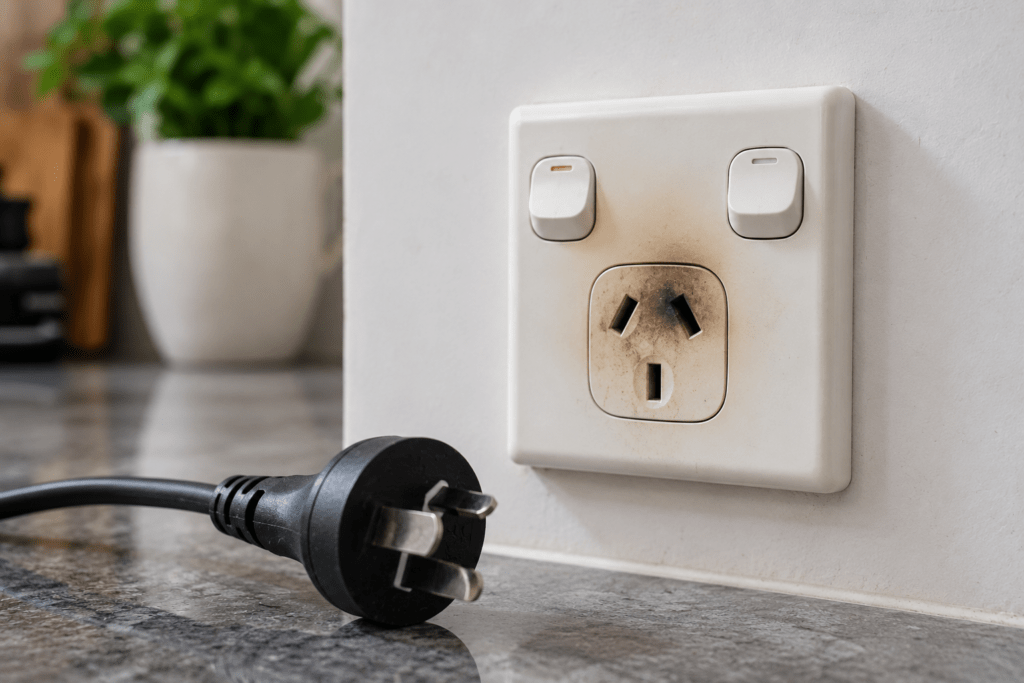
| A quick visual check is enough to sign off an older secondary dwelling | Proper compliance needs testing of insulation resistance, RCD trip times, earthing and polarity, not just looking at fittings | Arrange a full granny flat electrical inspection and obtain an electrical compliance certificate, especially before leasing or selling the property |
Tip from a licensed electrician:
“If you cannot see test results and an electrical compliance certificate, assume the installation needs a thorough check before you rely on it.”
Putting It All Together
Bringing everything together for a Sunshine Coast granny flat means combining approvals, wiring standards, safety devices and fair metering into one clear plan — an approach supported by Protocols for Mitigating Cladding Risk documentation, which illustrates how structured authorisation frameworks reduce compliance risk across residential building projects from design through to handover. When these pieces line up, secondary dwelling electrical compliance becomes a straightforward checklist rather than a series of last‑minute problems.
A practical approach is:
-
Before Design Is Finalised
-
Confirm your building classification and planning approvals with your designer, certifier and Sunshine Coast Council
-
Engage a licensed electrician to review existing mains and switchboard capacity
-
Decide on likely usage: family, rental, short stay or mixed
-
-
During Planning And Construction
-
Work with Sunshine Coast Electrician to map out:
-
Switchboard arrangements and any required upgrades
-
Sub‑mains to the granny flat
-
RCD and RCBO protection for all circuits
-
Smoke alarm locations and interconnection
-
Lighting, power circuits, air conditioning and hot water supplies
-
EV‑ready cabling and solar/battery allowance if required
-
-
Decide on shared, separate or sub‑metered power supplies
-
Coordinate trenching, conduits and meter positions with the builder
-
-
At Completion And Handover
-
Your electrician completes mandatory testing, including:
-
Insulation resistance and polarity
-
RCD trip‑time testing
-
Earth continuity and fault‑loop impedance
-
-
They provide:
-
Electrical certificates of testing or compliance
-
Any required Electrical Work Requests and documentation for Energex or Ergon Energy
-
-
Keep these documents with your building approval records for future insurance, sales and rental agreements
-
Sunshine Coast Electrician offers:
-
New home and secondary dwelling wiring
-
Switchboard upgrades and capacity assessments
-
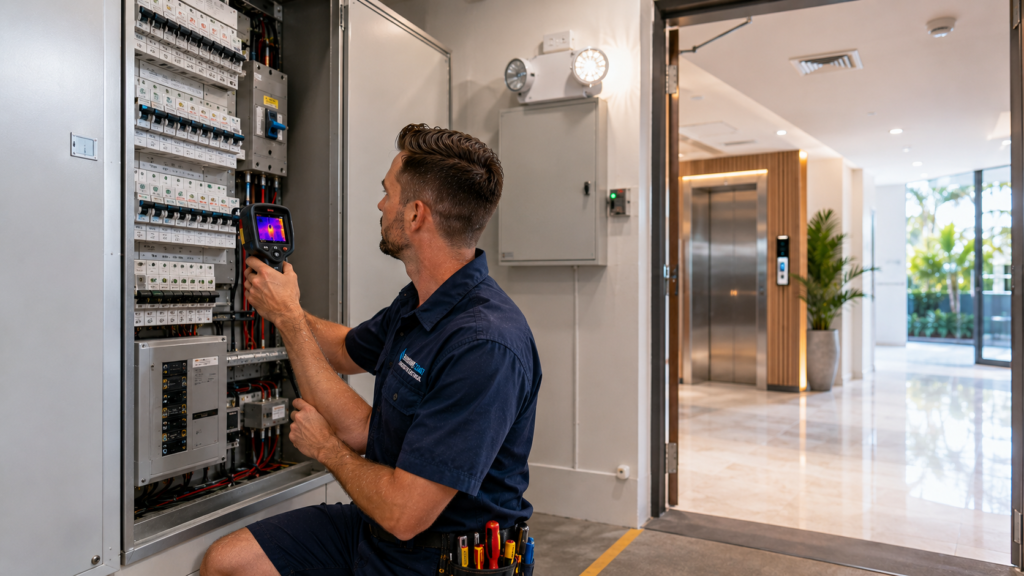
Detailed electrical inspections and compliance testing
-
Fault finding and maintenance across the region
If you are considering building a granny flat or upgrading an existing secondary dwelling on the Sunshine Coast, it is wise to arrange professional electrical planning and compliance advice before construction begins. That way your project is safe, legal and ready for modern living, including air conditioning, EV charging and efficient lighting.
Frequently Asked Questions
Does a granny flat need its own switchboard?
Not always. Some secondary dwellings are supplied from the existing main switchboard, while others require a dedicated sub-board or separate switchboard depending on the design, electrical load and distributor requirements.
A licensed electrician can assess your property's existing electrical system and recommend the most suitable arrangement for safety, compliance and future expansion.
Can I connect a granny flat to my home's existing electrical circuits?
Simply extending existing household circuits is often unsuitable for a complete secondary dwelling. A granny flat usually requires dedicated circuits designed for lighting, power, cooking appliances, hot water and air conditioning.
A properly designed electrical installation helps ensure adequate capacity, safety and compliance with current Australian standards.
Are smoke alarms mandatory in a secondary dwelling?
Yes. Queensland has specific smoke alarm requirements for residential dwellings, including many secondary dwellings. Hard-wired photoelectric smoke alarms with battery backup are generally required in prescribed locations and must meet current legislative requirements.
Your electrician and building certifier can advise on the exact requirements for your project.
Do I need a separate electricity meter for a granny flat?
Not necessarily. Some secondary dwellings share the main property's electricity meter, while others have separate metering or sub-metering arrangements depending on how the dwelling will be used and the distributor's requirements.
The most appropriate option depends on your property's design, intended occupancy and electrical infrastructure.
Can I install an EV charger in a secondary dwelling?
Yes. An EV charger can usually be incorporated into a granny flat design provided the electrical system has sufficient capacity. Planning for EV charging during construction is often simpler and more cost-effective than retrofitting it later.
Your electrician can assess the property's electrical load and recommend the most suitable charging solution.
What certificates should I receive after the electrical work is completed?
Electrical work performed by a licensed Queensland electrician must be tested and certified in accordance with applicable requirements. The documentation provided will depend on the scope of the work and the installation.
Keeping these records is important for future maintenance, insurance and property transactions.
When should I involve an electrician during a granny flat project?
It is best to involve a licensed electrician during the planning stage, before construction begins. Early electrical design helps coordinate switchboard capacity, wiring routes, lighting, power outlets, air conditioning, metering and future electrical requirements.
Planning ahead can reduce costly changes and help the project progress more smoothly.