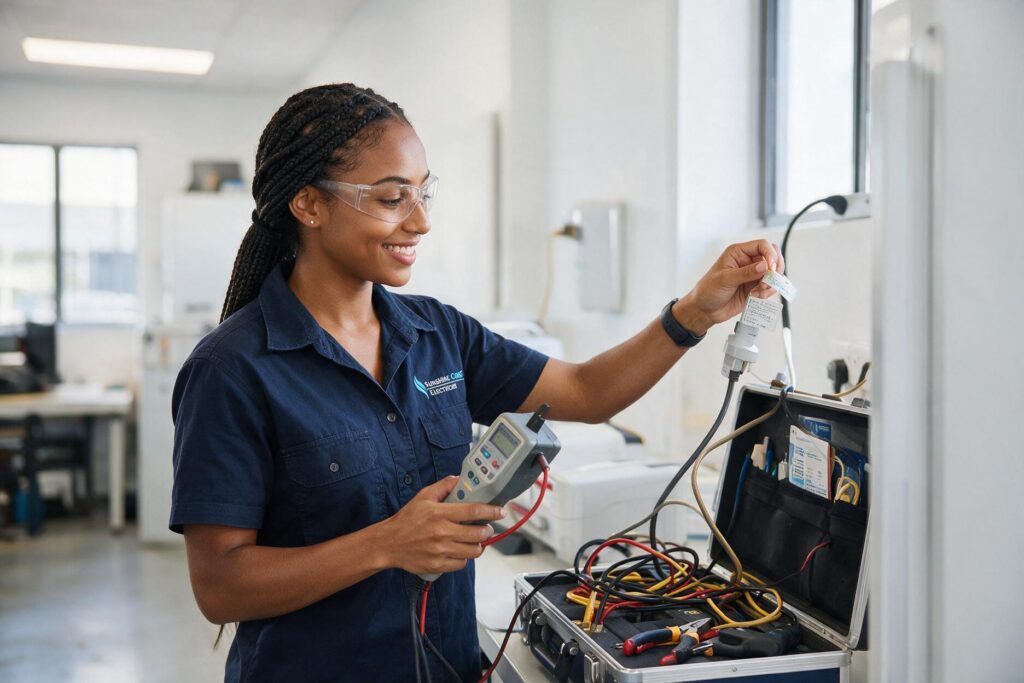
Test and tag requirements Sunshine Coast businesses must follow depend on workplace risk, equipment type and Queensland electrical safety rules. Plug-in equipment should be inspected and tested by a competent person on an appropriate schedule, while RCDs need regular checks. Construction sites generally face stricter requirements under AS/NZS 3012 than low-risk offices.
Sunshine Coast Projects & Electrical is a local Master Electrician contractor that helps offices, workshops, builders, landlords and body corporates meet these rules in a practical way. By the end, you will know what the law actually asks of you, what is simply good practice, and when it is time to bring in expert help rather than guess.
Tip: WorkSafe Queensland expects PCBUs to manage electrical risk, not just collect tags. A clear schedule, competent testing and usable records usually matter more than chasing the shortest possible interval.
Key Takeaways
-
Sunshine Coast businesses need a risk based test and tag program that aligns with Queensland electrical safety laws and AS/NZS 3760. Construction, workshops, hospitality and rentals face higher expectations than quiet office spaces. RCDs, emergency lighting and often microwaves sit inside the same safety picture, even if they follow different standards.
-
Different Sunshine Coast sites need inspection and testing at different intervals depending on how harsh the environment is. Construction tools and leads often need checks about every 3 months, while many offices can run on 1 to 2 year cycles for most plug in gear. RCDs need more frequent push button checks, plus regular instrument tests by a competent person.
-
The legal duty usually sits with the PCBU, which can be a business owner, landlord, body corporate or event organiser. Test and tag must be carried out by a competent person who understands AS/NZS 3760 and uses calibrated instruments. Untrained staff can look for obvious damage but cannot sign off compliance.
-
To avoid over testing, gaps and paperwork problems, you can split one site into higher and lower risk zones. Keeping a clear asset register and digital reports makes WorkSafe Queensland inspections, insurer questions and internal audits much easier. A short review every year helps your schedule keep up with changes to equipment and use.
-
Calling Sunshine Coast Projects & Electrical is sensible when you have multiple work areas, construction activity, rentals, shared spaces or added loads like EV chargers and solar. The team can review your current approach, adjust intervals, add RCD and emergency lighting checks, and set up reminders so tags do not quietly expire.
What Are The Test And Tag Requirements On The Sunshine Coast?
Simple Definition: What “Test And Tag” And RCD Testing Actually Mean
Test and tag on the Sunshine Coast means checking that plug in electrical equipment in use at a workplace is still safe. In simple terms, a competent person inspects each item, tests it with an appliance tester, applies a label and records the result.
The visual inspection looks for:
-
Damage to cords, plugs and casings
-
Signs of heat, moisture or rough handling
-
Missing covers or loose parts
-
Any home made repairs or non compliant modifications
Electrical tests then check earth continuity, insulation resistance and polarity so faults inside the equipment are also picked up. If the item passes, it receives a durable tag with the test date, retest due date and tester details.
RCDs, often called safety switches, are different from circuit breakers. Circuit breakers mainly protect wiring from overloads and short circuits, while RCDs protect people by tripping quickly when they detect leakage to earth. Under AS/NZS 3760, in service RCD testing involves both regular push button checks and periodic instrument based trip time tests so devices trip fast enough.
AS/NZS 3760 sets the accepted methods for this inspection and testing across Australia and New Zealand. AS/NZS 3012 adds stricter rules for construction and demolition work, and other standards cover fixed wiring and switchboards instead of portable gear.
Where Do Test And Tag Requirements Actually Apply On The Sunshine Coast?
Test and tag requirements on the Sunshine Coast apply wherever electrical equipment is used for work and a PCBU is involved. A PCBU is the legal term in the Work Health and Safety Act 2011 for the business or organisation in control of the work.
On the Coast this can include:
-
Builders and tradies on construction sites from Caloundra to Noosa
-
Offices and retail shops in Maroochydore and other centres
-
Workshops and warehouses at Kunda Park and similar estates
-
Cafés, bars and restaurants in Mooloolaba and hospitality strips
-
Schools, childcare centres and training rooms
-
Medical and allied health practices
-
Cleaning or maintenance contractors working across multiple sites
-
Body corporates and landlords that supply appliances in rentals or holiday lets
-
Community clubs, sports facilities and not for profits that use staff or volunteers
Standard homeowners who use appliances only for private domestic life are usually outside formal test and tag rules. That changes once there is a home business, employees, regular clients, paying guests, or heavy use of EV chargers, portable inverters, solar related gear or outdoor extension leads. On top of the law, many council facilities, shopping centres, mining and defence sites, and large clients insist on current tags and reports in their contracts or site entry rules.
What Does Queensland Law Actually Require For Test And Tag And RCD Testing?
Which Laws, Regulations And Standards Apply In Queensland?
Queensland test and tag rules for the Sunshine Coast sit inside several connected laws and standards. The Work Health and Safety Act 2011 and Work Health and Safety Regulation 2011 place a primary duty on PCBUs to keep workers and others safe, including from electrical risks.
The Electrical Safety Act 2002 and Electrical Safety Regulation 2013 deal more directly with electrical matters in Queensland. Regulation 150 talks about regular inspection and testing of plug in equipment in higher risk environments, such as construction or similar work. Together, these laws make it clear that electrical gear must be safe, maintained and checked often enough to control risk.
AS/NZS 3760 covers in service inspection and testing of electrical equipment and RCDs, and WorkSafe Queensland treats it as the practical benchmark for workplaces. AS/NZS 3012 sets extra rules for construction and demolition sites, especially around portable tools and temporary power setups. AS/NZS 2293.2 covers emergency and exit lighting inspections, which many Sunshine Coast businesses schedule alongside appliance test and tag. These standards are not Acts, but following them is a strong way to show you have taken reasonable steps, as described in WorkSafe Queensland’s guidance on managing electrical risks at work and the national Code of Practice for Managing Electrical Risks in the Workplace.
For current references, see:
-
WorkSafe Queensland – Managing Electrical Risks at the Workplace
https://www.worksafe.qld.gov.au -
Electrical Safety Act 2002 and Electrical Safety Regulation 2013
https://www.legislation.qld.gov.au -
Safe Work Australia – Model Code Of Practice: Managing Electrical Risks At The Workplace
https://www.safeworkaustralia.gov.au
Always confirm the latest versions before making compliance decisions.
What Is Legally Mandatory Versus Recommended Or Contractual?
Queensland law does not list one simple interval that every Sunshine Coast business must follow for test and tag. Instead, PCBUs must make sure electrical equipment is safe and inspected and tested as often as needed to manage the level of risk, as explained in Queensland electrical safety laws and the national code of practice for electrical risks.
Some duties are very clear:
-
Construction and demolition work and other high risk environments need regular testing and tagging of plug in equipment under Regulation 150 and AS/NZS 3012.
-
RCDs used in workplaces must be tested regularly using push buttons and, where relevant, instruments, as reflected in AS/NZS 3760 and WorkSafe Queensland guidance.
-
Unsafe or damaged equipment must be removed from service until it is repaired or replaced.
In these settings, inspectors expect to see fresh tags on tools and leads, and refusal of entry to sites like major projects around Brisbane and the Sunshine Coast is common when tags are missing.
In lower risk workplaces such as offices, quiet retail and consulting rooms, the law expects a documented, risk based program rather than one fixed rule. Many landlords, franchisors, school systems and health networks add their own requirements in leases and contracts. Insurers can also ask for test and tag reports and RCD test records, especially after an electrical fire or shock, which often pushes businesses toward a regular schedule even where the law is less specific.
Practical point: Treat standards and industry guidelines as your “default” and then adjust intervals up or down based on a written risk assessment, rather than guessing short cycles or leaving big gaps.
How Often Do Sunshine Coast Workplaces Really Need Test And Tag And RCD Testing?
Risk-Based Intervals For Different Sunshine Coast Environments
Risk based intervals mean Sunshine Coast businesses set test and tag timing by the environment and how equipment is used. A hostile environment is one with moisture, dust, heat, chemicals, vibration or rough handling that raises the chance of damage.
In practice, many workplaces on the Coast adopt patterns such as:
-
Construction and demolition:
-
Portable tools, extension leads and portable RCD boards often checked about every 3 months.
-
Temporary boards, site sheds and hire gear may be checked even more often, especially where several trades share power.
-
-
Workshops, factories and harsh industrial areas:
-
Portable tools, extension leads and floor gear commonly tested on about a 6 monthly cycle.
-
-
Hospitality, schools, childcare and health:
-
Kitchen appliances, portable gear and public use items commonly set between 6 and 12 months, depending on how busy and harsh the environment is.
-
-
Offices and light retail:
-
Low risk areas with equipment that rarely moves sometimes run on longer cycles, while many prefer 12 to 24 months for simplicity.
-
-
Rentals, holiday accommodation and shared spaces:
-
Owner supplied appliances are often checked yearly or every second year as part of safety routines for smoke alarms and RCDs.
-
The final call should come from a site specific risk review with a competent electrician, looking at:
-
How often equipment is moved
-
Exposure to moisture, dust, chemicals and outdoor use
-
Whether the public, children or vulnerable people can access it
-
History of faults, damage or tripping in that area
RCD Testing Intervals And How They Fit With AS/NZS 3760
RCD testing intervals on the Sunshine Coast follow the same risk thinking but are usually shorter than appliance intervals. RCDs are lifesaving devices, so regular checks are a high priority for inspectors and insurers.
There are two main types of checks:
-
User push button tests:
-
Simple checks that building managers or site staff can do, usually every 1 to 3 months in workplaces.
-
In higher risk areas such as construction, workshops or wet zones, checks are often more frequent, guided by AS/NZS 3760 and WorkSafe Queensland recommendations.
-
-
Instrument based trip time tests:
-
Use an RCD tester and are carried out by a competent person following AS/NZS 3760.
-
In many commercial and light industrial settings, these are done yearly, while construction and some medical or childcare environments may need shorter intervals, depending on the risk assessment and any specific regulatory or client requirements.
-
The goal is to confirm that the RCD trips within the required time limits across several test currents. A good program lines up RCD trip time testing on the same visit as appliance test and tag for each area, which keeps disruption and call out costs down.
What Equipment Must Be Tested And Tagged Under AS/NZS 3760?
Common Equipment Types In Sunshine Coast Homes, Offices And Sites
Under AS/NZS 3760, test and tag focuses on in service electrical equipment that plugs in and can be moved. If it has a flexible cord and a plug and is used for work, it likely needs inspection and testing on some schedule.
On the Sunshine Coast this typically includes:
-
Offices and clinics:
-
Desk computers, monitors, docking stations and chargers
-
Printers, photocopiers that plug in, shredders and phone chargers
-
Heaters, fans and desk lamps used in workspaces
-
-
Kitchens, break rooms and staff amenities:
-
Kettles, toasters, microwaves and sandwich presses
-
Coffee machines, benchtop fridges and dishwashers that plug in
-
-
Workshops, warehouses, construction and trade vehicles:
-
Drills, grinders, saws, welders and compressors
-
High pressure cleaners, pumps and portable lighting
-
Power tools stored in utes and site boxes
-
-
Cleaning and facilities:
-
Portable vacuums, floor polishers, scrubbers and carpet cleaners
-
Long extension leads, cord reels and power boards
-
-
Other commercial and specialist equipment:
-
Stationary but plug in gear such as large fridges or some EV chargers
-
Certain medical, lab and IT items that can be disconnected safely
-
Extension leads, cord sets, power boards and portable RCD power boards deserve special attention, because they often fail tests due to bending, crushing or incorrect wiring. Many fridges, photocopiers, some EV chargers and items of medical or lab equipment are stationary but still plug in, so they are treated as part of the test and tag inventory where they can be disconnected safely and testing will not void warranties.
What About RCDs, Emergency Lights, Microwaves And Fire Safety Gear?
RCDs, although not appliances, are included in AS/NZS 3760 because they protect people from electric shock. Board mounted safety switches, socket outlets with built in RCDs and portable RCD boards can all be checked during a test and tag visit, using both push button and instrument based tests.
Emergency and exit lighting falls under AS/NZS 2293.2 rather than the appliance standard. Commercial buildings, strata common areas, schools, hospitals and public venues on the Sunshine Coast usually need 6 monthly function and duration tests, with results entered into an emergency lighting logbook. Many businesses ask for this to be done on the same visit as appliance and RCD testing, to keep their safety records in one place.
Microwave leakage testing uses a hand held meter to check that radiation around the door and seals is below safe limits while the oven runs with a load. This is particularly useful in staff kitchens, school tuckshops and cafés where doors are opened thousands of times and seals wear out.
Fire extinguishers, fire blankets and smoke alarms sit under fire and building rules instead of AS/NZS 3760. However, body corporates, landlords and accommodation providers often have these checked during the same visit to cover several safety items at once. Refer to the Building Fire Safety Regulation 2008 (Qld) and Queensland Fire and Emergency Services guidance for current requirements.
Who Can Legally Perform Test And Tag And Who Is Responsible?
Who Is The PCBU And What Are Their Duties For Electrical Safety?
Under Queensland work health and safety law, the PCBU is the person or organisation that runs the business or undertaking. On the Sunshine Coast, that can be a café owner in Mooloolaba, a building manager in Maroochydore, a school principal, a body corporate committee or a tradie working under their own ABN.
Their duties include:
-
Providing and maintaining safe plant and equipment
-
Identifying electrical hazards in workplaces and accommodation they control
-
Controlling those risks as far as reasonably practicable
-
Making sure testing, inspection and maintenance are carried out by competent people
-
Keeping records of what has been done
This concern is not unique to electrical work either, research into potential inconsistencies in Queensland workplace risk management legislation has examined how the standard of protection for workers can vary across different workplace health and safety frameworks, underscoring why PCBUs cannot simply delegate legal responsibility to a contractor. If gear fails tests, they must arrange repair or replacement and keep the failed items out of service until they pass.
Responsibility can be shared in hire and contractor situations:
-
A hire company is responsible for the state of equipment when it leaves their yard.
-
The hirer becomes responsible for how it is used and maintained on site.
-
When contractors bring their own tools and leads onto your premises, you still have a duty to check that unsafe gear is not used in your workplace.
What Counts As A “Competent Person” Under AS/NZS 3760?
AS/NZS 3760 states that test and tag must be carried out by a competent person, not just anyone with a cheap tester. In practice, competence means having enough knowledge and practical skill to understand electrical safety, use the test gear correctly and interpret results.
This person might be:
-
A licensed electrician who also applies the appliance testing standard, such as technicians from Sunshine Coast Projects & Electrical.
-
In some larger organisations, a non electrician who has completed a recognised test and tag training course, has documented procedures and uses calibrated Portable Appliance Testers.
In both cases, they should:
-
Understand the relevant sections of AS/NZS 3760 and, where applicable, AS/NZS 3012
-
Be aware of Queensland electrical safety law expectations
-
Stay current with standard updates and manufacturer guidance
-
Use suitable and regularly calibrated test instruments
Untrained staff can and should look for obvious damage during daily use, such as frayed cords, broken plugs, scorch marks or cracked casings. They must not perform formal appliance tests or sign tags and records unless they meet the competency requirement. DIY testers in the wrong hands can miss hidden faults, damage sensitive electronics and leave PCBUs exposed if WorkSafe Queensland or a court later questions their program.
What Happens During A Test And Tag Visit (Step By Step)?
Step-By-Step Process From Booking To Report
A typical Sunshine Coast test and tag visit follows a clear sequence so you know what will happen on the day. Planning up front helps reduce disruption and keeps everyone safe.
The general steps are:
-
Initial scoping:
-
Discuss your site over the phone or through a walk through.
-
Agree which areas are in scope, such as offices, kitchens, workshops, vehicles or construction areas, and the best times to access each space.
-
Identify higher risk zones with moisture, dust or outdoor use so they can be tested more often if needed.
-
-
Site preparation:
-
Let staff know when testing will occur.
-
Arrange access to locked rooms, switchboards and cupboards.
-
Where practical, label critical equipment that cannot be powered down without planning.
-
-
Visual inspection:
-
The technician inspects each item before any electrical tests.
-
They look for cuts, abrasions or crushing on cords, bent or loose plug pins, cracked housings, missing covers, signs of heat or burning, liquid damage and any home made repairs.
-
Anything that fails this step is tagged as unsafe and removed from service straight away, with no further testing.
-
-
Electrical testing:
-
Items that pass the visual check are tested using a Portable Appliance Tester.
-
For earthed equipment, the tester checks that the earth path has low resistance so faults can clear quickly.
-
Insulation resistance tests confirm that live parts are well separated from accessible metal or earth.
-
Polarity tests on leads and power boards confirm that active, neutral and earth are wired correctly.
-
RCDs are checked using the built in test button and, where agreed, an RCD tester that measures the actual trip time and confirms performance against the limits referenced in AS/NZS 3760.
-
-
Tagging and isolation:
-
Once each item has a result, the technician attaches a durable tag showing pass or fail, the date of test, retest due date, their identifier and any asset number.
-
Failed items are clearly marked with wording such as DO NOT USE and set aside for repair or disposal.
-
Where critical equipment fails, they will discuss safe workarounds or repair options with the PCBU or manager.
-
A provider like Sunshine Coast Projects & Electrical can often quote for repairs or further electrical work if problems point to wider wiring issues, subject to a proper inspection of the fixed installation.
Reporting, Asset Registers And Reminders
Good reporting is the part of test and tag that proves what has been done and when. Without clear records, it is hard to show regulators, landlords or insurers that electrical risks are being managed.
A quality test and tag report usually includes:
-
A list of every item that was inspected and tested, grouped by location
-
Brief descriptions and asset numbers where used
-
The area or room where each item was tested
-
The test date, pass or fail result and next due date
-
A separate list of failed items and any immediate observations
For larger sites, an asset register is built over time so you can track items across multiple floors, buildings or even different properties on the Sunshine Coast. This is especially useful for:
-
Schools and campuses
-
Multi building commercial or industrial sites
-
Property portfolios with multiple rentals or commercial tenancies
Digital reports in PDF or spreadsheet format are easier to store and search than paper books. They can be produced quickly if WorkSafe Queensland or an auditor asks to see electrical maintenance records. Many businesses choose to keep several years of history so they can spot patterns such as certain brands or areas failing more often.
Providers can also set up reminder systems so you receive a prompt before tags expire, which avoids last minute scrambles when someone is refused entry to a site or a contractor is turned away because their leads are out of date.
How Do Test And Tag, RCD Checks And Other Electrical Work Fit Together?
Linking Test And Tag With Repairs, Upgrades And EV Charging
Test and tag is one piece of a larger electrical safety picture rather than a task on its own. Appliance failures and RCD trips often point to wider problems with wiring or switchboards.
Patterns that may need more investigation include:
-
Several items in one area failing due to heat damage or repeated tripping, suggesting overloading or poor ventilation.
-
Plugs or outlets showing signs of arcing or burning, which may point to loose connections or ageing outlets.
-
Frequent nuisance tripping of RCDs that could indicate wiring issues, moisture ingress or faulty appliances.
Older Sunshine Coast buildings with ceramic fuses or no RCD coverage often show up during test and tag rounds, when technicians see non compliant boards or signs of overheating. In these cases, updating the switchboard, adding RCD protection and fixing damaged wiring can sharply reduce future failures and bring the installation closer to current requirements under AS/NZS 3000.
Combining test and tag visits with other electrical work makes sense for many businesses. On one visit, an electrician can:
-
Test appliances and RCDs
-
Carry out a general safety inspection of switchboards and key circuits
-
Identify circuits without RCD protection and suggest upgrades
-
Check emergency and exit lighting where relevant
-
Provide advice on safe use of power boards and extension leads
Where EV chargers are involved, the fixed charger installation is tested under AS/NZS 3000 wiring rules and other specific standards, while portable EV leads used in workplaces can sit in the regular test and tag schedule. This joined up approach reduces call out costs and helps you get ahead of issues instead of reacting to them later.
How Solar, Batteries And Home/Office Setups Change Your Risk Profile
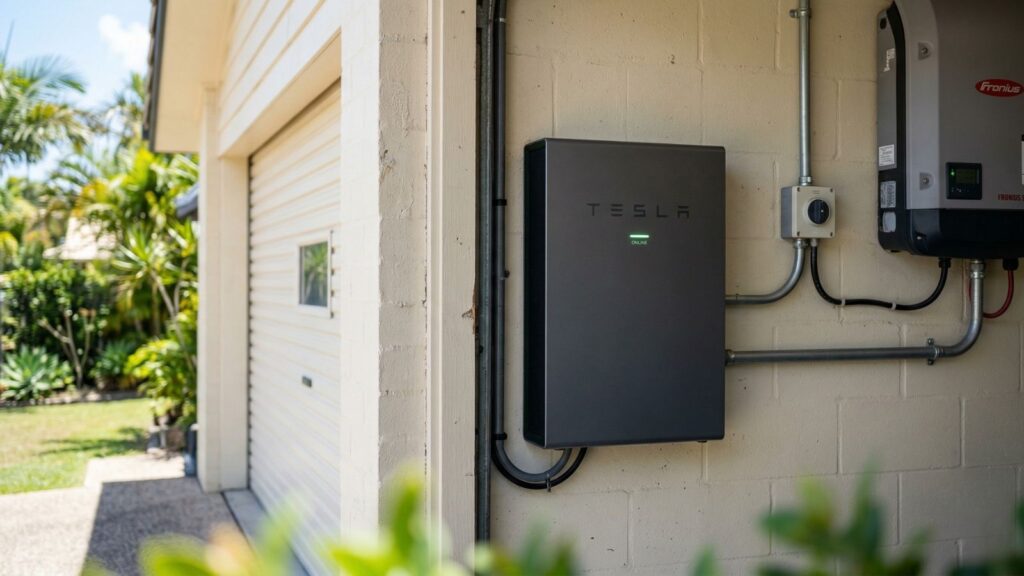
Solar and battery systems are covered by their own standards, such as AS/NZS 5033 and AS/NZS 4777, but they still share the same duty of care. Once you add solar, batteries, EV charging or home office setups, the mix of equipment and loads at your site changes.
Typical changes that affect risk include:
-
More portable heaters, fans, monitors, chargers and backup power devices to manage energy use.
-
Extension leads and power boards becoming semi permanent under desks or across patios, increasing the chance of damage.
-
Plug in inverters and UPS units for servers or home offices adding more items that should be inspected and tested.
-
Roof top solar and battery systems altering fault currents and earthing arrangements, which makes correct RCD operation even more important.
A provider that works in both general electrical and renewables can review the whole picture at once. The team can bring together solar and battery servicing, EV charger checks and appliance testing so your home office, small business or rental stays safe as it becomes more complex. This avoids blind spots where attention is paid to new technology while older cords, boards and appliances quietly age in the background.
How Can Sunshine Coast Projects & Electrical Help You Stay Compliant Without Wasting Money?
Our Risk-Based Test And Tag, RCD And Safety Programs
Sunshine Coast Projects & Electrical is led by Managing Director Charlie Doblo, a local electrician with more than 20 years trade experience and Queensland electrical contractor licence 79977. The business is a Master Electrician member and Clean Energy Council accredited, which supports high standards across both traditional and renewable work.
For test and tag programs, the team:
-
Looks at your actual work areas rather than applying one blanket rule.
-
Uses AS/NZS 3760 and, where relevant, AS/NZS 3012 and AS/NZS 2293.2 as references for inspection and testing.
-
Helps you document a risk based schedule that you can explain to WorkSafe Queensland, landlords and insurers.
Typical patterns include:
-
Construction and trade clients:
-
Quarterly checks on tools and leads, timed to suit site access requirements and colour coded tag systems.
-
-
Offices, clinics and community venues:
-
Annual or two yearly rounds for most plug in gear in low risk zones, with more frequent checks in kitchens, server rooms or outdoor areas as needed.
-
-
Cleaning and maintenance contractors, body corporates and rental managers:
-
Mixed programs where outdoor gear, common areas and plant rooms are treated as higher risk, while quiet offices and meeting rooms run on longer cycles.
-
Site risk zoning is a simple idea that saves money without cutting corners. One property can be split into:
-
High risk zones such as workshops, plant rooms, commercial kitchens and outdoor areas that need frequent testing.
-
Lower risk zones like meeting rooms and standard office areas that can go longer between checks.
Programs can include RCD testing, electrical safety inspections, switchboard work and commercial fit out projects, so issues found during tagging can be addressed quickly. Technicians use calibrated instruments and follow AS/NZS 3760, then provide clear reports that correct both over testing and under testing and give PCBUs usable information instead of just a pile of tags.
Typical Sunshine Coast Clients And How We Work With Them
Different Sunshine Coast clients use test and tag services in different ways, but the basic steps are similar. Examples include:
-
Construction tradies and subcontractors:
-
Need all tools and leads tested about every 3 months so site managers can see current tags at a glance.
-
Bookings are often timed to match major projects and colour coded tag systems used across Queensland sites.
-
-
Offices and medical clinics:
-
When moving into a new fit out, they may ask for an initial asset register, RCD checks and appliance testing before staff move in.
-
After that, an annual visit can keep on top of new equipment and any changes to layout, with higher attention given to kitchens and treatment areas.
-
-
Body corporates, hospitality venues and holiday complexes:
-
Often combine test and tag with emergency and exit light checks and common area inspections.
-
This supports their obligations under Queensland work health and safety, building and fire rules, as well as internal risk management policies.
-
-
Property managers and landlords:
-
Sometimes schedule combined visits to check RCDs, smoke alarms and owner supplied appliances in rentals in one sweep, particularly across multiple units.
-
This assists with their duties under Queensland tenancy and safety frameworks while keeping records in one place.
-
-
Home based businesses, EV owners and solar clients:
-
May have test and tag added when they upgrade switchboards, add chargers or solve nuisance tripping.
-
A simple program can cover work equipment, RCDs and any portable EV leads or inverters used for business purposes.
-
If you want a clear view of your own situation, you can call Sunshine Coast Projects & Electrical on 0400 677 514 for an obligation free chat and quote, then confirm current rules against WorkSafe Queensland and Safe Work Australia guidance.
In Summary
Queensland work health and safety laws and the Electrical Safety Act create the framework for test and tag and RCD testing on the Sunshine Coast. AS/NZS 3760, AS/NZS 3012 and AS/NZS 2293.2 then provide the accepted technical methods for in service checks of appliances, safety switches and emergency lighting.
The key idea is simple. If you are a PCBU, you must keep electrical risks as low as reasonably practicable by inspecting, testing, fixing or removing unsafe equipment and keeping clear records. Intervals are risk based, so construction, workshops and harsh outdoor areas need more frequent checks than calm offices or consulting suites. Good digital records and an up to date asset register are as important as the tests themselves when it comes to dealing with WorkSafe Queensland, landlords and insurers.
Ready to make your workplace electrical-safety program clear and practical? Call Sunshine Coast Projects & Electrical on 0400 677 514 to book an assessment or request an obligation-free quote. Learn more about our electrical services at https://sunshine-coast-electrician.com.au/services/ or contact the team at https://sunshine-coast-electrician.com.au/contact/.
Frequently Asked Questions
Test and tag is not named as mandatory for every office or shop, but safe equipment is required. Most PCBUs run a documented test and tag program to show they manage electrical risks, and to satisfy landlords, centre managers and insurers. It is wise to check WorkSafe Queensland guidance and agree a sensible schedule with a competent electrician.
A home based business can be a PCBU for work equipment in the house. Items like work laptops, printers, chargers and extension leads used with staff or clients may fall under AS/NZS 3760 expectations. A simple risk based schedule with tagged items and RCD checks, planned with a local electrician, is usually enough, but you should always confirm current advice from WorkSafe Queensland.
Brand new equipment from reputable suppliers is generally treated as safe for first use. AS/NZS 3760 focuses on in service equipment, so testing usually starts once items are in regular use and subject to wear. It still helps to record new items in your asset register when they arrive so you know when to add them to future rounds.
If an item fails, it must be removed from service straight away and clearly labelled. Any needed repairs have to be carried out by a licensed electrician where required, then the item must be retested before returning to use. The team can help identify the cause, quote repairs or suggest safe replacements, but the PCBU stays responsible for deciding whether to repair or retire the item.
You should keep test and tag records at least until the next test is done or the item is retired. Many businesses keep several years of history so they can track trends and satisfy insurers or auditors. Digital storage in well named folders makes it much easier to retrieve records during a WorkSafe Queensland visit.
You can adjust testing intervals based on a documented risk assessment, especially in low risk offices and similar workplaces. High risk areas such as construction still need to meet the shorter intervals expected under Queensland guidance and AS/NZS 3012. Zoning your site into higher and lower risk areas and reviewing the plan with a competent electrician can cut unnecessary costs while keeping people safe. Always cross check your approach against current WorkSafe Queensland and Safe Work Australia publications before making changes.