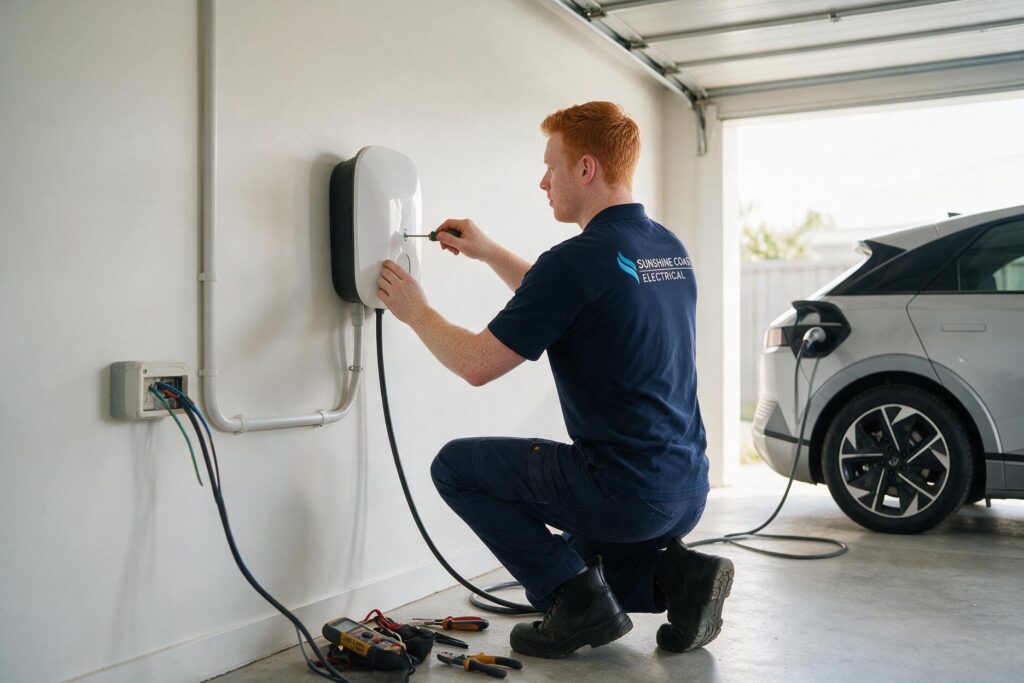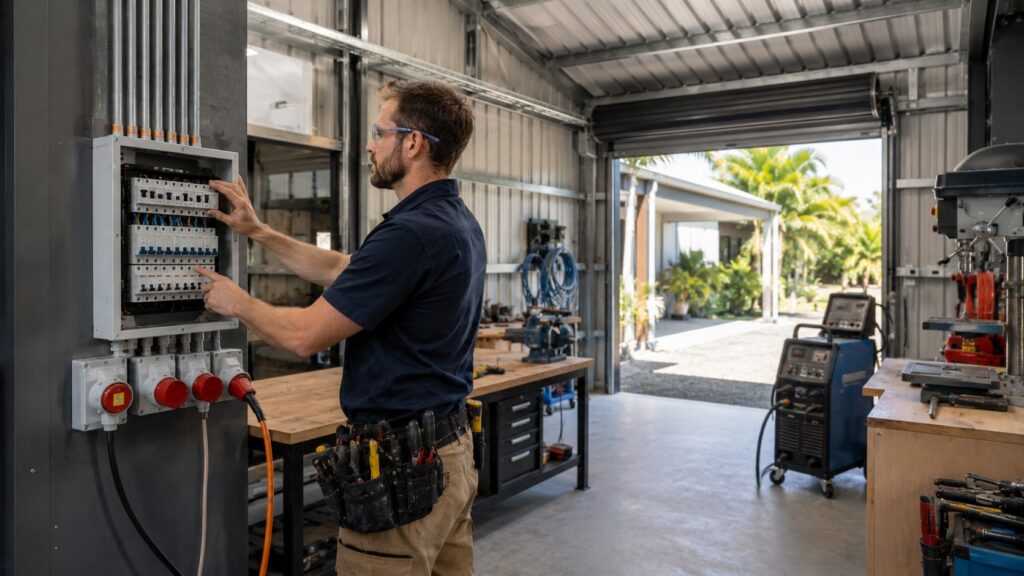
Underpowered workshops and sheds mean tripped breakers, stalled jobs and stressed Sunshine Coast tradies trying to keep work moving.
Every restart, delay and burnt tool chips away at profit and confidence. When you rely on your gear to earn a living, unreliable power quickly turns into lost hours, frayed tempers and missed deadlines.
3-phase power uses three live wires instead of one, giving more capacity and smoother supply than standard single phase. For a Sunshine Coast workshop in Maroochydore, Buderim, Caloundra or Nambour with big compressors, welders or multiple machines, that extra capacity is often exactly what keeps everything running. If your loads are light and used one at a time, well planned single phase design can still work.
This article explains how three phase power works, when your workshop genuinely needs it, what it costs in Australia and how Sunshine Coast Projects & Electrical designs safe, future-ready installations for tradies, rural properties, manufacturers, commercial operators and local homeowners.
We will also look at how 3-phase supports EV chargers, solar systems, battery storage, motor-driven equipment and future expansion so you can make a confident decision rather than guessing and worrying about costly changes later.
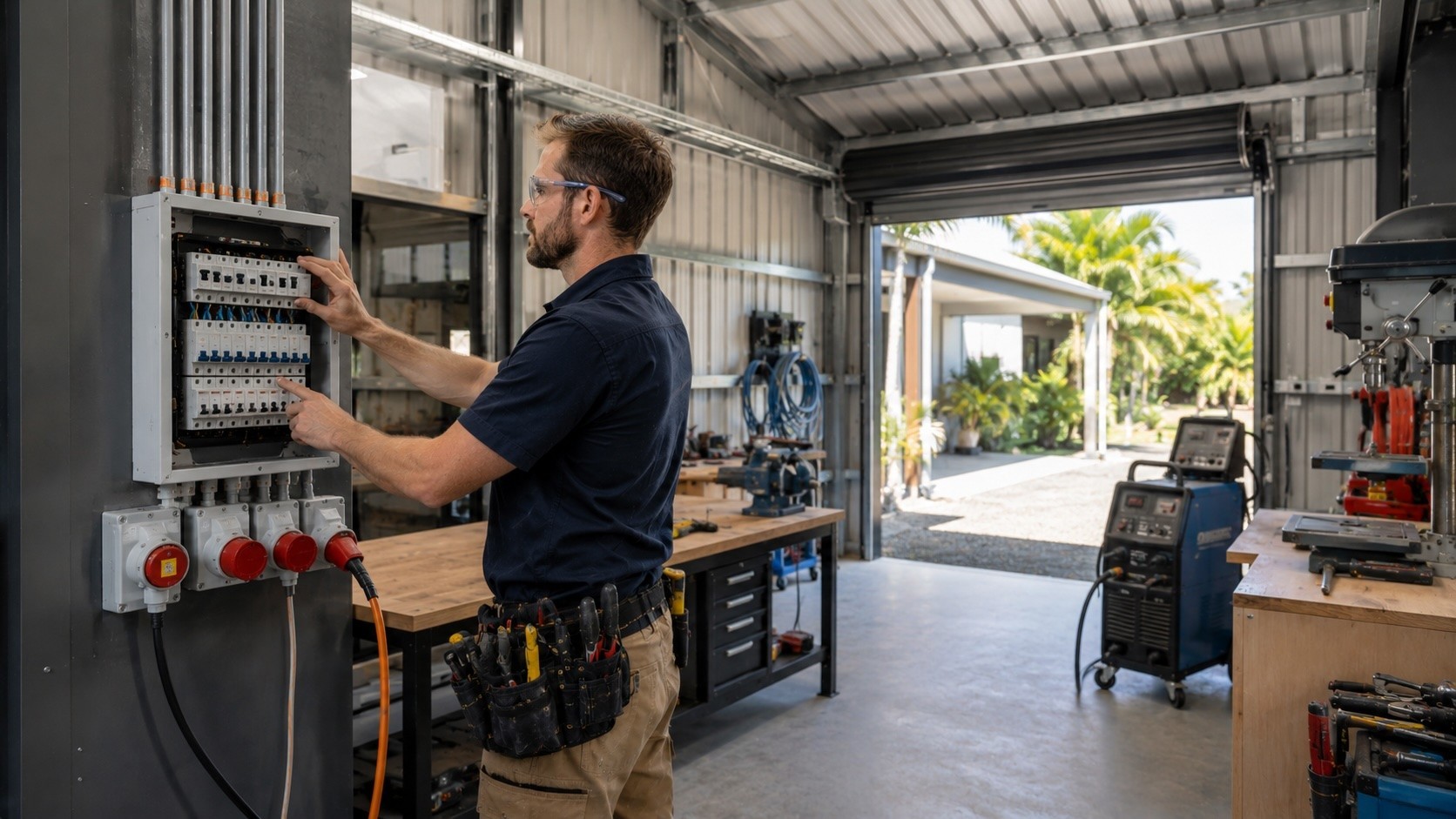
3-Phase Power for Workshops: What You Need to Know
This section gives a fast summary for busy Sunshine Coast tradies, workshop owners, rural property owners and business owners. Each point highlights a real decision trigger around three phase power.
- When 3-Phase Power Becomes Essential On The Sunshine Coast is when heavy compressors, welders or multiple machines run together and single phase circuits keep tripping. At that stage the supply is holding you back. A “three lane” style supply gives the headroom needed for daily work and avoids constant frustration.
- Key Workshop And Machinery That Really Needs 3-Phase includes larger welders, spray booths, cabinet making lines, hoists, cool rooms and rural pumps. These machines draw serious current on start up and under load. Dedicated 3-phase power outlets keep them stable and protect motors from hard starts and overheating.
- How 3-Phase Power Boosts Productivity And Equipment Life comes down to fewer stoppages and smoother motor torque. Less heat and voltage sag means motors, compressors and welding gear last longer. Staff spend time working, not resetting boards or waiting for tools to cool down.
- Future-Proofing Your Shed, Workshop Or Business avoids paying twice for electrical work. Installing a 3-phase electrical installation now leaves spare capacity for more bays, extra staff, EV chargers, bigger solar systems and batteries later. That calms the worry about outgrowing the site or being stuck with expensive rework.
- How Sunshine Coast Projects & Electrical Manages The Whole Upgrade covers load assessment, Energex or Ergon applications, new switchboard, 3-phase meter and final testing. Led by Accredited Master Electrician Charlie Doblo, the team keeps workshops and properties across Maroochydore, Bli Bli, Sippy Downs, Mooloolaba and surrounding areas running safely and reliably.
“The best time to upgrade your power is before it starts costing you jobs.”
— Charlie Doblo, Sunshine Coast Projects & Electrical
What Is 3-Phase Power And How Is It Different To Single Phase?
Three phase power is a supply with three live conductors and one neutral that share the load between them. Compared with single phase, it delivers more usable power with less voltage sag, which matters once you start running serious workshop machinery, rural pumps or commercial equipment.
According to Energy Networks Australia, standard low voltage supplies here provide about 230 volts between any phase and neutral, and around 400 volts between phases. That higher three phase voltage is why big motors in industrial setups feel so strong and start so cleanly.
Single Phase Vs 3-Phase Power Explained For Tradies
Single phase power is what most smaller Sunshine Coast homes start with. You get one active and one neutral, at about 230 to 240 volts, which suits:
- Lighting and general power points
- Fridges, freezers and standard appliances
- Small split system air conditioners
- Handheld and smaller heavy duty power tools
Three phase power adds two more actives while keeping the same voltage to neutral. Between phases you get roughly 400 to 415 volts, which lets the system move more energy down similar size cables. Think of single phase as one lane of traffic and three phase as a three lane highway that spreads vehicles out so they flow better.
Here is a simple comparison.
| Supply Type | Wires And Voltage | Typical Sunshine Coast Use |
|---|---|---|
| Single Phase | One active plus neutral, about 230 to 240 V | Standard homes, small sheds, light tools, office equipment |
| Three Phase | Three actives plus neutral, 230 to 240 V to neutral and about 400 V between phases | Workshops, rural pumps, big air con, commercial sites, EV chargers, larger solar |
In Maroochydore, Buderim or Caloundra, a small home workshop with one welder and some hand tools might stay on stay on single phase. A panel shop in Nambour running hoists, a 3-phase air compressor and a spray booth is far better served by a three phase power connection and properly laid out circuits.
How 3-Phase Power Keeps Motors, Compressors And Welders Running Smoother
Three phase motors see a rotating magnetic field that never really dips right down, so they start easier and run more smoothly — a principle supported by Differential geometry-based harmonic analysis of three-phase systems, which explains how phase relationships govern motor behaviour. That means:
- Less vibration and noise
- More consistent torque
- Better performance under heavy load
Motor manufacturer ABB notes that three phase motors are usually more efficient than similar single phase motors. Over years of running a 3-phase welding machine, dust extraction fan or irrigation pump, that saves energy and cuts heat build-up.
For Sunshine Coast workshops in places like Mooloolaba or Kunda Park, that smoother three phase voltage means:
- Compressors kick in without dimming lights or tripping breakers
- Pumps, hoists and conveyors stay closer to their design speed
- Weld arcs stay stable and spray finishes remain consistent
This stable behaviour suits how people naturally work: they want tools to just work every time they pull the trigger, not create anxiety about “will it trip again?”.
When Do Sunshine Coast Workshops And Businesses Really Need 3-Phase Power?
Sunshine Coast workshops and businesses really need three phase power once single phase circuits can no longer support the mix of machines and growth plans. The tipping point usually comes when multiple large loads start together or run all day.
At that stage, staying on single phase vs 3-phase power is less about saving money and more about avoiding lost productivity. Sunshine Coast Projects & Electrical often see this in:
- Growing metal fabrication shops
- Automotive repair and 4×4 workshops
- Cabinet makers and joinery shops
- Rural properties moving from hobby scale to full time operations
- Small manufacturers adding extra shifts or staff
Common Workshop And Machinery Setups That Call For 3-Phase
Some setups almost always call for 3-phase power for workshop and commercial use. They combine high current motors, frequent starts and long duty cycles, which push single phase wiring and switchboards too hard.
- A metal fabrication shed in Caloundra might run a big 3-phase air compressor, two welders, grinders and a bandsaw. When the compressor starts while someone is welding, the inrush current can blow single phase breakers. With a 3-phase power supply, the load spreads across phases and jobs keep flowing.
- An automotive workshop in Nambour with two hoists, tyre machines, diagnostic equipment and extraction fans has many motors switching on and off. On single phase, voltage swings cause nuisance trips and sensitive electronics misbehave. A proper 3-phase motor connection for hoists and compressors keeps the workshop predictable.
- A cabinet maker in the Bli Bli industrial estate might have a table saw, thicknesser, edge bander, dust extractor and compressor. Running these on single phase can mean constant juggling of which machine is on. 3-phase circuits let staff operate machines together, which directly raises throughput and lowers stress.
- Rural properties around Yandina or Palmwoods that pump water for irrigation or stock often use big bore pumps. Three phase motors in this setting are more efficient and easier to start, which matters on long rural feeds. A 3-phase electrical installation out to the shed or pump house pays back in reliability.
- Commercial and light industrial sites in Kunda Park, Warana or Sippy Downs often need 3-phase for lifts, commercial kitchens, refrigeration, cool rooms and HVAC plant. Here, 3-phase power is less of a luxury and more of a baseline requirement.
Red Flags That Your Single Phase Supply Is Holding You Back
There are clear signs that single phase power is no longer coping in a Sunshine Coast shed, rural property or business. These signs usually show up long before a serious failure, so noticing them early helps.
Watch for:
- Frequent breaker trips when the compressor, welder and dust extractor run together
- Lights dimming in a Buderim or Sippy Downs workshop every time a large motor starts
- Hot switchboards, humming breakers or discoloured covers
- Old fuse bases with cracks or signs of overheating
- Extension leads everywhere because there are never enough suitable outlets
On the human side, when staff work around “that one circuit you never touch” or avoid using two tools together, it creates stress and constant decision fatigue. People naturally prefer certainty; they want to turn equipment on without thinking through a mental checklist.
A three phase electrician can visit, carry out a load assessment and explain whether a 3-phase power upgrade or a targeted rearrangement of circuits is the right step. That expert advice gives a clear path forward instead of guesswork.
Which Equipment And Setups Benefit Most From 3-Phase Power?
Equipment benefits most from three phase power when it has a large motor, long duty cycle or both. That includes many tools and systems used daily by Sunshine Coast tradies, manufacturers, rural property owners and commercial operators.
The International Energy Agency notes that electric motors account for a large share of global electricity demand, which is exactly why their efficiency and supply quality matter so much. Matching those motors with an appropriate three phase power supply pays off in smoother operation, fewer failures and lower operating stress.
Key Tools, Machines And Properties That Suit 3-Phase Power
Certain tools really shine on a 3-phase power outlet because they draw heavy current and need steady voltage:
- Welders: Larger MIG and TIG welders, especially in fabrication shops, do well on 3-phase. When they run on three phase, arc stability improves and you are less likely to see the welder trip the board mid bead.
- Air compressors: Three phase air compressors are a major use case. Spray painters in Mooloolaba or Kunda Park rely on steady air pressure for smooth finishes. Compressors on three phase start easier and keep pressure up without dragging down other circuits feeding lights or computers.
- Woodworking machinery: Lathes, table saws, thicknessers, edge banders, panel saws and dust extractors all benefit from 3-phase motors with smoother torque and better efficiency.
- Metalworking machinery: Mills, bandsaws, folders, guillotines, CNC machines and hydraulic equipment often need or strongly prefer 3-phase supply.
- Automotive and mechanical workshops: Car hoists, wheel balancers, tyre machines, transmission flush units, extraction fans and detailers’ gear commonly run better on 3-phase.
- Rural and agricultural equipment: Bore pumps, irrigation pumps, feed systems, cool rooms, shearing sheds and grain handling equipment work reliably on 3-phase, especially over long cable runs.
- Commercial equipment: Commercial kitchens, laundries, refrigeration racks, elevators and escalators almost always rely on three phase.
Rural sheds and mixed-use properties across the Sunshine Coast Hinterland with multiple pumps, cool rooms or feed systems benefit from the same characteristics. For mixed use properties that combine a home with a workshop, 3-phase power keeps business loads separate from household circuits and avoids one side constantly robbing power from the other.
How 3-Phase Supports EV Chargers, Solar And Battery Systems
Three phase power lines up neatly with modern electrification, especially for EV chargers, solar PV and battery storage.
According to the Electric Vehicle Council, most home and workplace AC chargers range between about 7 and 22 kilowatts. The higher end of that range typically needs three phase supply.
- A tradie parking an electric ute or van at home in Sippy Downs or Bli Bli who wants quicker nightly charging will often look at a 3-phase EV charger. That allows more energy into the battery in the same number of hours, as long as the vehicle supports three phase charging.
- Commercial premises in Maroochydore, Caloundra or Nambour installing multiple EV chargers for staff or customers almost always benefit from 3-phase power to share the load fairly and avoid constant overloads.
For solar and batteries, 3-phase inverters on commercial sheds or rural properties around Nambour and Kunda Park can spread generation and storage across all phases. The Clean Energy Regulator reports that millions of Australian homes now have rooftop solar, and larger systems are on the rise.
Sunshine Coast Projects & Electrical design 3-phase power supplies so solar, batteries, workshop loads and future EV chargers work together instead of competing for limited capacity. That integrated planning gives you efficiency, certainty and clearer upgrade options down the track.
Why 3-Phase Power Is A Smart Investment For Tradies And Workshop Owners
Three phase power is a smart investment because it supports consistent productivity today and keeps options open for tomorrow. Instead of waiting for constant faults to force action, you set up an electrical backbone that can handle work as your property or business grows.
The International Energy Agency highlights that motors consume a large portion of the electricity used by industry worldwide. When those motors are fed by stable three phase supplies, more of that energy turns into useful mechanical work rather than waste heat, nuisance trips and breakdowns.
Productivity, Reliability And Equipment Life
For Sunshine Coast workshops and rural properties, the biggest gain from a 3-phase power installation is simple productivity:
- Fewer tripped breakers mean fewer unplanned breaks in welding runs
- Less downtime on hoists and machinery
- Fewer delays repainting panels after a compressor stalls
- Less need to sequence who can use which machine at what time
Voltage stability also protects equipment, and peer-reviewed work on Three-Phase Power Factor Correction for motor drive applications demonstrates how stable three-phase supply reduces stress on sensitive electronics and extends equipment service life. Welders, plasma cutters, CNC controllers and EV chargers dislike brownouts. When inrush current is spread over three phases instead of one, that sag is smaller and sensitive electronics live longer. Motors on compressors and pumps run cooler, which extends bearing life and stretches the time between maintenance.
From a behavioural angle, reliable power feeds into peace of mind. When your workshop in Maroochydore or Bli Bli feels electrically solid, it is easier to:
- Take on extra jobs without worrying about the board failing
- Add a new machine or bay without second guessing every decision
- Plan staff rosters around work, not around power limitations
Sunshine Coast Projects & Electrical see this shift often after completing a 3-phase switchboard upgrade. Owners report less background stress and more confidence when quoting bigger jobs or investing in new gear.
Future-Proofing Your Shed Or Business For Expansion
People naturally like to feel that big decisions will not box them in. 3-phase power supports that need for certainty and flexibility by keeping electrical headroom available for future plans. If you want more bays, extra staff or new machinery later, the backbone is already in place.
Key future-proofing advantages include:
- Capacity for extra 3-phase machinery, hoists or compressors
- Easier integration of EV chargers for staff vehicles or delivery vans
- Support for larger solar systems and battery storage
- Room for air conditioning upgrades or extra cool rooms
Upgrading to three phase once, including a new switchboard and 3-phase meter, is usually less disruptive than a string of smaller fixes. It avoids pulling mains apart again when you later add 3-phase supply for a second hoist or an EV charger. That saves both money and stress.
For property owners, a well designed 3-phase electrical installation can also add appeal for future buyers or tenants. A workshop in Buderim or Caloundra that already has spare 3-phase outlets, good phase balance and capacity for solar will stand out compared with one stuck on an outdated board. Sunshine Coast Projects & Electrical keep that long view in mind during every design.
How A 3-Phase Power Installation Or Upgrade Works On The Sunshine Coast
A 3-phase power upgrade on the Sunshine Coast follows a clear set of steps from first call through to energisation. Knowing that path up front helps tradies, rural landowners and business owners plan downtime and budget with less uncertainty.
Any upgrade must meet Queensland electrical safety laws, the AS/NZS 3000 Wiring Rules and network requirements from Energex or Ergon Energy. WorkSafe Queensland reminds businesses that electrical incidents remain a serious cause of workplace harm, which is why only licensed electricians should touch this level of work.
Step-By-Step From First Call To A Live 3-Phase Power Supply
A typical process with Sunshine Coast Projects & Electrical looks like this:
- Site visit and load assessment
- Inspect existing switchboard, consumer mains, earthing and major equipment
- Identify current problems such as nuisance tripping or overheating
- Discuss future plans like extra machinery, solar, batteries or EV chargers
- Design and approvals
- Prepare layout, cable sizing and load calculations
- Decide on 3-phase outlet locations, submains and board arrangement
- Lodge applications with Energex or Ergon to request the 3-phase connection
- Quoting and scheduling
- Provide a clear, itemised quote explaining materials, labour and any network fees
- Agree on dates that suit your trading hours or farm operations
- Discuss any staged work to reduce downtime if needed
- On-site upgrade works
- Replace or upgrade the consumer mains to 4-core cabling
- Install a new 3-phase switchboard with RCD/RCBO protection
- Arrange a new 3-phase smart meter through your retailer
- Rebalance existing circuits and install dedicated 3-phase power outlets
- Testing, compliance and handover
- Test all circuits and protection devices
- Provide certificates of testing and compliance for Queensland regulations
- Walk you through the new board layout and clearly label circuits
Throughout, the team keeps you informed so you always know what is happening, why and how it affects operations. That level of communication is important for business owners who want control and clarity.
Why Choose Sunshine Coast Projects & Electrical As Your Three Phase Electrician
Sunshine Coast Projects & Electrical are led by Accredited Master Electrician Charlie Doblo, who brings more than 20 years of hands-on experience across residential, commercial, industrial and rural work. That depth shows when balancing the needs of a busy workshop with safety and network rules.
The team handle everything from initial advice to Energex paperwork, installation and final testing. They regularly complete commercial electrical installations around Maroochydore, Buderim, Caloundra, Nambour, Bli Bli and Sippy Downs, so they know local grid conditions and network expectations well.
Every job comes with:
- A 12 month workmanship guarantee
- Clear, upfront quoting with no hidden extras
- Honest advice on whether you really need 3-phase or not
Whether you need a fresh 3-phase electrical installation, a workshop electrical upgrade or extra 3-phase outlets in a rural shed, Sunshine Coast Projects & Electrical focus on neat work, safe design and straightforward communication.
What Does 3-Phase Power Cost In Australia And What Affects Pricing?
The cost of three phase power in Australia varies widely between sites, so no single figure fits all — and data on Table 1 Distribution of monthly household electricity expenses shows just how significantly electricity costs differ across different respondent groups and usage profiles. Instead, it helps to understand what drives the price so quotes feel logical rather than mysterious.
According to the Australian Energy Regulator, network and “poles and wires” charges often make up around 40 to 50 percent of a typical electricity bill. When upgrading to 3-phase, some of that same network infrastructure has to be adjusted, which explains a portion of the project cost.
Key Cost Factors For A 3-Phase Power Upgrade Or New Installation
Several factors influence the total cost of a 3-phase upgrade or new connection on the Sunshine Coast:
- Age and condition of the existing switchboard
- Older homes and sheds in Buderim or Nambour with ceramic fuses usually need full replacement before they can accept a 3-phase switchboard upgrade.
- Newer boards with modern breakers may only need reconfiguration, which keeps costs lower.
- How power reaches your property
- Overhead supplies from a nearby street pole are often more straightforward.
- Long underground runs from a pillar or switchboard, especially under concrete or landscaping, add labour and reinstatement costs.
- Scope of internal works
- Adding multiple 3-phase power outlets, new submains to a distant shed, heavy duty power tools wiring and integrating solar or EV chargers at the same time increases time on site and materials used.
- Some projects also include new lighting, extra single-phase outlets or safety upgrades, which add to scope but can be cost effective when done together.
- Network and metering fees
- There can be separate costs for the new 3-phase meter and any Energex or Ergon work on the street side of the connection.
- These amounts vary by area and are usually outlined during the design and application stage.
Sunshine Coast Projects & Electrical spell these components out clearly in their quotes so you can see exactly where your money is going.
Thinking About Return On Investment, Not Just Up-Front Cost
Looking only at upfront price can make a three phase upgrade feel confronting, especially for small workshops or rural operations, but analysis of Fig. 4 | Scientific data on the share of household income allocated to electricity, gas and heating puts these infrastructure costs in a broader financial context. It helps to weigh that spend against the hidden cost of downtime, call outs and ruined work from unreliable power.
Consider:
- One bad week of failed welds, ruined paint jobs or pump failures can erase a big chunk of the difference between “doing nothing” and upgrading properly.
- For businesses, 3-phase power lets more staff and machines work at once on the same footprint, which can lift revenue without moving premises.
- For property owners, having 3-phase already installed can make the site more attractive to future tenants or buyers who run commercial equipment.
An obligation free assessment from Sunshine Coast Projects & Electrical gives a clearer picture of the real project scope and long-term value. That way you can line up the long term benefits with the actual quote, rather than guessing whether an online “average 3-phase power cost in Australia” number applies to your shed or property.
Let’s Power Up Your Workshop The Right Way
Three phase power turns your electrical supply from a crowded one lane road into something closer to a three lane highway. Compressors, welders, hoists and pumps in Sunshine Coast workshops receive steadier power, which means fewer stoppages, less stress and better use of every working hour.
Upgrading before things start failing avoids rushed decisions and messy, piecemeal fixes. A considered 3-phase power installation or upgrade gives you a solid base for extra machinery, EV chargers, solar systems and battery storage when the time is right. It also supports that natural desire for certainty: you know your power can handle what you plan to throw at it.
Sunshine Coast Projects & Electrical combine local knowledge, 20 plus years of experience and a 12 month workmanship guarantee to support tradies, rural landowners, manufacturers, commercial operators and homeowners across Maroochydore, Buderim, Caloundra, Nambour, Mooloolaba, Bli Bli, Sippy Downs and nearby areas.
Book a site visit, walk the team through your workshop, farm or business plans, and get clear, practical advice on whether three phase power is the right fit for your situation.
Frequently Asked Questions
This section answers common questions Sunshine Coast tradies, business owners, rural property owners and homeowners ask about three phase power. Each reply is short, direct and written so it still makes sense on its own.
Is 3-Phase Power Worth It For A Small Sunshine Coast Workshop At Home?
Question: Is 3-Phase Power Worth It For A Small Sunshine Coast Workshop At Home? It is worth it if you run a large welder, compressor or several machines together and keep tripping circuits, or if you plan to add EV charging or bigger machinery in the near future. Smaller sheds using one tool at a time can often stay on single phase with good design. A local electrician Sunshine Coast based can do a load assessment and give clear guidance.
Can I Run 3-Phase Machinery Using A Single Phase To 3-Phase Converter?
Question: Can I Run 3-Phase Machinery Using A Single Phase To 3-Phase Converter? Yes, some single phase to 3-phase converter units can run smaller machines, but they have limits on size and duty cycle. They suit occasional or niche use, not full time production. A proper three phase power supply is usually better for daily heavy work. Always get advice from a licensed electrician before buying one.
How Do I Tell If My Shed Or Workshop Already Has 3-Phase Power?
Question: How Do I Tell If My Shed Or Workshop Already Has 3-Phase Power? Look in your switchboard for a main switch labelled three phase or a breaker with three linked toggles. Some meters also show three sets of readings, which hints at a 3-phase meter. The safest option is to have a Sunshine Coast Projects & Electrical technician confirm it on site and check phase balance.
Do I Need 3-Phase Power For A 3-Phase Welder Or Air Compressor?
Question: Do I Need 3-Phase Power For A 3-Phase Welder Or Air Compressor? True 3-phase machines are designed to run on genuine three phase power, so they work best on a dedicated 3-phase power outlet. Running them from undersized single phase circuits or cheap adapters can cause trips, poor performance and damage. Workshop circuits should be designed around your heaviest loads first.
What’s Involved In A 3-Phase Switchboard Upgrade For My Workshop?
Question: What’s Involved In A 3-Phase Switchboard Upgrade For My Workshop? A 3-phase switchboard upgrade usually replaces the old board with a new enclosure, three pole main switch, RCD or RCBO protection and correctly rated breakers. Circuits are spread across phases for balance and clearly labelled. Testing and certification are then completed to meet Queensland and WorkSafe QLD requirements.
Does 3-Phase Power Cost More To Run Than Single Phase In Australia?
Question: Does 3-Phase Power Cost More To Run Than Single Phase In Australia? Three phase power itself does not automatically cost more to run, because tariffs are based mainly on energy used. Bills increase only if you run more or bigger equipment. Using efficient machines and integrating solar or batteries can keep costs in check, whether you have single or three phase.
How Long Will My Business Be Without Power During A 3-Phase Upgrade?
Question: How Long Will My Business Be Without Power During A 3-Phase Upgrade? Most upgrades need power off for several hours, sometimes most of a working day, depending on scope. Sunshine Coast Projects & Electrical plan works around your trading hours where possible and explain the likely outage window up front. Critical businesses can talk with the team about staging or temporary arrangements.
Can 3-Phase Power Help If I Want To Add EV Chargers And Solar To My Workshop Later?
Question: Can 3-Phase Power Help If I Want To Add EV Chargers And Solar To My Workshop Later? Yes, three phase power is ideal for faster EV chargers and larger three phase solar inverters. It lets workshop loads, solar and batteries share capacity more evenly. Designing a 3-phase electrical installation with spare board space and conduit now makes later EV and solar add ons smoother. Sunshine Coast Projects & Electrical specialise in this kind of future ready setup.
Is 3-Phase Power Available Everywhere On The Sunshine Coast?
Question: Is 3-Phase Power Available Everywhere On The Sunshine Coast? Many urban and industrial areas such as Maroochydore, Caloundra, Buderim and Nambour already have 3-phase available in the street. Some rural or fringe properties may need network upgrades or longer runs to access it. An on-site check and enquiry with Energex or Ergon through your electrician will confirm what is possible at your address.
Who Should I Contact To Discuss A 3-Phase Power Upgrade On The Sunshine Coast?
Question: Who Should I Contact To Discuss A 3-Phase Power Upgrade On The Sunshine Coast? Your best starting point is a licensed three phase electrician with local experience. Sunshine Coast Projects & Electrical can inspect your existing setup, talk through your equipment and future plans, deal with Energex or Ergon paperwork and provide a clear quote for the upgrade. This gives you expert guidance rather than guessing what you might need.