Solar Battery: Better than Feed-in Tariffs? (Sunshine Coast)
For many Sunshine Coast homeowners, installing a solar battery can deliver greater long-term savings than relying on feed-in tariffs alone. Instead of exporting excess solar power for a small credit, a battery lets you store that energy and use it during the evening when electricity prices are highest, significantly reducing your grid dependence and power bills.
Solar Battery vs Feed-In Tariffs: Which Option Saves Sunshine Coast Homes More?
Watching your power bill creep higher each quarter is a familiar feeling for many on the Sunshine Coast. You’ve likely invested in solar panels to combat rising energy costs, but are you getting the most from your system? The sunlight is free, but making the most of its value comes down to a key decision: is it better to sell your excess power back to the grid for a small credit, or to store it for your own use? This is the central discussion between relying on a solar battery and settling for dwindling feed-in tariffs.
For years, exporting power was the standard, but as feed-in tariff rates have fallen, the financial equation has shifted. Now, the smarter approach often involves storing that precious solar energy to power your home through the evening and night. This strategy, known as solar self-consumption, is the key to true energy independence and significant long-term savings. Making this choice, however, requires careful financial analysis and expert guidance.
At Sunshine Coast Projects & Electrical, we bring over 20 years of local experience to this exact problem. We aren’t just installers; we are your neighbours and trusted advisors. We provide honest, transparent advice backed by a 5-star reputation and a solid 12-month workmanship guarantee. This article will break down the financial sense behind a solar battery versus feed-in tariffs, giving you the clear insights needed to make an informed decision for your home or business.
Key Takeaways
-
A solar battery generally offers superior long-term financial benefits over feed-in tariffs (FiTs) by maximising solar self-consumption and reducing your reliance on expensive grid electricity.
-
The financial viability of a solar battery improves significantly when you are on a Time-of-Use (ToU) electricity tariff and can access available government incentives like the QLD Battery Booster program.
-
Sunshine Coast Projects & Electrical provides expert financial analysis, manages the incentive process, and delivers custom solar panel battery installation to make sure you achieve an optimal solar battery return on investment.
Understanding Solar Batteries And Feed-In Tariffs For Your Home
Before diving into a direct financial comparison, it’s important to understand the two main options for your excess solar power. Both a solar battery system and feed-in tariffs are designed to get value from the energy your panels produce but don’t immediately use. However, they work in fundamentally different ways and offer vastly different levels of control and financial return. One empowers you with solar energy self-sufficiency, while the other leaves you subject to the rates set by energy retailers. This section will clarify how each option functions, setting the stage for a clear financial showdown.
How Solar Batteries Work: Your Path To Energy Independence
A solar battery is the heart of a modern solar energy storage system, acting like a personal energy reservoir for your home. The process is straightforward and automated, designed to give you maximum benefit from your solar investment.
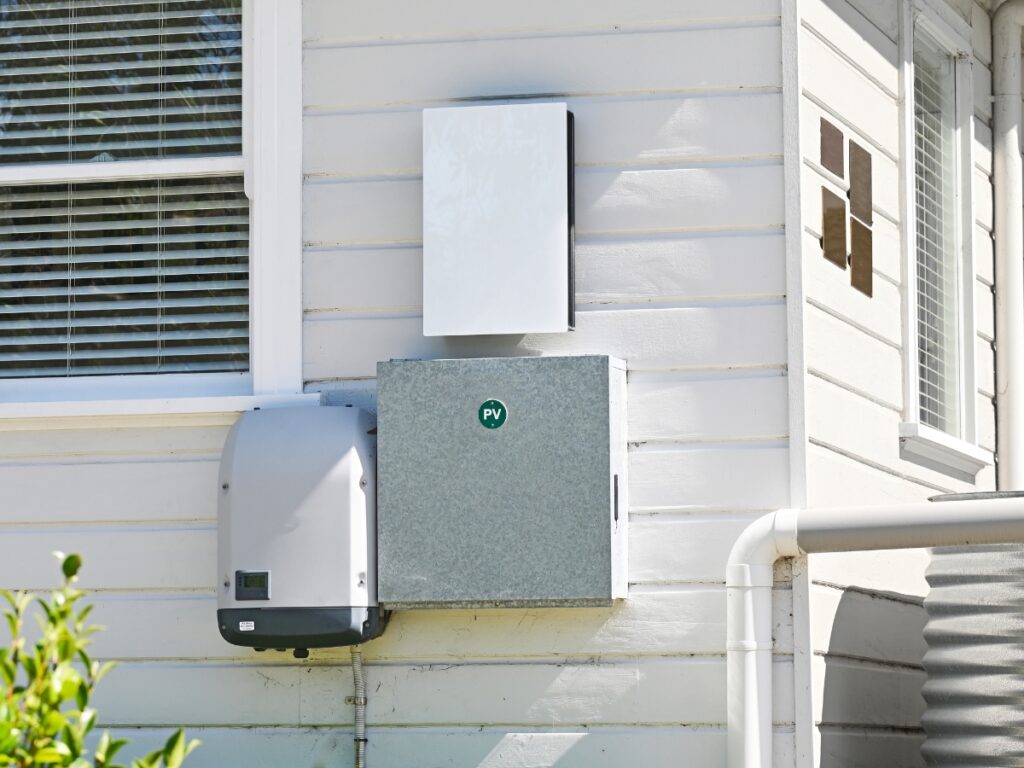
During the day, your solar panels convert sunlight into DC electricity. An inverter then changes this to AC electricity to power your appliances. Your home’s needs are always met first. Any surplus energy that isn’t immediately used is then directed to charge your home solar battery system. This stored energy is then ready for you to use whenever you need it, such as in the evening after the sun has set or on overcast days. By using your own stored solar power, you avoid purchasing electricity from the grid at higher retail prices. Most systems remain connected to the grid for reliability, and many advanced setups offer solar panels with battery backup, keeping your lights on during a power outage. The most common batteries use lithium-ion technology, with LFP (Lithium Iron Phosphate) and NMC (Nickel Manganese Cobalt) being popular choices for the best home battery storage due to their efficiency and lifespan.
“The true value of solar isn’t just generating power, it’s controlling when and how you use it. That’s where battery storage changes the game for homeowners.” – Renewable Energy Expert
What Are Feed-In Tariffs? Understanding Your Solar Credits
A feed-in tariff (FiT) is a credit you receive from your electricity retailer for any unused solar power you export to the main electricity grid. When your solar panels generate more electricity than your home is consuming, that excess power flows out through your meter, and you earn a small payment for each kilowatt-hour (kWh) sent. This credit is then applied to your electricity bill, reducing the overall amount you owe.
Historically, feed-in tariff rates were quite generous, making exporting power an attractive option. However, in recent years these rates have dropped significantly, and research on Falling Battery Storage Costs shows how this shift is quietly reshaping electricity markets worldwide. Today, the credit you receive for exporting a kWh of power is often much lower than the price you pay to buy a kWh back from the grid later that evening. This growing price gap is a primary driver behind the feed-in tariff vs. self-consumption discussion. Relying on FiTs means you are subject to fluctuating rates set by retailers and have less control over your energy costs, making the argument for solar self-consumption with a battery system much more compelling.
Solar Battery Vs. Feed-In Tariffs: A Financial Deep Dive
This is where the decision truly comes into focus. Choosing between a solar battery and relying on feed-in tariffs is a significant financial decision. While the upfront solar battery storage cost is higher, the long-term battery storage financial benefits often far outweigh the minor credits from exporting power. This section breaks down the costs, savings, and payback periods to illustrate why investing in solar energy self-sufficiency is becoming the smarter financial move for Sunshine Coast residents. With our expertise, we provide clear, transparent analyses to make sure your solar battery return on investment is maximised.
Calculating Your Savings: Self-Consumption Vs. Export
The financial case for a solar battery hinges on a simple principle: it is almost always more valuable to use your own solar power than to sell it. The retail rate you pay for electricity from the grid can be three to five times higher than the feed-in tariff rates you receive for exporting it. Each kWh you store and use from your battery is a kWh you don’t have to buy.
Your potential solar battery savings are heavily influenced by your electricity tariff.
-
Flat Rate Tariffs: On a flat tariff, you pay the same price for electricity regardless of the time of day. Your savings come from offsetting this single rate, but you must subtract the lost FiT credit. This often results in a longer solar battery payback period.
-
Time-of-Use (ToU) Tariffs: This is where batteries truly shine. ToU tariffs charge much higher rates during peak evening hours. By using your stored solar energy during these expensive periods, you avoid high peak charges, which drastically shortens the solar battery payback period and improves your solar battery return on investment. The initial solar battery price, including professional Tesla Powerwall installation or another quality brand, is an investment in avoiding these future high costs.
Sunshine Coast Projects & Electrical: Your Financial Guide
Navigating the financial side of a solar battery investment can seem daunting, but you don’t have to do it alone. At Sunshine Coast Projects & Electrical, we act as your personal financial guide, making sure the numbers make sense for your specific situation. We believe a solar battery is only worth it if it delivers a clear and tangible return for our clients.
Our process begins with a detailed financial analysis. We examine your energy usage patterns and electricity bills to provide a realistic, personalised estimate of your solar battery payback period and overall savings. We take the confusion out of government incentives by managing the entire process for you. We apply federal STC discounts directly to your quote and guide you through Queensland-specific programs like the Battery Booster to reduce the upfront solar battery price. We provide a final, all-inclusive price with no hidden costs. Our expert designs focus on maximising your solar self-consumption, making sure your home solar battery system is perfectly adapted to your needs and gives you the best home battery storage for long-term energy independence.
Maximising Your Return: Government Incentives And Local Considerations
The financial argument for a solar battery becomes even stronger when you consider available government incentives and the specific environmental conditions here on the Sunshine Coast. These elements can significantly reduce the initial solar battery storage cost and accelerate your solar battery payback period. Partnering with a local expert like Sunshine Coast Projects & Electrical makes sure you can take full advantage of these opportunities, making your investment in solar panels with battery backup both resilient and financially rewarding. According to Solar and Storage Industry research data, the situation for battery storage financial benefits in 2026 is more favourable than ever.
The government offers incentives to make switching to battery storage more affordable. At the federal level, Small-scale Technology Certificates (STCs) can reduce your upfront cost, but this scheme is being phased out by 2030, so the benefit is highest now. More locally, Queensland-specific battery incentives like the popular “Battery Booster” program provide substantial rebates that directly lower your initial investment. We handle all the paperwork to make sure you receive the maximum discount available. Another option is a Virtual Power Plant (VPP), where you can receive upfront subsidies or ongoing credits for allowing an energy company to use your battery to help stabilise the grid.
“Beyond the savings, battery storage offers invaluable peace of mind, especially in areas prone to weather events. It’s about resilience as much as it is about economics.” – Local Energy Analyst
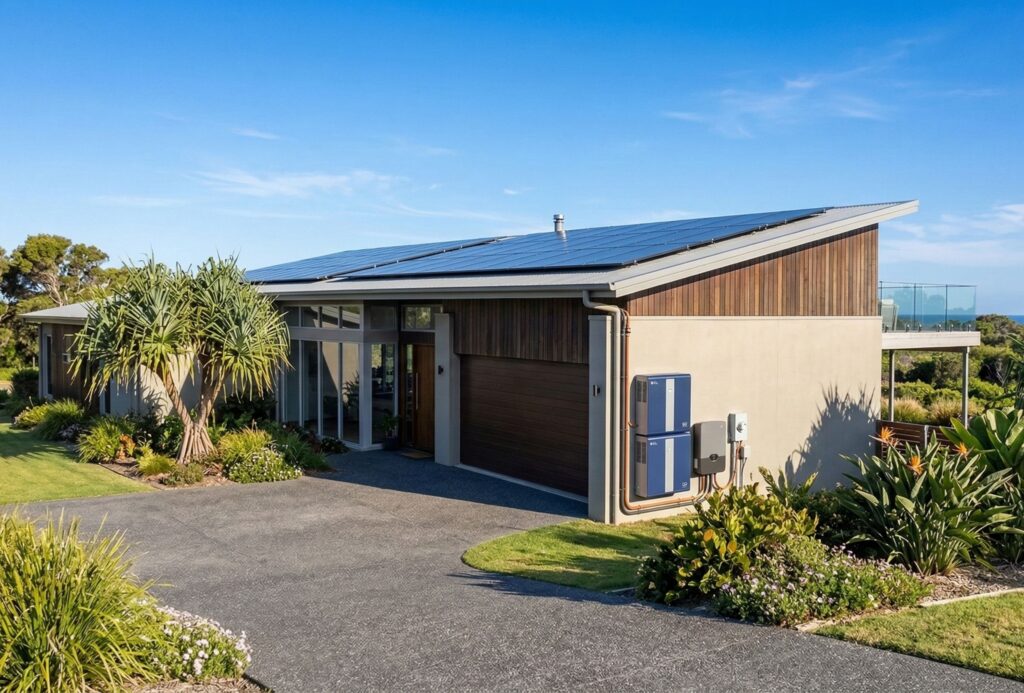
Here on the Sunshine Coast, our weather makes a strong case for battery storage. Frequent storms can lead to power outages, and having solar panels with battery backup provides essential energy independence and peace of mind. Furthermore, extreme heat can reduce the efficiency of solar panels. A battery allows you to store energy generated during cooler, more efficient parts of the day for use during peak heat, making sure your system is always working for you. This makes a solar battery worth it not just for savings, but for reliability.
Conclusion
The choice between a solar battery and relying on low feed-in tariff rates has become increasingly clear. For most Sunshine Coast homeowners, investing in solar energy storage offers a stronger and financially rewarding path to energy independence — a finding supported by Stanford University research showing that Most U.S. households can save money and weather blackouts with solar plus storage. By maximising solar self-consumption, you shield yourself from rising electricity prices and gain control over your energy future. When you partner with Sunshine Coast Projects & Electrical, you gain more than just an installation. You get a trusted local expert committed to providing transparent financial analysis, seamless incentive management, and a custom solution that guarantees your move to solar energy self-sufficiency is a sound one.
Ready to see what a solar battery could save you? Contact Sunshine Coast Projects & Electrical today for a personalised assessment and a free, no-obligation quote.
FAQs
Question: Is A Solar Battery Really Worth It On The Sunshine Coast?
Yes, a solar battery is increasingly worth it on the Sunshine Coast, especially with rising electricity prices and low feed-in tariff rates. It allows you to maximise solar self-consumption, provides solar panels with battery backup during our storm season, and you can benefit from Queensland-specific battery incentives. Sunshine Coast Projects & Electrical offers custom advice on your solar battery return on investment.
Question: What Is The Typical Solar Battery Payback Period For A Home System?
The solar battery payback period can vary, but it generally ranges from 5 to 12 years. This timeframe improves significantly if you are on a Time-of-Use tariff and take advantage of government rebates. Key factors include the solar battery price, the size of your system, and your household’s electricity usage. Sunshine Coast Projects & Electrical can provide a personalised solar battery return on investment calculation for your home.
Ready to Get More Value From Your Solar Power?
⚡ Book a Solar Battery Assessment
Find out if a solar battery system makes financial sense for your Sunshine Coast home. Our licensed electricians will review your current solar setup and energy usage.
⚡ Request a Free Solar Battery Quote
Get a clear, no-obligation quote for solar battery installation tailored to your home and energy needs.
⚡ Upgrade Your Solar System for Greater Savings
Already have solar panels? Adding battery storage can help you maximise solar self-consumption and reduce reliance on the grid.
⚡ Speak With a Sunshine Coast Solar Energy Specialist
Have questions about feed-in tariffs, battery incentives, or installation costs? Our experienced team is here to help.