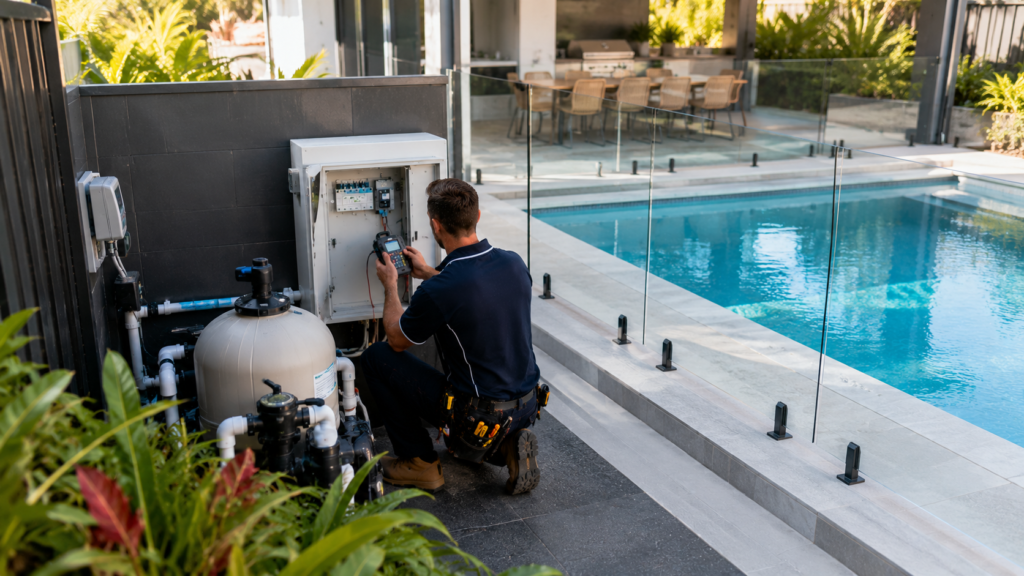
Pool & Spa Electrical Safety starts with compliant wiring, RCD safety switches, correct earthing and regular inspections to prevent faults around water from becoming dangerous electric shocks. These essential safety measures disconnect power quickly when current leaks, keep your pool or spa compliant with Queensland regulations, and help identify corrosion or damaged equipment before it becomes a serious hazard.
For a Sunshine Coast backyard pool to meet Queensland electrical requirements, you need RCD protection on all pool and spa circuits, correct earthing and equipotential bonding, weatherproof outdoor fittings, and testing by a licensed electrician. Regular inspections by a local expert such as Sunshine Coast Electrician help ensure your installation continues to operate safely as equipment ages.
This guide explains Pool & Spa Electrical Safety in clear, practical terms for Queensland homeowners. You’ll learn why electricity around water is so dangerous, what the Wiring Rules require, how RCDs, bonding and earthing work, the most common compliance issues, and when it’s time to call a Sunshine Coast electrician for an inspection or emergency repair.
A few key points sum up how Queensland pool owners keep electricity and water from becoming a bad mix. These takeaways help time‑poor owners quickly see where their pool might fall short.
Pool & Spa Electrical Safety Essentials
-
RCD protection on every pool and spa circuit is non‑negotiable near water. Safety switches sharply cut shock risk by disconnecting power if current leaks through a person. According to the Queensland Government Electrical Safety Office, most domestic RCDs trip at 30 milliamps. That small figure still saves lives around wet areas.
-
Queensland and Australian Standards such as AS/NZS 3000 and AS 1926 set the rules for pool electrical work. These cover clearances from water, RCD use, bonding, earthing and approved equipment. Sunshine Coast Electrician designs and tests pool installations against these documents so owners are not guessing about compliance.
-
Earthing and equipotential bonding link metal ladders, fences, pump casings and reinforcing steel together and to earth. This stops dangerous voltage differences between surfaces people touch while wet. Missing or corroded bonding is a common problem in older pools. A licensed electrician checks these links during a safety inspection.
-
Red flags include tingling in the water, flickering lights, frequent RCD tripping, visible corrosion or cracked outlets near the pool. Any of these signs call for urgent testing. Sunshine Coast Electrician provides pool electrical inspections, RCD testing and switchboard upgrades across the Sunshine Coast when owners see these issues.
Why Electricity Around Pools And Spas Is So Dangerous
Electricity around pools and spas is especially hazardous because water, bare skin and metalwork sit side by side. That mix means even a small fault can send current through a swimmer or someone standing on wet pavers. Understanding these risks explains why RCDs, bonding and inspections are not optional extras.
According to the US Consumer Product Safety Commission, at least 60 electrocutions and nearly 50 serious electrical shocks have occurred in and around pools and spas since 1990. The same risk patterns apply to Australian pools, especially in storm‑prone regions like the Sunshine Coast where equipment sees heavy weather and salt air. When wiring is old, damaged or installed by an unlicensed person, the chance of a serious incident rises sharply.
How Electricity Behaves In Pool And Spa Environments
Pool and spa water contains dissolved salts, minerals and treatment chemicals, which makes it a good conductor of electricity — a factor examined in depth in studies on Thermal Water-Supplied Swimming Pools: their disinfection challenges and emerging contaminants, which also highlight how water chemistry affects electrical conductivity and safety. Pure distilled water does not carry current well, but real pool water behaves very differently. Once a fault lets electricity reach the water, current can spread through the pool shell, reinforcing steel and any connected metal parts.
The human body is also conductive, particularly when skin is wet. When a person in the water touches a live metal ladder or swims through a charged area, they can become part of the circuit between active conductors and earth. That current can pass through vital organs even at household voltages. Research cited by the Electrical Safety Foundation International shows that currents as low as a few milliamps can interfere with muscle control.
Current does not always take the shortest path, it takes all available paths. So a damaged cable, a leaking pool light niche or a faulty pump can energise metal handrails, fences or the water surface at the same time. Someone in bare feet on wet pavers or stepping off a metal ladder into the water is then exposed to both touch and step voltages.
Common Pool & Spa Electrical Hazards On The Sunshine Coast
Sunshine Coast pools and spas face harsh conditions from UV, salt air and summer storms. Over time these conditions break down insulation on flex leads, seals on underwater lights and gaskets on outdoor outlets. Corroded terminals inside junction boxes and pumps can loosen, creating hot joints or exposed live parts.
Common hazards include:
-
DIY or unlicensed wiring for extra garden lights, pumps or outdoor power points, often using makeshift cabling, wrong conduit or no RCD protection at the switchboard. According to Standards Australia, all fixed wiring must follow AS/NZS 3000, which DIY work often ignores.
-
Overhead power lines near pools, which become a real worry when people use telescopic cleaning poles, shade umbrellas or inflatable toys.
-
Misuse of extension leads and portable speakers or fridges right on the pool edge, especially if leads run across wet paving or through puddles.
-
Ageing switchboards that were never designed to supply modern pumps, chlorinators, heaters and lighting loads.
What Are The Pool Electrical Safety Requirements In Queensland And Australia?
Pool electrical safety requirements in Queensland flow from national wiring standards and state electrical laws. Together they set the minimum rules for how pool and spa circuits are designed, installed and maintained. Sunshine Coast homeowners, landlords and body corporates must follow these rules and leave fixed wiring to licensed electricians.
These requirements cover everything from RCD protection and cable types to clearances from the water and bonding of metalwork. They apply whether the pool is at a small backyard in Maroochydore, a holiday unit in Noosa or a resort in Caloundra. Sunshine Coast Electrician works within this framework every day, helping owners line up with both AS/NZS 3000 and Queensland legislation.
Key Standards, Laws And Who Can Do The Work
The main technical document for pool wiring is AS/NZS 3000, often called the Wiring Rules. It has special clauses for swimming pools and spas that address zoning, RCD requirements, clearances and bonding arrangements. Lighting equipment must also comply with AS/NZS 60598, while the AS 1926 series covers general pool safety, mainly barriers and access.
Queensland’s Electrical Safety Act and Electrical Safety Regulation place legal duties on owners and electrical contractors to keep installations safe. According to the Queensland Government Electrical Safety Office, all fixed electrical work must be performed and tested by a licensed electrician. That includes wiring pumps, chlorinators, spa heaters and pool lights.
Local councils play a part during new builds and major upgrades by checking plans, issuing permits and sometimes requiring inspections. However, they do not replace the need for proper electrical testing and certification. Sunshine Coast Electrician provides compliance documentation after pool electrical work so owners have records for insurance and property sales.
“If it’s fixed electrical work, it’s not a DIY job. In Queensland, it must be done by a licensed electrician.”
— Queensland Government Electrical Safety Office
Pool Safety Regulations, Zones And Clearances Around Water
Australian standards divide the area around pools and spas into zones that restrict where equipment can go:
-
Zone 0 – the water itself and internal surfaces.
-
Zone 1 – just above and beside the water.
-
Zone 2 – extending a little further out from the edge.
Each zone has different rules about what fittings and voltages are allowed.
Key points for homeowners:
-
Ordinary power points and light fittings are not allowed right on the water’s edge. They must sit outside the inner zones, usually more than 1.25 to 2 metres from the pool edge depending on the layout.
-
The Electrical Safety Foundation International suggests keeping portable devices at least 3 metres from water, which lines up well with Australian practice.
-
Pumps, chlorinators and switchgear are usually located in a dedicated plant area away from splashing and casual access.
Red flags include regular 230 V sockets close to the pool, standard light fittings directly above water, or festoon lights strung over the pool. Any of these signs mean it is time to get a licensed Sunshine Coast electrician to review the setup.
How RCD Protection, Earthing And Equipotential Bonding Keep Your Pool Safe
RCDs, earthing and equipotential bonding form the safety backbone of any compliant pool or spa installation. Together they reduce the size and length of electric shocks when faults happen. Sunshine Coast homes that miss one of these layers carry a much higher risk of serious injury around pools.
RCDs constantly watch the balance of current between active and neutral conductors, while earthing and bonding give fault current a low resistance path back to the switchboard. When everything works together, a fault pulls enough current to trip protective devices quickly. Sunshine Coast Electrician focuses heavily on these elements when inspecting older pools and spas.
Where RCDs Are Required Around Pools And Spas
An RCD, often called a safety switch, compares live and neutral current and trips when it detects leakage to earth. Most household RCDs in Australia operate at 30 milliamps, a level chosen to reduce serious heart effects while still allowing normal appliance use (Queensland Government Electrical Safety Office). Around pools that fast trip can mean the difference between a scare and a fatality.
In practice, circuits supplying:
-
pool pumps and chlorinators
-
spa blowers and heaters
-
control panels and timers
-
all underwater or poolside lights
-
outdoor power points in pool and entertaining areas
should be RCD‑protected. Older switchboards on the Sunshine Coast sometimes only protect a few circuits, leaving others exposed.
Portable plug‑in RCDs add some protection for temporary tools or cleaners, but they are not a substitute for fixed RCDs at the board. Homeowners should press the “TEST” button on each RCD every few months, as many regulators recommend. Sunshine Coast Electrician offers professional RCD testing, fault diagnosis, switchboard upgrades and safety switch installations so every pool‑related circuit has proper coverage.
Pool Bonding Requirements And Earthing Basics
Earthing connects exposed metal parts such as pump casings, switchboard enclosures and light fittings to earth conductors back at the board. If a fault makes a metal case live, the earthing conductor carries current away and helps protective devices trip. Without good earthing, a person can become that path instead.
Equipotential bonding links separate pieces of metalwork around the pool so they sit at the same voltage, and the Design and Specification of modular pool systems confirms that bonding conductor sizing and attachment points must be documented and verified by qualified contractors. Typical bonded items include:
-
stainless ladders and handrails
-
diving boards and metal pool furniture fixed in place
-
nearby metal fences and balustrades
-
accessible reinforcing steel
-
metallic water pipes and pool railings
This linking reduces the chance that a swimmer touches two surfaces at very different voltages.
Older pools on the Sunshine Coast sometimes have missing, corroded or undocumented bonding. During a pool electrical safety inspection, a licensed electrician checks accessible bonding links, earth connections and test readings. Sunshine Coast Electrician includes these checks in its inspections so owners know whether hidden bonding issues need repair or upgrade.
Pool Lighting, Pumps, Outdoor Power And Switchboards: Common Compliance Issues
Most electrical faults that affect pools and spas start at familiar places such as lights, pumps, outdoor outlets or the main switchboard. When these components age, corrode or get modified without proper design, they can energise water or nearby metal. Understanding typical problems helps Sunshine Coast owners spot issues early.
Coastal weather, stormwater and pool chemicals are tough on electrical gear. Seals dry out, conduits crack and terminals work loose. According to the Electrical Safety Foundation International, damaged or poorly protected outdoor fittings significantly raise shock risk. Sunshine Coast Electrician often finds that a few targeted upgrades in these areas sharply improve safety.
Pool Lights, Pumps And Spa Equipment
Modern pool and spa lights are usually low‑voltage LED units supplied through an isolating transformer. Even so, the transformer and primary circuits still carry mains voltage. If seals around the light niche fail or cables deteriorate, water can reach live parts. Flickering lights, frequent globe failures or moisture inside lenses are warning signs that should not be ignored.
Pumps, heaters and chlorinators run for many hours and often live in cramped plant enclosures, and a Comparative Analysis of Design solutions in swimming pool facilities shows that matching circuit design to actual consumption is essential for safe, efficient operation. Safe setups typically include:
-
dedicated RCD‑protected circuits
-
local isolator switches
-
correctly sized cables supported in conduit or trays
-
equipment set above potential flood levels and away from direct spray
According to Standards Australia, poor mechanical support and wrong cable selection are common causes of faults.
Unapproved or non‑pool‑rated equipment, such as cheap garden lights or indoor heaters used near the water, adds further risk. DIY connections using extension leads or makeshift junctions are a particular problem. Sunshine Coast Electrician replaces these weak links with pool‑rated gear and proper terminations as part of pool electrical services and compliance upgrade work.
Outdoor Power Points, Cables And Switchboards
Outdoor power points and switches around a pool need suitable IP ratings and in‑use covers that keep them dry even when a plug is inserted, consistent with the IEEE Guide for Installation standards that govern circuit integrity in wet and chemically aggressive outdoor environments. Cracked, discoloured or loose covers allow water to reach contacts, especially during storms. The Electrical Safety Foundation International reminds homeowners that outdoor outlets must stay dry to remain safe.
Safe outdoor electrical installations around pools usually feature:
-
weatherproof power points with intact gaskets and lids
-
UV‑resistant conduit for exposed cabling
-
correctly buried cables where they cross gardens or lawns
-
clear separation between low‑voltage control wiring and mains circuits
Leads draped along fences or across paths invite mechanical damage from mowers, tools and foot traffic. Extension leads and power boards are suitable only for short‑term tasks, never as permanent wiring to pumps or lights.
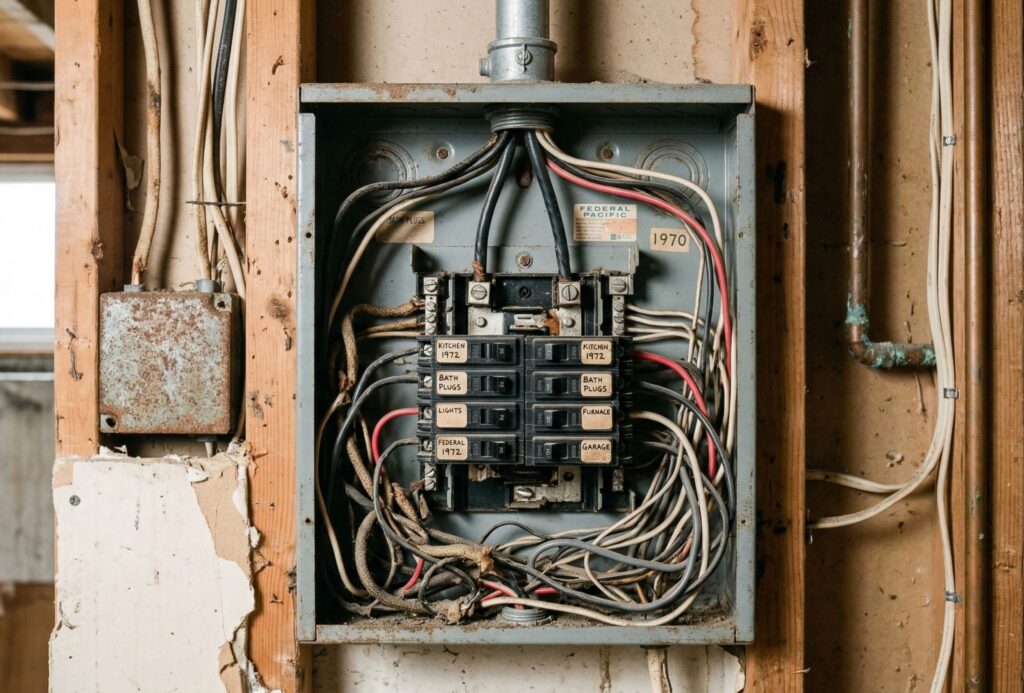
Many older Sunshine Coast switchboards lack enough space or capacity for modern RCDs and additional pool loads. Common issues include:
-
no RCDs on pool circuits
-
mixed lighting and power on a single breaker
-
fragile ceramic fuses
-
unclear or missing circuit labelling
Sunshine Coast Electrician carries out switchboard upgrades, adds labelled RCDs and organises outdoor installations so pool areas stay safe and compliant with current Queensland expectations.
Maintenance, Inspections And Warning Signs Pool Owners Should Never Ignore
Electrical safety around pools is not a set‑and‑forget task. Equipment ages, seals fail and standards change, so ongoing checks matter just as much as a compliant original installation. Sunshine Coast owners who follow a simple maintenance routine reduce both shock risk and unexpected breakdowns.
Regular inspections by a licensed electrician give a deeper picture of cable condition, RCD performance and bonding integrity. Industry guidance cited by Energy Queensland encourages periodic testing of safety switches and outdoor circuits, especially in coastal areas. Sunshine Coast Electrician offers scheduled pool and spa electrical safety inspections for homes, rentals and commercial properties across the Sunshine Coast and nearby hinterland.
“Don’t wait for a tingle in the water to tell you something is wrong. Planned inspections cost far less than an emergency.”
— Charlie Doblo, Master Electrician, Sunshine Coast Electrician
Practical Maintenance Tips And Owner Checks
Homeowners do not need to touch wiring to support pool and spa electrical safety. Simple visual checks and safe habits go a long way. Several times a year:
-
Walk around the pool area and look closely at outlets, switches, lights and equipment housings for cracks, rust, discolouration or loose covers.
-
Inspect cords for flattened sections, cuts or exposed conductors and replace damaged leads instead of taping them up.
-
Keep all plugged‑in devices and cords at least 3 metres from the pool edge, a distance also recommended by the Electrical Safety Foundation International.
-
Prefer battery speakers, lanterns and toys instead of mains‑powered ones near the water.
-
Make sure the pump and filter area drains well and does not flood in heavy rain.
-
Keep vegetation, pool chemicals and clutter away from electrical gear.
Test RCDs by pressing the “TEST” button every few months; the handle should flick off instantly. If any device does not trip, treat that as urgent. Avoid operating switches or plugging things in when hands or feet are wet, and avoid swimming during thunderstorms.
Booking a periodic pool and spa electrical safety inspection with Sunshine Coast Electrician ties these habits together with professional testing, including RCD trip‑time checks and visual inspection of switchboards, bonding and outdoor outlets.
Warning Signs Of Electrical Faults Around Pools And Spas
Some early clues suggest electrical faults around a pool or spa. Act fast if you notice:
-
tingling, pins‑and‑needles or a “buzzing” feeling when in the water or touching metal ladders or rails
-
frequent or unexplained RCD or breaker tripping when pumps, heaters or lights run
-
flickering or dim pool lights, or water visible inside light lenses
-
moisture, rust stains or green corrosion in junction boxes or on terminals
-
burning smells, unusual noises or hot enclosures near pumps, heaters or switchboards
If any of these signs appear:
-
Stop using the pool or spa.
-
Keep everyone out of the water.
-
Switch off power to pool circuits at the board if it is safe to reach.
-
Call a licensed electrician.
Sunshine Coast Electrician responds with fault‑finding, emergency repairs and compliance inspections so owners can return their pool to safe use.
Myth Vs Fact: Common Misconceptions About Pool & Spa Electrical Safety
Misunderstandings about pool and spa electrics often lead to risky shortcuts or delayed repairs. Some owners assume a single safety switch makes any wiring safe, or that a pool that has “always been fine” does not need inspection. Clearing up these myths supports better decisions and safer pools.
Only licensed electricians working to current standards can accurately assess whether a Sunshine Coast pool installation is safe and compliant. Sunshine Coast Electrician regularly finds hidden problems behind apparently normal operation, especially in older pools and spas. The next section sets out common myths, facts and safer actions.
Pool & Spa Electrical Safety Myths Debunked
Several dangerous myths keep turning up around Sunshine Coast pools and spas.
-
Myth: A safety switch alone makes any wiring near the pool safe.
Fact: RCDs act as a last line of defence, not a fix for poor wiring, missing bonding or rusted equipment.
Safer action: Combine RCD protection with compliant wiring, bonding checks and regular inspections by a licensed electrician. -
Myth: Low‑voltage pool lights cannot hurt anyone.
Fact: Water‑damaged lights can still involve mains voltage parts, especially around transformers and junctions.
Safer action: Replace old or leaking lights with pool‑rated LED kits and have all light circuits tested by an electrician. -
Myth: A pool that has been fine for years must be safe.
Fact: Corrosion, UV damage and changing standards mean older installations often fall short without obvious symptoms.
Safer action: Arrange a one‑off electrical safety inspection, especially for pools older than ten to fifteen years. -
Myth: Running a quick power point or extra light for the spa is okay as DIY.
Fact: Queensland law bans unlicensed people from doing fixed electrical work.
Safer action: Call a licensed contractor such as Sunshine Coast Electrician for any new wiring, circuit changes or switchboard work.
Here is a quick comparison table to summarise these points.
| Myth | Fact | Safer Action To Take |
|---|---|---|
| A safety switch makes any pool wiring safe | RCDs cannot fix bad wiring, missing bonding or faulty gear | Combine RCDs with compliant wiring and scheduled electrical safety inspections |
| Low‑voltage pool lights are always harmless | Water ingress and faulty transformers can introduce mains voltage into fittings | Replace old lights with pool‑rated LED kits and have circuits checked by a licensed electrician |
| The pool has been fine for years, so it must be okay | Ageing, corrosion and new standards often leave older pools below current expectations | Book a pool electrical safety check, especially on pools older than ten to fifteen years |
| DIY wiring for a spa or pool power point is acceptable if done neatly | Queensland law requires licensed electricians for all fixed electrical work | Use a licensed electrician such as Sunshine Coast Electrician for any pool‑related wiring or upgrades |
To Sum Up
Pool and spa electrical safety on the Sunshine Coast depends on more than just a few safety switches. It relies on:
-
compliant design to AS/NZS 3000
-
correct RCD protection on all relevant circuits
-
solid earthing and equipotential bonding
-
outdoor electrical installations that can handle heat, storms and salt air
When those pieces work together, the risk of electric shock around water drops sharply.
Queensland laws make owners responsible for keeping pool electrical installations safe and for using licensed electricians for all fixed work. Regular inspections catch corrosion, damaged seals, loose terminations and outdated switchboards before they lead to shock, fire or equipment failure. According to the US Consumer Product Safety Commission, many serious pool electrocution incidents link back to preventable faults.
Sunshine Coast Electrician, led by Accredited Master Electrician Charlie Doblo, brings over twenty years of experience to this type of work. The team provides electrical safety inspections, RCD testing, switchboard upgrades, outdoor electrical installations and detailed pool and spa electrical services across the Sunshine Coast and surrounding areas.
If you own or manage a pool or spa, now is the ideal time to act. Book a professional pool and spa electrical safety inspection with Sunshine Coast Electrician to keep your installation safe, compliant and enjoyable for family and guests all year round.
Book a Professional Pool & Spa Electrical Safety Inspection
Your pool or spa should be a place to relax—not somewhere you have to worry about hidden electrical hazards. Whether you’re installing a new pool, upgrading equipment, experiencing nuisance RCD trips or simply want peace of mind, a professional electrical safety inspection is the best way to ensure your installation is safe and compliant.
At Sunshine Coast Electrician, our licensed electricians specialise in Pool & Spa Electrical Safety, including RCD testing, switchboard upgrades, equipotential bonding, pool lighting, pumps, chlorinators, spa equipment and outdoor electrical installations. We inspect your entire system to ensure it complies with current Queensland regulations and Australian Standards while identifying potential problems before they become expensive—or dangerous.
Contact Sunshine Coast Electrician today for a free, no-obligation quote and let our experienced team help keep your pool or spa safe, compliant and ready for your family to enjoy all year round.
Frequently Asked Questions
Do all swimming pool and spa circuits need to be protected by a safety switch (RCD)?
Yes. Pool and spa electrical circuits should be protected by appropriately installed safety switches (RCDs) in accordance with current Australian Standards and Queensland electrical requirements. This generally includes pumps, chlorinators, heaters, lighting and outdoor power outlets associated with the pool or spa.
If your property has an older switchboard, a licensed electrician can inspect the installation and recommend any upgrades needed to improve safety and compliance.
How often should a pool or spa electrical system be professionally inspected?
Although there is no fixed inspection interval for every residential pool, regular inspections are recommended, particularly for older pools, coastal properties and installations exposed to harsh weather.
An inspection is also advisable after major storms, renovations, equipment replacements or if you notice unusual electrical behaviour such as nuisance tripping, flickering lights or corrosion.
What are the warning signs that my pool lights or pump may be electrically unsafe?
Common warning signs include flickering or dim pool lights, condensation inside light fittings, repeated safety switch trips, unusual noises, burning smells, visible corrosion, or tingling sensations when touching metal components around the pool.
If any of these symptoms occur, stop using the pool, isolate the affected equipment if it is safe to do so and arrange an inspection by a licensed electrician as soon as possible.
Can I use extension leads or power boards around my pool or spa?
Extension leads and power boards should never be used as a permanent power supply around pools or spas. Water, damaged insulation and accidental immersion create a significant electrical hazard.
If temporary use is unavoidable, they should only be connected to RCD-protected outlets, kept well away from the water and removed immediately after use. Installing permanent weatherproof outdoor power points is the safest long-term solution.
What is equipotential bonding and why is it important around swimming pools?
Equipotential bonding connects accessible metal components around the pool so they remain at the same electrical potential. This greatly reduces the risk of dangerous touch voltages developing between ladders, handrails, reinforcing steel, fences and other conductive parts.
Older pools may have missing or deteriorated bonding, making a professional electrical inspection worthwhile to verify the installation remains compliant and safe.
Is it safe to swim if my safety switch keeps tripping when the pool equipment is running?
No. A repeatedly tripping safety switch indicates an electrical fault that requires investigation. Continuing to reset the switch without identifying the cause could expose swimmers to unnecessary risk.
Turn off the affected equipment, keep everyone out of the water and contact a licensed electrician to diagnose and repair the fault before using the pool again.
Do I need a pool safety certificate for electrical compliance?
Pool safety certificates generally relate to fencing and barrier compliance rather than the electrical installation itself. Electrical compliance is assessed under Queensland electrical legislation and Australian Standards.
If you're buying, selling or upgrading a property, an electrical inspection can provide confidence that your pool or spa installation remains safe and compliant.
When should I call an emergency electrician for a pool or spa electrical problem?
Contact an emergency electrician immediately if anyone experiences an electric shock or tingling sensation, if you notice smoke, burning smells, damaged electrical equipment, water entering switchboards or repeated safety switch tripping that cannot be safely resolved.
Keep everyone away from the pool or spa, isolate the power if it is safe to do so, and seek emergency assistance if anyone has been injured.