Choosing the correct kilowatt (kW) capacity is the key to a right size air conditioner that keeps your Sunshine Coast home comfortable while keeping power bills under control. A quick rule of thumb is to measure the room, multiply the floor area in square metres by about 120–160 watts, then divide by 1000 to get a starting kW figure, adjusting upward for high ceilings or large west‑facing windows.
That quick calculation helps, but it is only the first step. Sunshine Coast homes from Noosa to Caloundra vary in insulation, roof colour, window glazing and layout, so the same room size can need very different capacities. Getting the numbers right means steadier comfort, quieter operation and lower energy use over the life of the system.
In this guide you will see how kilowatts, room size, ceiling height, windows, humidity, insulation and electrical capacity all link together. You will get a room size to kW chart, common sizing mistakes, and clear advice on when to call Sunshine Coast Electrician for professional advice, split system air conditioning installation and replacement.
Key Takeaways
If you only have a minute, these points cover the most useful lessons from this kW sizing guide. They focus on choosing a right size air conditioner for Sunshine Coast homes without wasting money or comfort.
-
Why correct kW sizing matters more than people expect
Correct capacity means your system runs in steady, efficient cycles instead of constantly starting and stopping. This protects your comfort in heatwaves and avoids cold, clammy rooms in humid weather. It also helps keep electricity costs and repair bills down over the long term. -
Key factors that change your required air conditioner size
Floor area and ceiling height are only the beginning. Insulation, roof colour, window size, room orientation, number of people, climate and how you use each space all change the kW required. Sunshine Coast humidity and strong afternoon sun often push systems toward the upper end of standard capacity ranges. -
When a simple room calculator is not enough
Online tools and basic watts‑per‑square‑metre rules ignore many real world details. Larger open plan areas, ducted systems, homes with lots of glass and properties with EV chargers or solar usually need a proper heat‑load calculation. That is where Sunshine Coast Electrician gives clear, site specific advice and air conditioning design.
What Does “Right Size” Air Conditioner Mean In kW?
A right size air conditioner in kW is one whose cooling and heating output closely matches the actual heat load of your home. Instead of guessing based only on room area, you choose a capacity that suits your construction, orientation, insulation and Sunshine Coast climate so the unit can run smoothly and efficiently.
When the capacity is well matched, the system holds a stable temperature without constant on and off cycling. You feel comfortable, humidity stays under control, and the unit draws no more power than needed. According to Energy.gov.au, heating and cooling can account for around 40 percent of household energy use, so getting the capacity right has a big impact on bills and emissions.
“The most efficient air conditioner is one that is sized correctly and installed correctly.”
— Adapted from guidance by Energy.gov.au
Understanding kW, Cooling Capacity And Efficiency Labels
Kilowatts in this context describe how much cooling or heating the unit can deliver to your rooms, not how much electricity it uses. A 2.5 kW split system is common for a small bedroom, while 7 kW or more is typical for large open plan living areas. Ducted systems for whole homes often range from about 10 to 20 kW.
The electrical draw is shown separately as input power. Thanks to heat pump technology, a 7 kW cooling unit might only use around 2 kW of electrical power when running steadily. Efficiency numbers such as EER / AEER for cooling and COP / ACOP for heating express how much output you get for each kilowatt of input.
Australian star ratings and Zoned Energy Rating Labels, published by Energy Rating, compare models so you can see which one uses less energy for the same capacity. On the Sunshine Coast, choosing a high‑efficiency inverter system in the correct size has a direct effect on running costs and comfort.
Why The Sunshine Coast Climate Changes How You Size An Air Conditioner
On the Sunshine Coast, warm temperatures combine with high humidity for much of summer. That means your system must remove moisture as well as heat, otherwise rooms feel cool but sticky. Oversized units often hit the set temperature quickly then switch off, which cuts short the time needed to pull water from the air.
Local conditions also include:
-
Strong sun on west and north facing glass
-
Hot roof spaces, especially under dark metal roofs
-
Salty coastal air from places like Mooloolaba and Maroochydore
The Bureau of Meteorology reports that average summer afternoon humidity along the Queensland coast often sits above 60 percent, which raises the latent load your system must handle. Sunshine Coast Electrician uses local climate assumptions rather than generic Australian averages when giving kW recommendations, so your system deals properly with both heat and humidity.
How To Size An Air Conditioner For A Room Or Home
Sizing an air conditioner for a room or whole home starts with a simple area‑based estimate, then refines that number for how your building actually behaves. You begin with floor area and a watts‑per‑square‑metre guide, adjust for ceiling height, windows, insulation, occupancy and usage, then confirm the capacity with a professional if the space is complex.
A basic starting method is:
-
Measure the room’s length and width, then calculate area in m².
-
Multiply by 120–160 W per m² for a standard 2.4 m insulated room.
-
Divide by 1000 to convert to kW.
-
Adjust up for poor insulation, high ceilings, large west‑facing glass or very hot roof spaces.
Key Factors That Affect The Correct Air Conditioner Size
Several building and lifestyle factors change how many kilowatts you really need in a Sunshine Coast home.
-
Room size and ceiling height
Floor area in square metres gives the first rough figure. Taller ceilings increase the volume of air that must be cooled. High or raked ceilings often mean stepping up to the next capacity range, or using multiple indoor units in large spaces. -
Insulation and building envelope
Good ceiling and wall insulation, lighter roof colours and well‑sealed doors and windows slow heat flow from the roof and outside air. Dark metal roofs, uninsulated walls and air gaps around doors or downlights all raise the cooling load. Better insulation can let you choose a slightly smaller system without losing comfort. -
Window size and orientation
Large north or west facing windows and sliding doors bring in a lot of afternoon heat. Single glazing without external shading usually needs more kW than shaded or double glazed glass. Adding awnings, external screens or quality blinds can reduce solar gain enough to stay within a lower capacity band. -
Internal heat gains and room use
People, fridges, ovens, computers and big TVs all give off heat. A home office full of equipment or a busy open plan kitchen needs more capacity than a quiet spare bedroom of the same size. Lighting type matters too, with older halogen downlights adding more heat than modern LEDs. -
Sunshine Coast climate and humidity
In this region, systems must run long enough to remove moisture as well as lower temperature. A right size air conditioner will run steady cycles that dry the air, instead of short bursts that leave the space cool but clammy. -
Occupancy and lifestyle
More people mean more body heat, more doors opening and more internal loads. Spaces that host regular gatherings, kids, home workouts or cooking often require extra capacity compared with seldom‑used rooms. -
Home design and airflow
Open plan layouts, stairwells, voids and connecting hallways influence how air moves. A single indoor unit trying to serve several rooms through doorways often needs careful placement or support from ceiling fans to distribute cool air effectively.
When Do You Need A Professional Heat‑Load Calculation?
Simple calculators are helpful for small, straightforward rooms, but they do not account for many real details. You should consider a professional heat‑load calculation when you have:
-
Large open plan living areas
-
High, raked or cathedral ceilings
-
Multiple large sliding doors or extensive glass
-
Poor insulation or very dark roofs
-
Whole‑of‑house ducted systems or multi split designs
-
Homes with solar, EV chargers, pool pumps or other big electrical loads
A professional heat‑load calculation looks at each room’s dimensions, construction type, insulation level, window area and orientation, shading, occupancy and usage pattern, then adds them together properly. Sunshine Coast Electrician uses manufacturer design guides and industry methods so your chosen capacity fits your home and helps avoid expensive guesswork or disappointing performance.
Room Size Vs kW Air Conditioner Sizing Guide (Sunshine Coast)
A room size guide helps answer the common question of what size air conditioner is needed for a typical Sunshine Coast room. The ranges below assume average insulation, standard 2.4 to 2.6 metre ceilings and normal residential use. Poor insulation, lots of glass or strong afternoon sun usually push you toward the top of each kW band.
Practical Room Size To kW Guide And Examples
Use this guide as a starting point, not a final design. It suits most split system air conditioners in modern Sunshine Coast homes.
| Room Type | Approx Area m² | Typical Ceiling Height | Recommended kW Range | Notes |
|---|---|---|---|---|
| Small bedroom or office | 8–12 | 2.4 m | 2.0–2.5 kW | Use upper range if upstairs, poorly insulated or west facing. |
| Medium bedroom | 12–16 | 2.4–2.7 m | 2.5–3.5 kW | Add capacity for large windows or sliding doors. |
| Master with ensuite | 16–22 | 2.7 m | 3.5–4.0 kW | Extra area from robe or ensuite may need higher end of range. |
| Small living room | 20–30 | 2.4–2.7 m | 3.5–5.0 kW | Open to kitchen or hallway usually needs more capacity. |
| Open plan living | 35–50 | 2.7–3.0 m | 5.0–7.1 kW plus | Very large or high ceiling spaces may need multiple indoor units. |
Manufacturers such as Daikin publish similar capacity charts that place a 2.5 kW split in the small bedroom range and a 7.1 kW split in the larger living area range. On the Sunshine Coast, rooms with poor insulation, western exposure or extensive glass usually sit at the top of these bands.
Energy‑smart measures like shading, insulation upgrades, lighter roof colours and ceiling fans can all help you stay in the lower part of a range, improving comfort and reducing running costs.
Split System Vs Ducted How Sizing Differs
Single split systems are sized for one room or zone, and any cooling that drifts into nearby rooms is treated as a bonus, not a design feature. Each indoor head still needs to match its own room’s volume, glazing, insulation and use, even in a multi split system that shares one outdoor unit.
Ducted systems work a little differently, because one central unit feeds a group of rooms through ceiling ducts and zones. The main unit is sized for the highest likely combination of zones running together, not every outlet at full load at the same time. Factors such as:
-
Duct length and friction losses
-
Roof space temperatures
-
Return air grille size and location
-
Supply outlet placement
all affect how much of the unit’s rated kW actually reaches each room. This is why Sunshine Coast Electrician always considers duct layout, zoning and airflow alongside capacity when designing or replacing ducted air conditioning.
What Happens If Your Air Conditioner Is Too Small Or Too Big?
Getting the capacity wrong can make your home less comfortable and more expensive to run. An air conditioner too small for a room struggles during heatwaves, while an oversized unit brings its own problems with humidity, short cycling and upfront cost.
Risks Of Undersized Air Conditioners
An undersized system often runs at full power for long periods and still fails to reach your set temperature on hot, humid Sunshine Coast days. West facing living rooms and upstairs bedrooms suffer the most, staying stuffy even with the thermostat set low.
Key issues with undersized units include:
-
Constant hard running, leading to higher electricity use
-
Extra wear on compressors and fans, reducing lifespan
-
Poor humidity control if the coil does not reach low enough temperatures
-
More noise from both indoor and outdoor units
-
Less tolerance for future changes, such as renovations or window upgrades
If you later add more glass, change the use of a space or remove shade trees, the shortage in capacity becomes even more obvious. A professional assessment by Sunshine Coast Electrician can confirm whether your current unit is under‑capacity and suggest efficient upgrade paths.
Problems Caused By Oversized Air Conditioners
Going too big may sound safe, but it often creates a different set of issues. Oversized units cool the air very quickly, then shut off, only to restart again shortly after. This short cycling leads to temperature swings, disturbed sleep and more mechanical stress on compressors and electronics.
Because the system does not run for long, it removes less moisture, leaving rooms cool but clammy and increasing the risk of condensation and mould. Testing by Choice suggests that poorly sized air conditioners can use around 20 percent more energy than correctly matched systems, even at the same thermostat setting.
You also pay more upfront for:
-
The larger unit itself
-
Bigger electrical circuits and cabling
-
Possible switchboard or mains upgrades
This is why Sunshine Coast Electrician checks both capacity and electrical supply before recommending a size, balancing comfort, efficiency and installation costs.
How Inverter Technology, Efficiency And Electrical Capacity Influence Sizing
Inverter technology, energy efficiency and your home’s electrical limits all shape the right size for an air conditioner. Modern systems work best when their kilowatt rating suits the real load, so the compressor can run steadily instead of constantly switching on and off.
Oversizing not only affects comfort, it pushes up your maximum electrical demand. Large ducted units, multiple splits, EV chargers, pool pumps and hot water heat pumps all share the same supply. Sunshine Coast Electrician looks at the whole picture, so your air conditioning, solar and EV plans fit together sensibly.
Inverter Air Conditioners, Star Ratings And Running Costs
Inverter compressors vary their speed to match how much heating or cooling your rooms need at a given moment. Once the set temperature is reached, a right size inverter air conditioner can settle into a gentle, almost continuous run, using surprisingly little power while holding around 24–25 degrees with good humidity control. Fixed speed units tend to blast on and off, which wastes more energy.
According to tests reported by Choice, modern inverter models can use up to 30 percent less electricity than older fixed speed systems of similar capacity. Higher star ratings on the Zoned Energy Rating Label, especially in the warm humid zone that applies to the Sunshine Coast, point to lower running costs over the life of the unit.
When comparing two sizes, the key question is whether the smaller model can reliably meet your peak load. If it can, going larger rarely pays off once comfort, noise and dehumidification are considered.
Electrical Load, Solar, EVs And Right‑Sized AC
Cooling kilowatts and electrical kilowatts are linked through efficiency. A 7 kW split system might only draw around 2 kW once it has settled, but at start‑up or during extreme heat it can pull closer to its maximum input rating. Add a 7.2 kW single phase EV charger and other big appliances, and you can quickly approach the limits of an older switchboard.
The Clean Energy Council notes that many Australian homes now install solar systems of 6 to 10 kW to cover daytime loads such as air conditioning. Choosing a right size air conditioner keeps those loads realistic, so your solar and any future battery are more likely to handle the demand without frequent grid imports.
Sunshine Coast Electrician can:
-
Assess your existing switchboard and supply
-
Review current and planned solar capacity
-
Consider EV charging, hot water and pool equipment
-
Recommend air conditioner sizes that fit within a sensible electrical plan
This whole‑home view helps avoid unnecessary supply upgrades while still keeping your home comfortable and energy efficient.
Myths Vs Facts Choosing The Right Size AC Unit In Australia
There is plenty of backyard advice about air conditioner sizing, and much of it ignores local climate and proper design. Some tips sound reasonable at first but lead to higher bills, hot rooms or cold, damp indoor air. Sorting myths from facts helps you choose a right size air conditioner with confidence.
Common Sizing Myths Sunshine Coast Homeowners Should Ignore
Here are some of the most common myths heard around the Sunshine Coast, and the facts that replace them.
| Myth | Fact |
|---|---|
| Bigger will cool faster and save power | Large units cool quickly but cycle on and off, often using more energy and leaving humidity high. A matched capacity that runs steadily is usually cheaper. |
| One large split can cool the whole house if doors stay open | Air does not flow evenly through doorways and long halls. You end up with one cold room, warm bedrooms and a system that is larger than needed. |
| Matching the old system’s size is always fine | Previous installers may have guessed, and renovations, new windows or insulation changes alter loads. Modern inverter units can also be sized differently. |
| All air conditioner size calculators give the same answer | Online tools use different assumptions and rarely include Sunshine Coast humidity, glazing or roof colour. Local assessment gives a more reliable figure. |
| Star rating is all that matters | Efficiency helps, but an efficient unit that is badly sized still performs poorly and can cost more to run than a correctly sized mid‑range model. |
Tip from local tradies: “Spend the time on sizing before you spend the money on the unit. Fixing mistakes later is far more expensive.”
Why Working With A Local Professional Beats Guesswork
A local expert like Sunshine Coast Electrician works on homes across Buderim, Kawana, Noosa and surrounds, so patterns emerge that online charts miss. The team regularly sees how roof colour, insulation upgrades, renovations and window changes affect real‑world performance.
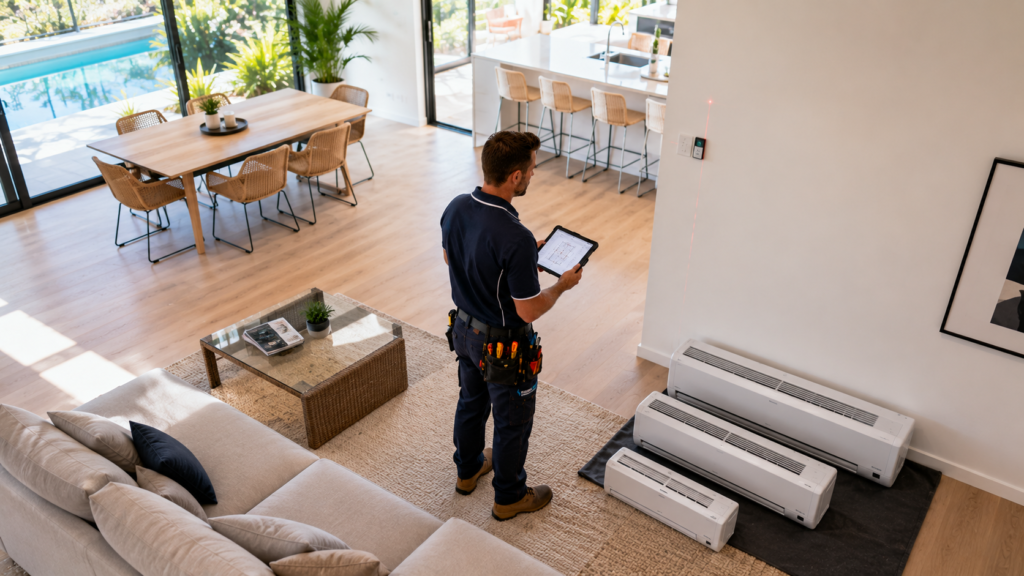
During an in‑home visit, your electrician can:
-
Measure each room and confirm ceiling heights and volumes
-
Check insulation, glazing, shading and roof type
-
Evaluate existing wiring, switchboard capacity and safety
-
Discuss how your family uses each space, day and night
-
Provide clear recommendations on kW sizing and system type
You receive straightforward advice that explains why a particular kilowatt size has been suggested, not just a model number. With sizing, split system installation, electrical upgrades and future replacement handled by one trusted crew, homeowners reduce the risk of finger pointing between trades and enjoy better comfort from day one.
Summary
Correct air conditioner kW sizing underpins comfort, humidity control, running costs and system life in Sunshine Coast homes. A quick area‑based calculation gives a useful starting point, but real accuracy comes from looking at ceiling height, insulation, window orientation, occupancy, internal heat gains, climate and home design.
When capacity matches the actual load, your system can run in smooth, efficient cycles rather than constantly racing or short cycling. Using the room size to kW guide, you can see why small bedrooms often suit 2.0–2.5 kW splits while larger open plan living areas need 5–7 kW or more.
You have also seen how oversizing leads to cool but clammy rooms and higher bills, and how undersizing wears equipment out while still leaving spaces hot. Inverter technology, star ratings, solar and EV chargers all work best when they fit into a sensible overall electrical and energy‑efficiency plan.
Sunshine Coast Electrician specialises in that kind of practical whole‑home thinking. If you are planning a new split system installation, a replacement unit or a ducted upgrade anywhere on the Sunshine Coast, book a professional assessment. The team will help you choose the most efficient, right size air conditioner for your home and electrical setup, so you stay comfortable without nasty surprises on your power bill.
Get Expert Advice on Choosing the Right Size Air Conditioner
Choosing the right size air conditioner is one of the most important decisions you’ll make when installing a new cooling system. A correctly sized unit keeps your home comfortable, controls humidity, reduces energy bills and helps your system last longer, while the wrong size can lead to poor performance and unnecessary running costs.
At Sunshine Coast Electrician, we assess your home’s layout, insulation, ceiling height, window orientation, occupancy and electrical capacity to recommend the ideal air conditioning solution for your needs. Whether you’re installing a split system, replacing an older unit or planning a ducted air conditioning system, we’ll ensure it’s sized correctly and installed to Australian Standards for maximum comfort and efficiency.
Contact your Sunshine Coast Electrician today for a free, no-obligation quote and let our experienced team help you select and install the perfect air conditioning system for your Sunshine Coast home.
Frequently Asked Questions
How many kW of air conditioning do I need per square metre in Australia?
A common rule of thumb is around 120–160 watts of cooling per square metre for a standard 2.4 metre, insulated room. Multiply your room area by that number, then divide by 1000 to calculate the approximate kilowatt capacity.
On the Sunshine Coast, high ceilings, large windows, poor insulation and high humidity can push the required capacity toward the upper end of that range. Treat this calculation as a guide and confirm the final size with a professional heat-load assessment.
What size split system air conditioner do I need for a bedroom?
Most small bedrooms measuring approximately 8–12 square metres suit a 2.0–2.5 kW split system. Larger master bedrooms with ensuites, extensive glazing or 2.7 metre ceilings may require a system between 3.5 and 4.0 kW.
Oversizing a bedroom air conditioner can cause draughts, excess noise and frequent cycling that disturbs sleep. Sunshine Coast Electrician can recommend and install a quiet, efficient split system matched to the room's size, construction and usage.
Can one air conditioner cool my whole house?
One wall-mounted split system rarely cools an entire house evenly. Cool air struggles to move through closed doors, long hallways and separate levels, often leaving one room very cold while more distant rooms remain warm.
Multiple split systems, a multi-split system or ducted air conditioning with zoning will usually provide better whole-home comfort. Sunshine Coast Electrician can compare the available options based on your home's layout, usage and budget.
How do I know if my current air conditioner is undersized or oversized?
Common signs of an incorrectly sized air conditioner include:
- Likely undersized: the unit runs almost constantly on hot days but still fails to reach the set temperature, particularly in west-facing or upstairs rooms.
- Likely oversized: the unit starts and stops frequently, causes noticeable temperature swings or leaves the room feeling cool but humid.
Renovations, new windows, changes to shading or a different use of the room can also affect whether the original air conditioner remains correctly sized. A site inspection can identify airflow and performance issues and determine whether servicing, adjustment or replacement is the best option.
Is an oversized inverter air conditioner still a problem?
Yes. A significantly oversized inverter air conditioner can still cause comfort, humidity and efficiency problems. The compressor may alternate between very low output and switching off rather than maintaining a stable, continuous operating cycle.
This can leave humidity levels too high, increase wear on components and result in unnecessary upfront expense for capacity you do not need. Correct kilowatt sizing remains important for inverter systems, just as it does for older fixed-speed air conditioners.
Do I need a bigger air conditioner if I have large windows?
Large windows, particularly west-facing and north-facing glass, can add substantial heat to a room. Single glazing without external shading will normally require more cooling capacity than shaded or double-glazed windows.
Rooms with extensive glass often sit toward the upper end of the typical kilowatt range for their floor area. Combining suitable shading, quality blinds and correctly calculated air-conditioning capacity will provide better comfort and long-term energy savings.
How often should a correctly sized air conditioner be serviced?
Most domestic air conditioners on the Sunshine Coast benefit from a professional service at least once a year. Systems exposed to heavy use, coastal conditions or rental-property usage may benefit from servicing every six months.
Regular cleaning of filters, coils and drains, together with electrical and refrigerant inspections, helps the system continue delivering its rated capacity efficiently. Sunshine Coast Electrician provides air-conditioning maintenance to help keep systems reliable and energy efficient.
Is a ducted system more efficient than multiple split systems for a house?
It depends on the home's layout, insulation, occupancy and usage patterns. Multiple split systems can work well when only a few rooms require cooling or different rooms are used at different times.
A ducted system with effective zoning may provide better whole-home comfort in larger or predominantly single-storey homes. With either option, correct sizing, good duct or unit placement and professional installation have the greatest influence on efficiency and running costs.