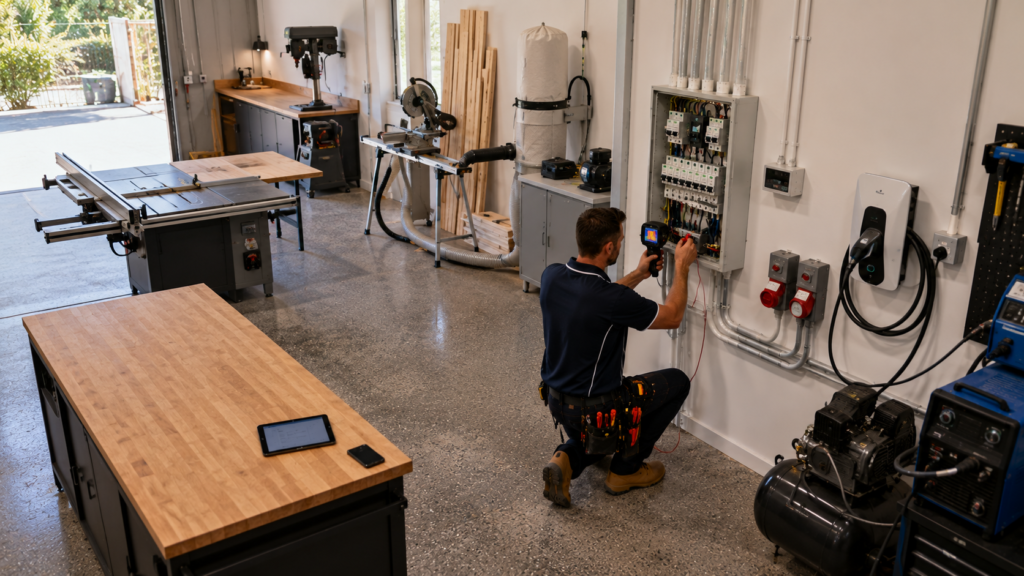
Most Sunshine Coast home workshops run fine on single-phase power if you only use one or two moderate tools at a time. Three-phase power for home workshops starts to make sense when you run heavier machinery, have long cable runs to a shed, or want faster EV charging and bigger pumps on a hobby farm. The right answer depends on your actual loads, not just your postcode.
This article explains what three-phase power is, how it differs from single-phase, when an upgrade genuinely helps, and where it can be wasted money. You will see how welders, compressors, machinery, irrigation pumps, EV chargers and solar all fit into the picture, and what is involved in a safe, compliant upgrade.
By the end, you will have a clearer idea whether to stay with single-phase, plan a full three-phase upgrade, or ask Sunshine Coast Electrician for a professional assessment of your workshop, shed or hobby farm.
Key Takeaways
A quick summary helps busy Sunshine Coast owners decide whether three-phase is worth exploring before diving into the detail.
-
When Three-Phase Power Makes Sense
Three-phase suits sheds with industrial machinery, larger welders, big air compressors and long cable runs to detached workshops or rural outbuildings. It also suits hobby farms with several irrigation pumps or cool rooms and homes planning high-capacity EV charging or large ducted air conditioning. If you want everything running together without nuisance tripping, three-phase is often the right step. -
When Single-Phase Is Still Enough
A well designed single-phase setup suits many DIY workshops that mostly use 10 or 15 amp tools and run one major machine at a time. Upgrading old wiring, adding dedicated circuits or improving cable sizes often fixes flickering lights and tripping breakers. Sunshine Coast Electrician can often tidy and upgrade an existing single-phase system instead of jumping straight to three-phase. -
Key Benefits for Workshops and Hobby Farms
Three-phase spreads heavy loads across three actives, which supports smoother motor starts, less voltage drop and better use of commercial-grade equipment. It works well with larger solar systems, batteries, irrigation pumps and faster EV chargers. On hobby farms, it supports multiple pumps, cold rooms and machinery without overloading a single conductor. -
Safety, Compliance and Legal Requirements
Any fixed wiring, switchboard work or three-phase upgrade in Queensland must be carried out by a licensed electrical contractor. The Wiring Rules AS/NZS 3000, the Queensland Electrical Safety Act and Energex requirements all apply. Sunshine Coast Electrician designs, installs and tests three-phase systems so they remain safe and compliant. -
How Sunshine Coast Electrician Can Help
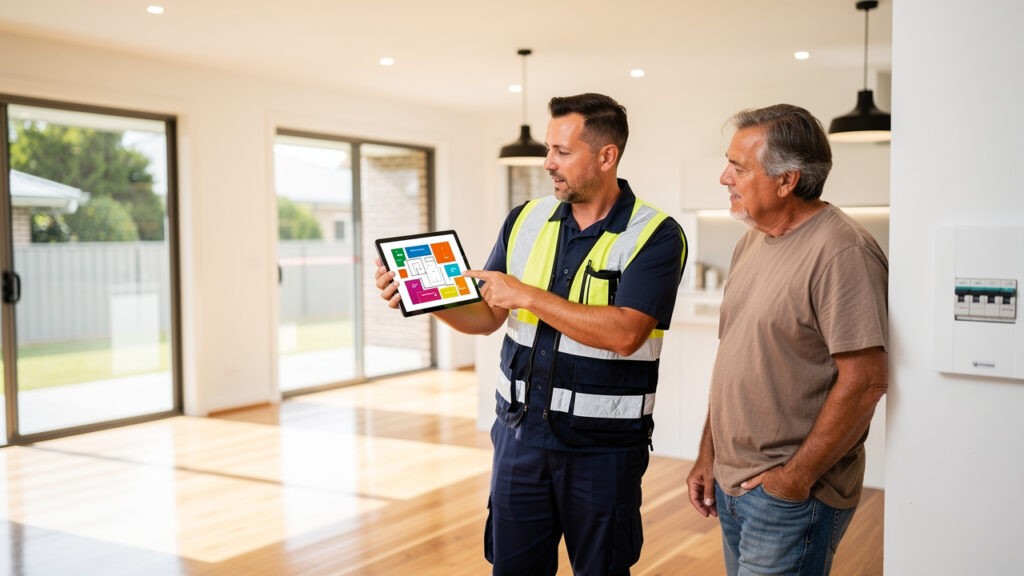
The team can check your current supply, calculate loads for your workshop or hobby farm and explain options in plain language. They manage Energex applications, consumer mains and switchboard upgrades, shed sub-boards, three-phase outlets, EV chargers and rural electrical work. You have one point of contact from first quote through to final energisation.
What Is Three-Phase Power and How Is It Different From Single-Phase?
Three-phase power for homes, sheds and hobby farms provides three active conductors, while single-phase gives you only one. The extra actives allow more total capacity, better sharing of load and smoother operation for motors and heavy equipment.
According to Energy Networks Australia, standard Australian low-voltage supply is 230 volts between active and neutral. Three-phase still uses 230 volts per phase, but you also get about 400 to 415 volts between any two phases, which is where many industrial motors sit.
Single-Phase Vs Three-Phase: How They Work In Sunshine Coast Homes
In most Sunshine Coast suburbs, single-phase power brings one active, a neutral and an earth into the switchboard, usually through a 63 or 80 amp main switch. That gives roughly 14 to 18 kilowatts of usable power across the whole house, enough for:
-
Lights and power points
-
Small split-system air conditioners
-
An electric oven or cooktop
-
A pool pump and basic household appliances
Three-phase power brings three actives plus neutral and earth. Each active is 230 to 240 volts to neutral, and 400 to 415 volts between phases. Common residential services are 3 x 32 amp or 3 x 40 amp supplies, which spread demand across the three actives instead of piling everything on one.
According to the Clean Energy Council, more than three million Australian homes now have rooftop solar. Many larger systems on the Sunshine Coast already use three-phase inverters, which sit neatly with a three-phase supply.
Here is a simple comparison.
| Feature | Single-Phase | Three-Phase |
|---|---|---|
| Typical main switch | 63–80 A at 230–240 V | 3 x 32–40 A at 230–240 V |
| Total usable power | Roughly 14–18 kW | Roughly 22–27 kW or more, shared |
| Best suited loads | General household, small tools, basic EV charger | Heavy machinery, bigger homes, serious workshops, hobby farms |
| Common machinery | Portable tools, small welders, small compressors | Table saws, lathes, mills, 5 kW+ compressors, hoists, large pumps |
| EV charging | Up to about 7.4 kW AC | Up to 11–22 kW AC where the vehicle supports it |
| Solar and batteries | Smaller or single-phase inverters | Larger three-phase inverters and whole-of-home battery support |
Most Sunshine Coast streets already have three-phase available in the street. The question is whether your property is connected that way. A licensed electrician from Sunshine Coast Electrician can confirm your current supply by checking the meter, switchboard and existing cabling.
Where You’ll See Three-Phase In A Home, Workshop Or Hobby Farm
In day-to-day use, three-phase shows up in a few clear ways around a property. The most obvious sign is round, multi-pin outlets in a shed or workshop, usually rated at 20 or 32 amps, sometimes higher for heavy tools or cool rooms.
Larger machines such as:
-
Panel and table saws
-
Lathes and milling machines
-
Large dust extractors and air compressors
-
Irrigation and bore pumps
-
Some ducted air conditioning systems
are often hard wired on three-phase. They are connected through an isolator near the unit rather than a plug, which keeps the wiring neat and allows safe lock-off for maintenance.
Behind the scenes, a three-phase upgrade usually means your main switchboard now has three busbars. Circuits are spread so, for example:
-
Kitchen and general lighting sit on one phase
-
Air conditioning and pool equipment sit on another
-
The workshop, shed sub-board, EV charger and some rural pumps use the third
Sunshine Coast Electrician often runs a dedicated three-phase sub-main from the house switchboard out to a workshop, rural shed or pump shed, with its own local board and protection. This is a common approach for shed wiring and rural electrical services across the Sunshine Coast and surrounding areas.
Do You Really Need Three-Phase Power For Your Home Workshop Or Hobby Farm?
Deciding whether you need three-phase power for home workshops or a hobby farm comes down to what you run now and what you plan for the next decade. Many sheds on the Sunshine Coast work perfectly well on a well designed single-phase supply.
Three-phase starts to pay off when the current setup keeps tripping, voltage drop to the shed is obvious, or you want to run heavier industrial gear, irrigation pumps and EV chargers without constant compromise.
Common Signs Your Power Supply Is Holding Your Workshop Back
One clear sign is regular nuisance tripping when you work in the shed. If lights dim or flicker every time the dust extractor or compressor starts, or if the breaker trips when you weld while the extractor runs, the single-phase circuit is probably working too close to its limit.
Long runs to detached sheds or rural outbuildings can also be a problem, especially if the cable was installed many years ago and is fairly small. Voltage drop makes motors work harder, draw more current and run hotter, which shortens their life.
Other warning signs include:
-
Breakers tripping when several tools run together
For example, the welder and compressor run while the dust extractor starts, and the main shed breaker trips. This pattern suggests the combined load is too high for the single-phase feed and can point to undersized cabling. -
An old, cramped or outdated switchboard
If there is no room for extra circuits, or if you still have rewireable fuses and limited RCD protection, the shed may already be at the practical limit of the original design. Any extra demand, especially from bigger machinery, increases both safety risk and inconvenience. -
Constant workarounds with converters
If you have bought second-hand three-phase equipment and now juggle phase converters or small variable frequency drives just to make things run, the whole setup might be more fragile than you like. Power quality can suffer, and you remain limited by the original single-phase feed.
According to the Electrical Safety Office Queensland, poor quality and unlicensed electrical work is a regular factor in serious incidents — research such as the Development of a Real-Time IoT-based monitoring study highlights how undetected faults in industrial machines can escalate quickly, so signs like these should not be ignored.
Scenarios Where Three-Phase Power Is Worth The Upgrade
Three-phase power for home workshops starts to shine when you use industrial-style machinery, such as:
-
Three-phase table and panel saws
-
Larger dust extractors and 5 kW+ air compressors
-
Heavy lathes, milling machines and CNC equipment
-
Vehicle hoists and heavy welders
-
Larger ducted air conditioning systems
On hobby farms and rural blocks, three-phase is very helpful when you run several pumps, such as:
-
Bore pumps
-
Pressure pumps
-
Irrigation pumps for paddocks, nurseries or orchards
or when you need cold rooms or feed storage with refrigeration. These loads can sit on different phases and share demand more evenly.
Three-phase is also attractive if you own an EV with three-phase charging, or plan to buy one soon. According to the Electric Vehicle Council, home AC charging power ranges from about 3.6 kW on small circuits up to 11 or 22 kW on three-phase. A three-phase EV charger can comfortably work alongside a busy workshop and large air conditioning if the switchboard is designed well.
On the other hand, if you mostly run portable 10 or 15 amp tools, use only one heavier machine at a time and do not plan for fast EV charging, large air conditioning or big pumps, single-phase may be fine. In many cases, Sunshine Coast Electrician can:
-
Add dedicated single-phase circuits
-
Upsize existing cables
-
Carry out a modern switchboard upgrade
to remove most of the issues without a full conversion to three-phase.
What Are The Benefits And Limitations Of Three-Phase Power For Home Workshops And Hobby Farms?
Three-phase power brings real gains for workshops, EV charging and rural loads, but it is not a fix-all for every shed. You still need good design, quality gear and legal installation to see the true benefits.
The main upsides are extra capacity, better motor performance and more flexibility for solar, batteries and EVs. The downsides are higher upfront cost and the fact that poor wiring, even on three-phase, still causes problems.
Key Advantages For Workshops, EV Charging And Rural Loads
The biggest gain from three-phase is higher total capacity without overloading any one conductor. That lets you run several heavy loads together, such as:
-
A welder
-
A dust extractor
-
A large air compressor
in the workshop, while the house air conditioning, pool pump and EV charger are running on other phases.
Other key advantages include:
-
Smoother, more efficient motor operation
Three-phase motors start more smoothly, draw less current per phase and often run quieter, which is kinder to bearings and belts — a finding supported by Advanced Investigation of Three-Phase variable frequency drive performance research examining motor behaviour under varying supply conditions. This matters on larger saws, lathes, mills, pumps and irrigation equipment that see long duty cycles. -
Reduced voltage drop on long runs
On long feeds to sheds or pump sheds, three-phase can help reduce voltage drop for the same cable size, improving performance for welders, compressors and irrigation pumps at the far end of a rural property. -
Access to commercial-grade machinery
Because most commercial machinery is built with three-phase motors, you can often use second-hand industrial tools at their full rating rather than pushing smaller single-phase models to the limit. Sunshine Coast Electrician regularly designs workshop electrical installations with three-phase outlet layouts so owners can plug in future panel saws, CNC routers, hoists or bigger compressors without rewiring the entire shed. -
Better integration with solar and batteries
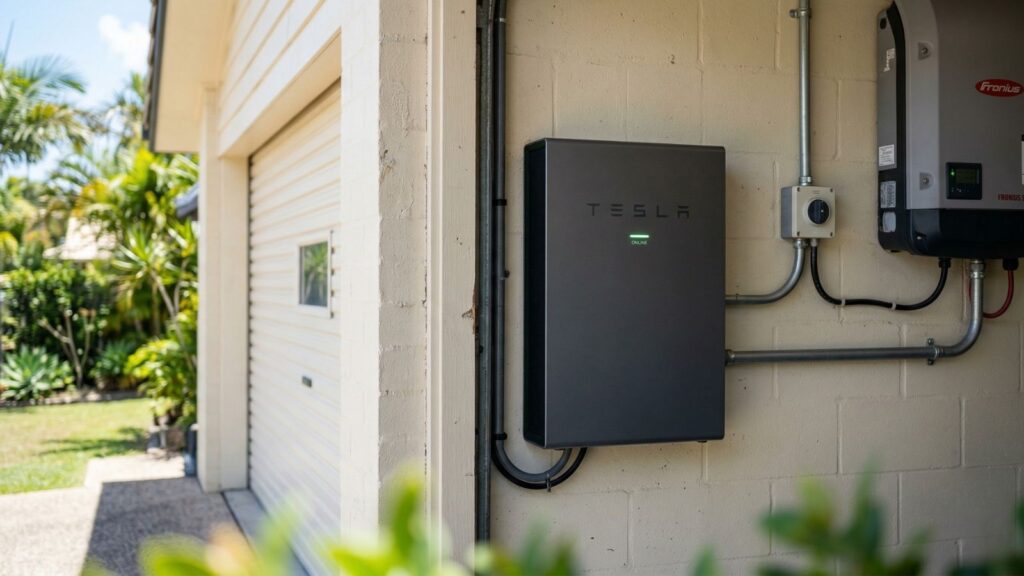
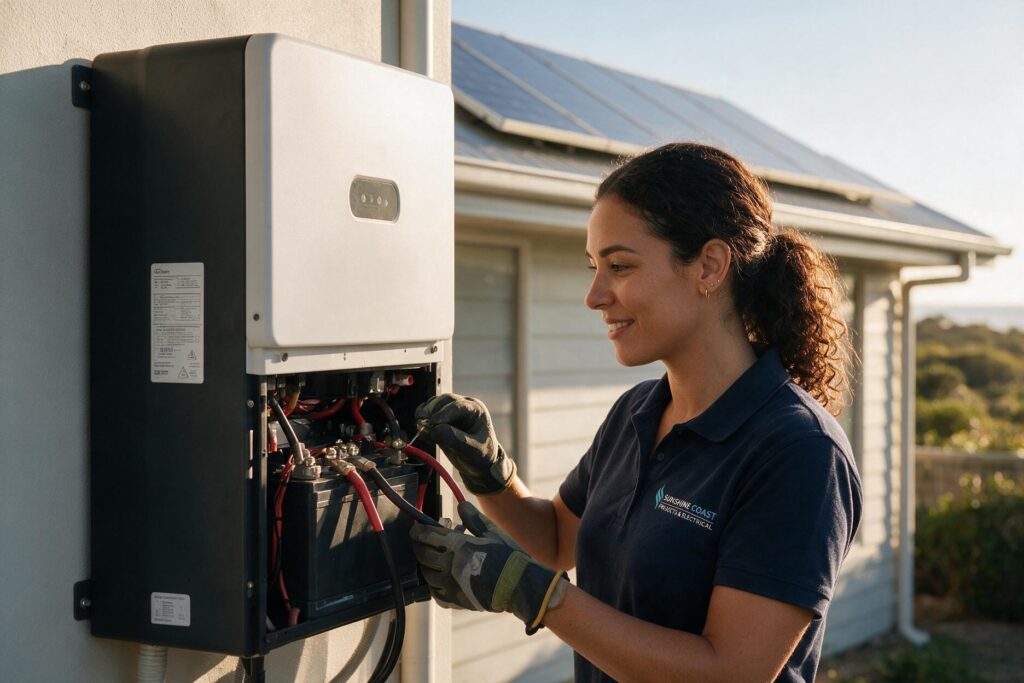
A three-phase supply allows bigger inverters that spread export across phases, which can reduce voltage rise and export limiting on busy local networks. Batteries tied into a three-phase system can support more of the property during an outage, including workshop circuits and essential pumps in some designs. -
Stronger support for EV charging and large air conditioning
For EV owners, three-phase chargers around 11 kW can add roughly 50 to 70 kilometres of range per hour of charge, depending on the vehicle (Electric Vehicle Council). Three-phase also supports larger ducted air conditioning systems more comfortably, especially in homes with busy workshops or hobby farms.
Limitations, Costs And When Three-Phase Might Be Overkill
Three-phase upgrades involve real money. Costs sit in several parts of the job, including:
-
Any Energex network charge
-
New consumer mains
-
A three-phase switchboard with modern safety devices
-
Sub-mains to sheds or pump sheds
-
The actual workshop fit-out with outlets and lighting
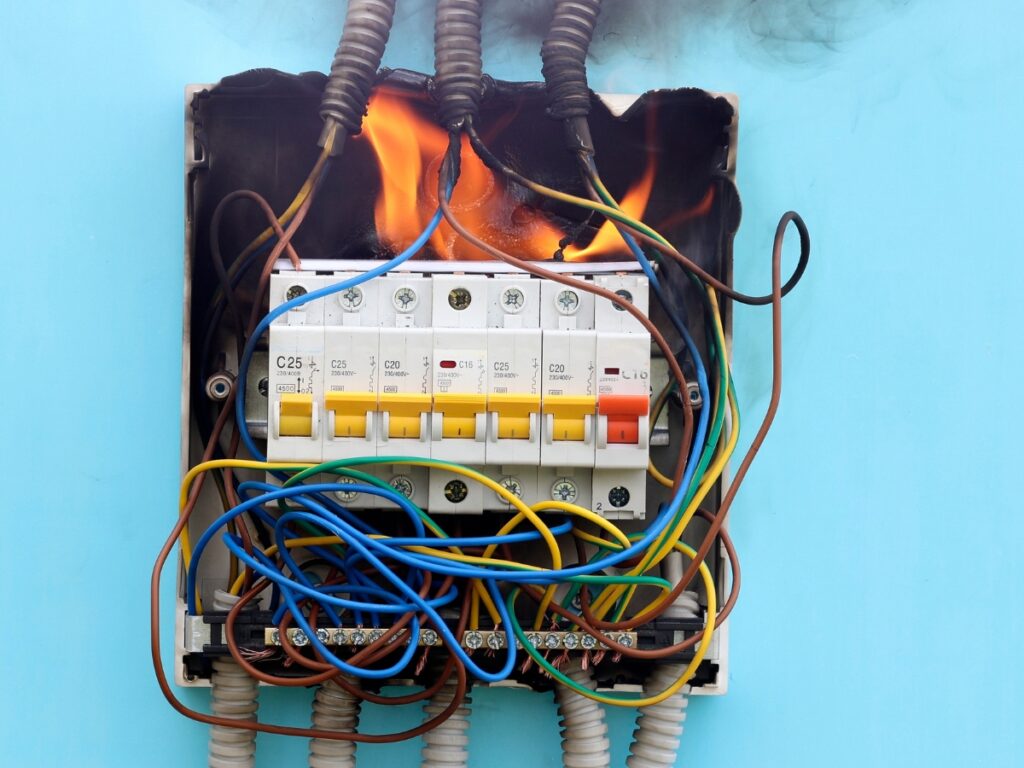
Three-phase will not fix unsafe or messy existing wiring on its own — as research into Problems in Modeling Three-Phase circuits demonstrates, unbalanced loads and non-sinusoidal waveforms can cause significant issues regardless of supply type. Old cables still need replacing, dodgy joints still need correcting and any non-compliant DIY work must be removed. A three-phase board that is poorly laid out or badly balanced can still give nuisance tripping and hot breakers.
For smaller hobby sheds, a fresh single-phase circuit with the right cable size, RCD protection and a modern sub-board often does the job at lower cost. In some rural areas, the local transformer or distance from the street can limit the size of supply available, even on three-phase, so expectations need to match what the network can provide.
Sunshine Coast Electrician focuses on clear, itemised quotes and will explain when three-phase power for home workshops is worthwhile and when a simpler upgrade is smarter. That way you do not pay for capacity you will never use.
How Does A Three-Phase Power Upgrade Work For Sunshine Coast Homes, Sheds And Hobby Farms?
A three-phase upgrade for a Sunshine Coast home, shed or hobby farm follows a clear series of steps from first inspection to final testing. The process feels far less disruptive when you know what will happen and who handles each part.
Sunshine Coast Electrician manages the technical design, Energex paperwork, on-site work, metering and compliance checks so you have one point of contact from start to finish.
Step-By-Step: From Initial Assessment To Energisation
A typical three-phase upgrade process includes:
-
Site visit and discussion
A licensed electrician checks your existing supply, switchboard type, consumer mains and any signs of overload or age. They also walk through your workshop, shed or hobby farm, list your current and planned equipment, and talk about EV charging, air conditioning and solar plans. -
Design and load calculation
The electrician works out the likely maximum demand using diversity rules from AS/NZS 3000 and local guidelines, then selects an appropriate three-phase service size. They plan how circuits will be spread across phases, decide whether you need a shed sub-board and set out outlets, lighting and any dedicated machinery or pump circuits. -
Network application and approvals
Sunshine Coast Electrician then handles the network application, lodging forms with your retailer or directly with Energex for the three-phase connection and new smart meter. Any technical queries from the network are answered by the electrician. -
On-site upgrade work
On the agreed day, the team upgrades the supply. That can include:-
Replacing single-phase consumer mains with a four-core three-phase cable
-
Fitting a new three-phase switchboard upgrade with RCD or RCBO protection, surge protection and clear labelling
-
Running three-phase sub-mains to sheds, pump sheds or outbuildings, underground or overhead depending on the site
-
-
Metering and configuration
Once the metering provider has fitted a three-phase smart meter, the electrician confirms phase allocation for major loads such as ducted air conditioning, solar inverters, EV chargers and workshop equipment. -
Testing, documentation and handover
Sunshine Coast Electrician tests every circuit, including insulation resistance, earth fault loop impedance, RCD trip times and phase rotation on three-phase outlets and machines. You then receive Electrical Safety Certificates and a clear explanation of which breaker feeds each part of the property.
“Take the time to ask your electrician to walk you through your new switchboard. Knowing which breaker does what can save a lot of stress during a fault or storm.” — Advice from a Sunshine Coast electrician
What Affects Three-Phase Power Upgrade Cost In Australia?
Three-phase power upgrade cost in Australia, and on the Sunshine Coast in particular, varies widely because each property is different. Key cost drivers include:
-
Distance from the street to your switchboard
The distance from the street pillar or pole to your switchboard, and whether the service is overhead or underground, can have a big impact on labour and materials. -
Condition and size of your existing switchboard
Older boards with asbestos backing, rewireable fuses or no room for extra gear usually need replacing as part of the job. That adds cost but also improves safety and makes future changes easier. -
Distance to sheds and outbuildings
For sheds and hobby farms, the distance from the house to the workshop or pump shed is another major factor. Long underground runs need trenching, conduit, possible concrete cutting and careful reinstatement of driveways or gardens. Voltage drop limits may require larger cables, which are more expensive. -
Number and rating of three-phase circuits
The number and rating of three-phase outlets, plus any fixed-wired machinery such as hoists, compressors or cool room motors, influence price. Adding three modest 20 amp outlets costs less than installing several 32 amp outlets and hard-wired connections for a big compressor and hoist. -
Extra work such as solar, batteries and EV chargers
If you are adding or upgrading solar, batteries or EV chargers at the same time, those extras will sit on the same quote. The advantage is that everything can be designed as one system.
Sunshine Coast Electrician offers free quotes, clear breakdowns and can stage work, such as doing the three-phase and main switchboard now, then fitting extra workshop circuits, irrigation pumps or EV chargers later.
Safety, Compliance And Common Myths About Three-Phase Power In Queensland
Three-phase power in Queensland homes, sheds and hobby farms is safe when it is designed, installed and tested by licensed electricians. The higher capacity does mean that mistakes or illegal work carry greater risk.
This is why government agencies and Master Electricians stress that DIY wiring, especially on three-phase, is both illegal and dangerous.
“Electrical work on your home must only be done by a licensed electrician.” — Electrical Safety Office Queensland
Safety, Legal Requirements And Best Practice For Three-Phase Workshops
All three-phase installations must follow AS/NZS 3000 (the Wiring Rules), along with the Queensland Electrical Safety Act and local Energex service rules. These documents set out how cables, protective devices and earthing must be selected and installed.
DIY work on fixed wiring, switchboards or three-phase circuits is illegal for homeowners. According to the Queensland Government, unlicensed electrical work can lead to fines, insurance problems and serious injury or death.
Good practice for three-phase workshops and hobby farms includes:
-
RCDs or RCBOs on socket and most lighting circuits
These devices trip quickly if there is an earth fault, reducing shock risk. Users should test RCDs regularly with the test button, as recommended by safety regulators. -
Correct MEN earthing and bonding
Proper earthing for metal sheds, frames and pipework is critical, especially on hobby farms where moisture and corrosion are common. -
Adequate clearances and labelling
Adequate clearances around switchboards, lockable isolators at large machines and the right IP-rated gear in dusty or damp zones all add to safety. -
Regular inspections and maintenance
Having a licenced electrician periodically check key parts of your workshop or rural installation can pick up heat damage, loose terminations and ageing equipment before it fails — an approach aligned with Development of a Real-Time IoT monitoring systems designed specifically to detect these failure modes in three-phase industrial machines.
Sunshine Coast Electrician performs full testing at handover and backs installations with a workmanship guarantee. That gives owners confidence that their three-phase workshop, shed wiring and rural electrical work meet Queensland standards from day one.
Myth Vs Fact: Three-Phase Power At Home
Several myths still surround three-phase power on the Sunshine Coast, and they can easily confuse planning.
-
Myth: Three-phase is only for big factories.
Fact: Many newer homes, sheds and hobby farms now use three-phase for workshops, ducted air conditioning, pools, irrigation pumps and EV chargers. Energex supplies three-phase to plenty of residential streets. -
Myth: Three-phase is always dangerously high voltage.
Fact: Voltage to earth on each phase is still around 230 to 240 volts, the same as single-phase. The extra risk comes from higher fault currents and larger machinery, which good design and RCD protection manage well. -
Myth: A three-phase upgrade means unlimited power.
Fact: Every property still has a set maximum demand. Load calculations, sensible circuit design and phase balancing remain important so you do not overload main switches or cables. -
Myth: Cheap phase converters are just as good as a real upgrade.
Fact: Converters and small variable frequency drives can help in special cases, but they add complexity and do not raise the capacity of your single-phase supply. For several heavy three-phase machines, a proper upgrade is usually safer and more reliable. -
Myth: Any electrician will handle three-phase the same way.
Fact: Experience with three-phase design, Energex applications, rural sheds and workshop layouts varies. A local contractor such as Sunshine Coast Electrician brings specific experience with Sunshine Coast conditions, rural distances and typical workshop loads.
“Australia is a world leader in rooftop solar uptake.” — Clean Energy Council
This strong solar presence on the Sunshine Coast makes safe, well designed three-phase systems even more useful, because they connect heavy workshop and farm loads with onsite generation and storage.
Moving Forward
Three-phase power for home workshops, sheds and hobby farms suits owners who:
-
Run heavier machinery, welders or large compressors
-
Need long cable runs to detached sheds or pump sheds
-
Want fast EV charging
-
Rely on multiple irrigation pumps, bore pumps or cool rooms
-
Plan to install larger solar and battery systems
When matched to your actual loads, three-phase brings smoother operation, fewer trips and more options for solar and storage.
On the other hand, many smaller DIY sheds and simple rural setups keep working well on single-phase once an experienced electrician tidies the wiring, upgrades the switchboard and adds a few dedicated circuits. The key is an honest assessment rather than guessing.
Sunshine Coast Electrician can visit your property, measure what you have, talk through your plans and then outline clear options. Whether that means a modest single-phase tidy-up or a full three-phase workshop electrical installation, you get practical advice, transparent pricing and work that keeps you safe and compliant.
Ready to Find Out if Three-Phase Power Is Right for Your Workshop?
Whether you’re planning a new shed, upgrading a home workshop, expanding a hobby farm or installing an EV charger, Sunshine Coast Electrician can help you choose the most practical and cost-effective solution. Our licensed electricians will assess your current electrical supply, calculate your future power requirements and explain whether a single-phase upgrade or Three-Phase Power for Home Workshops is the best option for your needs.
Request your free, no-obligation quote today and receive honest, expert advice tailored to your property. From switchboard upgrades and Energex applications to complete three-phase installations, workshop wiring and EV charger installations, Sunshine Coast Electrician delivers safe, compliant electrical solutions across the Sunshine Coast.
Contact your Sunshine Coast Electrician today to book your professional assessment and build a workshop that’s ready for today—and whatever you add tomorrow.
Frequently Asked Questions
Question: Do I Need Three-Phase Power For A Home Workshop In Australia?
Most small and medium DIY workshops work well on a good single-phase supply. Three-phase becomes attractive when you use several industrial machines, have a long run to a shed, or want EV charging and large air conditioning as well. A professional load assessment from Sunshine Coast Electrician gives a clear answer for your setup.
Question: How Much Does It Cost To Upgrade To Three-Phase Power In Australia?
Upgrade cost varies from property to property, because it depends on Energex network fees, switchboard condition, cable distances and how complex the workshop or hobby farm fit-out is. The job might include new consumer mains, a larger board, sub-mains to a shed, irrigation pumps and several outlets. Sunshine Coast Electrician offers free, itemised quotes for Sunshine Coast homes, sheds and rural properties.
Question: Can I Run Three-Phase Machinery On Single-Phase Power Instead Of Upgrading?
You can sometimes run a single three-phase motor from single-phase using a variable frequency drive or a rotary or static phase converter. These options often reduce available power and add extra equipment that can fail. For several machines or higher loads, a proper three-phase upgrade, designed and installed by a licensed electrician, is usually safer and more practical.
Question: Is Three-Phase Power More Dangerous Than Single-Phase In A Home?
Three-phase is not automatically more dangerous, because each phase is still about 230 to 240 volts to earth. The higher available fault current and bigger machines do increase risk if wiring is poor or work is unlicensed. With correct RCDs, breakers, earthing and design by a licensed electrician, three-phase systems in homes, sheds and hobby farms are very safe.
Question: Will Three-Phase Power Reduce My Electricity Bills?
A three-phase supply does not change your tariff rate, so the price per kilowatt-hour stays the same. It can support larger solar systems and better use of batteries, which may cut grid imports. It also reduces nuisance trips and motor stress, which can save money on maintenance and equipment replacement. Good energy management and a smart electrical design are the real drivers of lower bills.
Question: Can I Add Solar, Batteries And An EV Charger When I Upgrade To Three-Phase?
Yes, three-phase usually makes it easier to install larger solar inverters, whole-of-home batteries and faster EV chargers. An integrated design lets workshop loads, home circuits, solar and EV charging share capacity without constant overloads. Sunshine Coast Electrician regularly designs three-phase switchboards that allow staged additions of PV, storage and chargers across the Sunshine Coast region.
Question: How Long Does A Three-Phase Upgrade Take On The Sunshine Coast?
Timeframes depend on Energex approvals, meter scheduling, any trenching or civil works and how involved the workshop or rural fit-out is. From quote acceptance to completion, many projects finish within several days to a few weeks. The main power changeover at your switchboard is usually done within a single day, with Sunshine Coast Electrician keeping you informed before any outage.
Question: Is Three-Phase Power Available In All Sunshine Coast Areas?
Most Sunshine Coast streets already have three-phase in the network, though individual connections and rural limits vary. Some remote or older areas may need extra network work or have supply size limits. Sunshine Coast Electrician can check your existing service, speak with Energex and carry out a site inspection so you know exactly what is possible on your property.
Conclusion
Three-phase power for home workshops, sheds and hobby farms gives Sunshine Coast owners the capacity to run serious machinery, multiple pumps, larger solar systems and faster EV chargers with fewer compromises. When it suits the loads, it brings smoother running, less tripping and better long-term flexibility for your property.
At the same time, not every shed needs three phases. Many smaller workshops gain plenty from a modern single-phase board, well sized circuits and safe, compliant wiring that supports the tools you already own.
If you are unsure where you sit, the safest next step is a professional electrical assessment. Sunshine Coast Electrician can review your current setup, discuss your plans and outline clear, no-pressure options. With a local, licensed electrician guiding the process, you can decide confidently whether a three-phase upgrade is the right move for your home, workshop or hobby farm.
Ready to find out if three-phase power is right for you?
Contact Sunshine Coast Electrician to arrange an on-site assessment and clear advice tailored to your property and the way you actually use it.