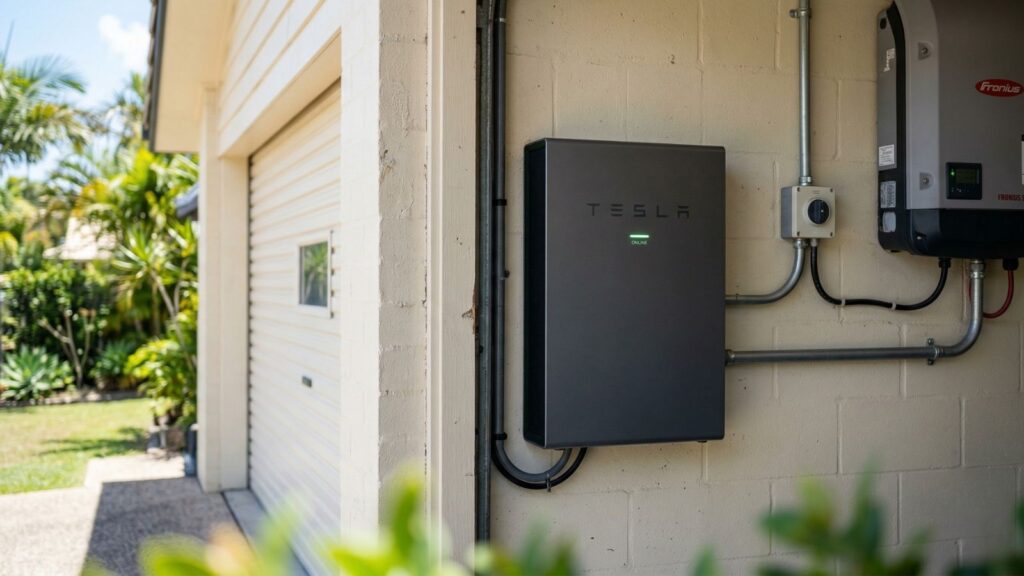
Living on the Sunshine Coast, you know that sunshine is one thing we have in abundance. But without solar battery storage, much of that valuable energy is lost once the sun goes down or during outages. Instead of relying on expensive grid power, storing your solar energy allows you to use it when you need it most—reducing bills, increasing energy independence, and keeping your home powered when it matters.
This is where a solar battery storage system changes the game.
Think of it as a personal energy reservoir for your home. Instead of sending all your excess solar power back to the grid for a pittance, you can save it for when you really need it—at night, during peak demand, or in a power outage. It puts you back in control of your power, turning your home into a more self-sufficient and energy-secure household.
At Sunshine Coast Projects & Electrical, we’ve seen firsthand how these systems empower local homeowners. A home solar battery system isn’t just about saving money; it’s about peace of mind and energy independence. Being self-reliant in how you power your property brings a comfort that conventional grid power simply cannot match. In this guide, we’ll break down everything you need to know about solar battery storage in simple, straightforward terms. We’ll explain how it works, the benefits for QLD homes, what to look for when choosing a system, and why professional installation is non-negotiable.
Key Takeaways
-
A solar battery storage system stores the excess energy your solar panels generate during the day. This allows you to use your own solar power at night or during peak-rate periods, which significantly cuts your electricity bills.
-
These systems provide important blackout protection. This is particularly valuable during Queensland’s storm season, helping to keep your essential appliances running when the grid fails.
-
Choosing the right battery requires careful consideration of its capacity (kWh), chemistry (like safe LiFePO4), and power output (kW). The guidance of an experienced installer is key for making the correct choice.
-
For safety, performance, and longevity, your home battery installation must be carried out by a licensed and accredited professional who adheres to strict Australian Standards.
-
At Sunshine Coast Projects & Electrical, we provide complete, integrated energy approaches. We can seamlessly combine your solar and battery system with EV charging, helping you power your car with stored sunshine.
What Is Solar Battery Storage and How Does It Work?
In simple terms, a solar battery storage system is like a rechargeable power bank for your entire house. It’s designed to capture and store the surplus electricity that your solar panels generate during the day so you can use it later on. This is especially important in Queensland, where getting the most from your own solar energy is the smartest way to reduce reliance on an expensive and sometimes unreliable grid.
“Harnessing the sun’s power during the day and storing it for night use is not just smart, it’s the foundation of true energy independence for homeowners.” – Industry Observation
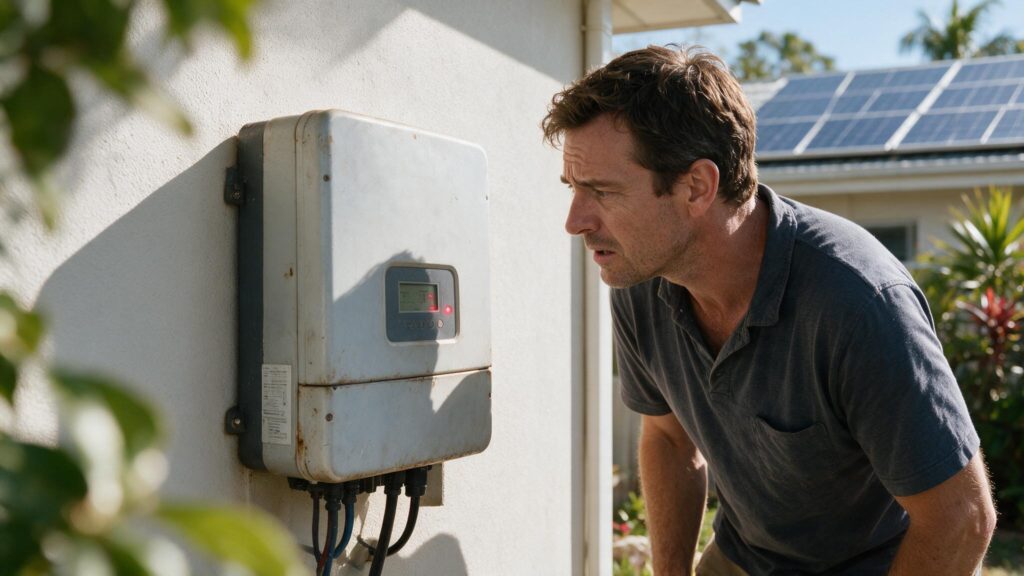
A complete solar energy storage system has a few core components that work together. It starts with your solar panels (the PV array) on the roof, which create direct current (DC) electricity from sunlight. This power then flows to an inverter, a clever device that converts DC power into the alternating current (AC) power your home appliances use. Many modern systems use a hybrid inverter, which can manage both solar power conversion and battery charging/discharging. The battery unit itself is the heart of the system, storing energy for later. Finally, an energy management system acts as the brain, directing the flow of electricity to where it’s needed most—whether to your home, the battery, or occasionally back to the grid.
The process is straightforward. During the day, as your panels produce electricity, your home’s immediate needs are met first. If you’re generating more power than you’re using, that excess energy is used to charge your solar battery bank. Once the sun sets or on a heavily overcast day, the system automatically switches over, and your home begins drawing power from the battery instead of the grid. If you have a system configured for backup, it can also provide power during a blackout, keeping your lights on and your fridge running.
There are two common ways to set up these systems:
-
DC-coupled systems: These connect the battery directly to the solar panels before the main inverter. This setup is often very efficient, as it converts DC power from the panels once into AC for the home and directly charges the DC battery. It’s a great choice for new solar installations.
-
AC-coupled systems: These connect the battery after the main solar inverter, using its own inverter to convert AC from the solar system (or grid) into DC for battery charging, and then back to AC for home use. This makes it a perfect choice for adding a battery backup for solar to an existing setup without replacing the current solar inverter.
Either way, combining a battery helps Sunshine Coast homeowners achieve greater energy freedom and lower their carbon footprint.
The Benefits of Solar Battery Storage for Queensland Homes
Installing a solar power battery storage for home offers a host of advantages that go far beyond just having solar panels. For homeowners on the Sunshine Coast, these benefits are particularly impactful, addressing our specific climate and energy environment.
The most immediate advantage is getting the most from self-consumption and major cost savings. Instead of exporting your valuable excess solar energy to the grid for low feed-in tariffs, you store it yourself — and with battery storage costs falling steadily, this decision makes more financial sense than ever. You can then use this stored, free energy during the evenings when electricity prices from the grid are at their highest. This simple shift in energy use can dramatically reduce your power bills, giving you more control over your household budget. For example, by storing energy generated during the day and using it during the peak 4 pm – 9 pm grid tariff window, you avoid paying premium rates, often saving hundreds of dollars quarterly. At Sunshine Coast Projects & Electrical, we focus on delivering significant cost savings and energy independence.
Another important benefit is improved energy security and blackout protection. Queensland’s storm season is no joke, and power outages can be a serious inconvenience. A correctly installed solar battery backup system provides a dependable power source when the grid goes down, keeping your lights, refrigerator, and other essential appliances running. This provides invaluable peace of mind for your family. We make sure our installations offer strong blackout protection to handle whatever the weather throws at us.
“In an era of rising energy costs and unpredictable weather, home battery storage provides not just power, but a vital sense of security for Australian families.” – Local Energy Analyst
Beyond your own home, using more of your own clean energy reduces your carbon footprint by decreasing your dependence on fossil fuel-generated grid power. A property fitted with a solar plus storage system is also more attractive to potential buyers, which can increase its value. These systems make your home future-ready for changing energy needs. In addition, our team at Sunshine Coast Projects & Electrical offers expert guidance on government incentives, helping you understand any available rebates in Queensland to make your investment even more affordable.
Choosing the Right Solar Battery System for Your Sunshine Coast Home
Choosing the ideal solar storage system for home involves more than just picking a brand. To get the best value and performance, you need to match the system to your specific energy habits and household needs. Getting this right helps make sure you don’t overspend on a battery that’s too large or end up with one that can’t meet your demands.
Here are the key factors to consider:
-
Capacity (kWh): This tells you how much energy the battery can hold. We’ll help you review your electricity bills and consumption patterns, especially your night-time usage, to determine the perfect size for your home.
-
Power Output (kW): This indicates how much electricity the battery can supply at once. If you want to run multiple high-power appliances simultaneously (like an air conditioner and oven), you’ll need a battery with a sufficient power rating.
-
Battery Chemistry: The most popular and recommended choice for residential use is Lithium Iron Phosphate (LiFePO4 or LFP). These batteries are known for their outstanding safety profile, long lifespan, and ability to be deeply discharged without damage. While other chemistries exist (like older lead-acid or newer flow batteries), LiFePO4 offers the best balance for most homeowners.
-
Depth of Discharge (DoD): This tells you how much of the battery’s capacity you can safely use. A higher DoD (e.g., 90-100%) means you can use more of the stored energy without damaging the battery, which is common in LiFePO4 types.
-
Cycle Life: This indicates how many times the battery can be charged and discharged before its capacity noticeably degrades. A high cycle life (e.g., 6,000+ cycles) points to a longer overall lifespan for the battery.
“A well-chosen solar battery system is like a finely tuned instrument; it performs best when its specifications perfectly align with the home’s energy rhythm.” – Solar Energy Consultant
Finally, always focus on safety and quality. Make sure any residential solar battery complies with Australian Standards, particularly AS/NZS 5139. At Sunshine Coast Projects & Electrical, we only install systems from reputable manufacturers with strong warranties. Our experience as qualified local electricians means your system will not only be perfectly chosen for your needs but also installed to the highest safety standards, including any necessary switchboard upgrades. We also discuss smart energy management features, which allow you to monitor your energy use in real-time and even optimize charging/discharging based on time-of-use tariffs.
Professional Installation, Maintenance, and Combining EV Charging
While the technology within a home energy battery storage system is advanced, its performance, safety, and lifespan depend heavily on one thing: the quality of the installation. This is not a DIY project. Professional installation by a licensed electrician is very important to protect your home, your investment, and your family.
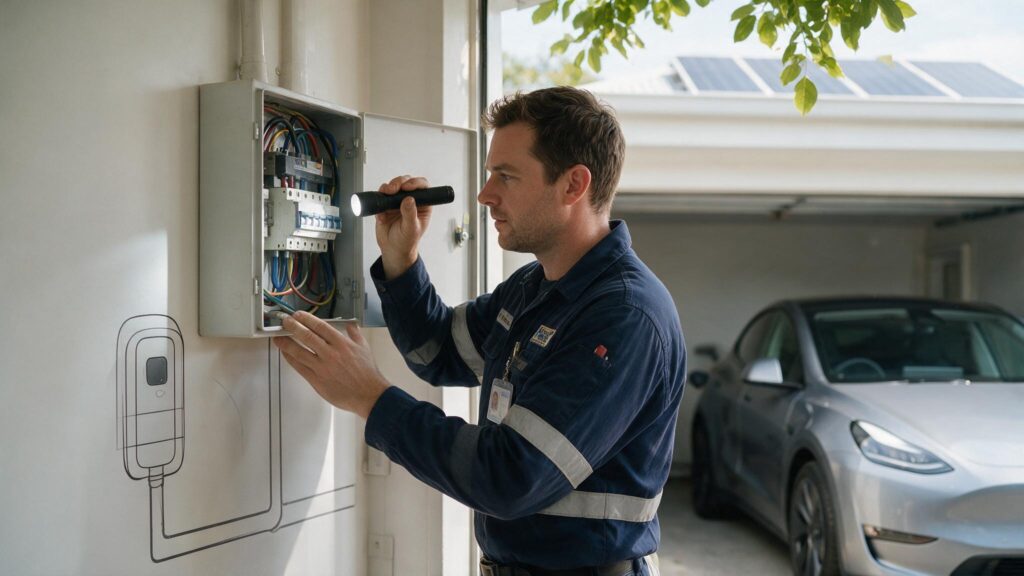
A professional installation begins with an expert design made to fit your home’s energy profile and existing electrical setup. At Sunshine Coast Projects & Electrical, we help make sure every installation adheres strictly to Australian Standards like AS/NZS 5139, which governs the safety of battery systems. This includes choosing the optimal location for the unit—somewhere cool, dry, and accessible—and making sure it combines seamlessly with your solar panels and switchboard. Attempting this yourself can void warranties, lead to inefficient operation, and create serious electrical hazards. We handle all permits and approvals, giving you complete peace of mind.
Once installed, modern lithium-ion batteries require very little maintenance. However, a few simple practices will help preserve longevity. Most systems come with a monitoring app that lets you track performance and battery health. It’s also wise to keep the unit clean and free from obstructions that could block ventilation. We also provide ongoing system maintenance and support, offering performance checks and fault diagnosis to keep your system running efficiently for years. Our team is always available for assistance if any issues arise.
“The proper installation of a home battery isn’t just about wiring; it’s about engineering a safe, efficient, and reliable energy future for the homeowner.” – Certified Electrician
A major advantage of a solar and battery system is the ability to combine it with other technologies, like electric vehicle (EV) charging. With a growing number of EVs on Sunshine Coast roads, being able to charge your car with stored solar energy is a game-changer. This offers you “free fuel” powered by the sun, dramatically cutting your transport costs and further reducing your carbon footprint. Sunshine Coast Projects & Electrical specialises in creating connected EV charging approaches, making sure your energy storage for solar panels works in harmony with your car charger for maximum savings and convenience. Imagine powering your daily commute with the sun’s energy collected from your own roof!
Conclusion
Making the switch to solar battery storage is a powerful step towards energy independence, lower electricity bills, and a more self-reliant home. By capturing the free, abundant sunshine on the Sunshine Coast, you can power your home day and night, even when the grid lets you down. It’s a smart, forward-thinking investment in your property and your family’s security.
However, the key to gaining these benefits lies in professional expertise. From choosing the right size and type of battery to making sure a safe, compliant installation, the guidance of a trusted local expert is invaluable. Choosing a certified installer means your system will meet all safety standards, perform optimally, and stand the test of time.
If you’re ready to take control of your home’s energy, contact Sunshine Coast Projects & Electrical today. With over 20 years of experience and a 12-month workmanship guarantee, we can design a solar battery system custom-made perfectly to your needs. Let’s start the conversation with a free quote.
Ready to Cut Your Electricity Bills for Good?
With solar battery storage, you can use your own power at night and avoid peak electricity rates.
👉 Request a free quote today and discover how much you could save on your energy bills.
FAQs
How long do solar batteries typically last?
Modern lithium-ion solar batteries, particularly the recommended LiFePO4 types, are built to last. You can generally expect a lifespan of 10 to 15 years or more, supported by warranties that guarantee performance for thousands of charge cycles.
Can I add a battery to my existing solar system?
Absolutely. Most existing solar panel systems can be retrofitted with a battery. We typically use an AC-coupled battery system, which is designed to connect smoothly with your current setup without needing to replace your primary solar inverter. This makes adding storage simple and effective.
What government incentives are available for solar batteries in Queensland?
Government incentives and rebates for energy products can change over time. While specific standalone battery rebates may vary, our team at Sunshine Coast Projects & Electrical stays up-to-date with all current state and federal programs and can guide you through any available financial assistance. It’s always a good idea to check what support might be available at the time of your inquiry.