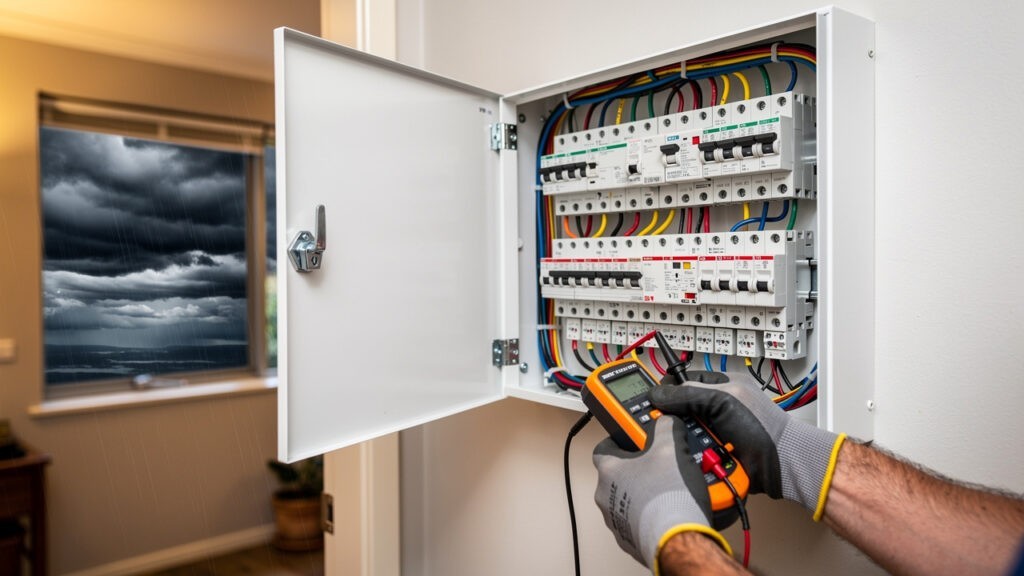
The Sunshine Coast’s weather can shift from beautiful to severe, creating electrical risks from storms and heavy rain. Protecting your property and family means ensuring your home is electrically safe before the storm season arrives. This guide offers a practical storm season electrical safety Sunshine Coast checklist, detailing how to prepare your systems, what to do during a storm, and when you need a licensed electrician.
This checklist will help you navigate the season safely.
Let’s get your property prepared.
Key Takeaways for Storm Season Electrical Safety
-
Proactive electrical checks can prevent significant storm damage.
-
Understanding the function of your RCDs and switchboard is paramount.
-
You should never attempt DIY electrical repairs, especially after a storm.
-
Knowing when to call a 24/7 24/7 emergency Sunshine Coast electrician is essential.
-
Solar systems, EVs, and commercial properties need specific safety measures.
Jump to section
- How Can I Prepare My Home’s Electrical System for Storm Season on the Sunshine Coast?
- What Electrical Safety Steps Should I Take During a Storm on the Sunshine Coast?
- When Do I Need an Emergency Electrician After a Storm? (Critical Warning Signs)
- How Can I Protect My Solar System, EV Charger, and Business During a Storm?
- How Do I Safely Use a Generator and Consider Backup Power for My Home?
- Why is DIY Electrical Work So Dangerous and Illegal in Queensland?
- Conclusion: Stay Safe This Storm Season with Sunshine Coast Projects & Electrical
- Frequently Asked Questions
How Can I Prepare My Home’s Electrical System for Storm Season on the Sunshine Coast?
Preparing your home’s electrical system for the Sunshine Coast storm season involves a few key actions to minimise risk and protect your property. The most effective strategy is a proactive one, focusing on inspecting your safety devices, securing any vulnerable equipment, and knowing exactly what to do in an emergency. Proactive checks of your safety switches and the entire electrical system serve as your first line of defence against damage from power surges and water ingress, which are common during Queensland’s summer storms.
Equally important is managing the electrical equipment both inside and outside your home. Before a storm approaches, securing outdoor electricals and understanding how to safely isolate your mains power, water, and gas supplies are fundamental steps. This preparation not only protects your expensive appliances but also prevents immediate electrical hazards from developing during heavy rain and high winds. For homeowners, landlords, tenants, renovators, and small business owners on the Sunshine Coast, a little preparation goes a long way. Following a simple checklist can make these tasks straightforward and ensure you haven’t missed anything important.
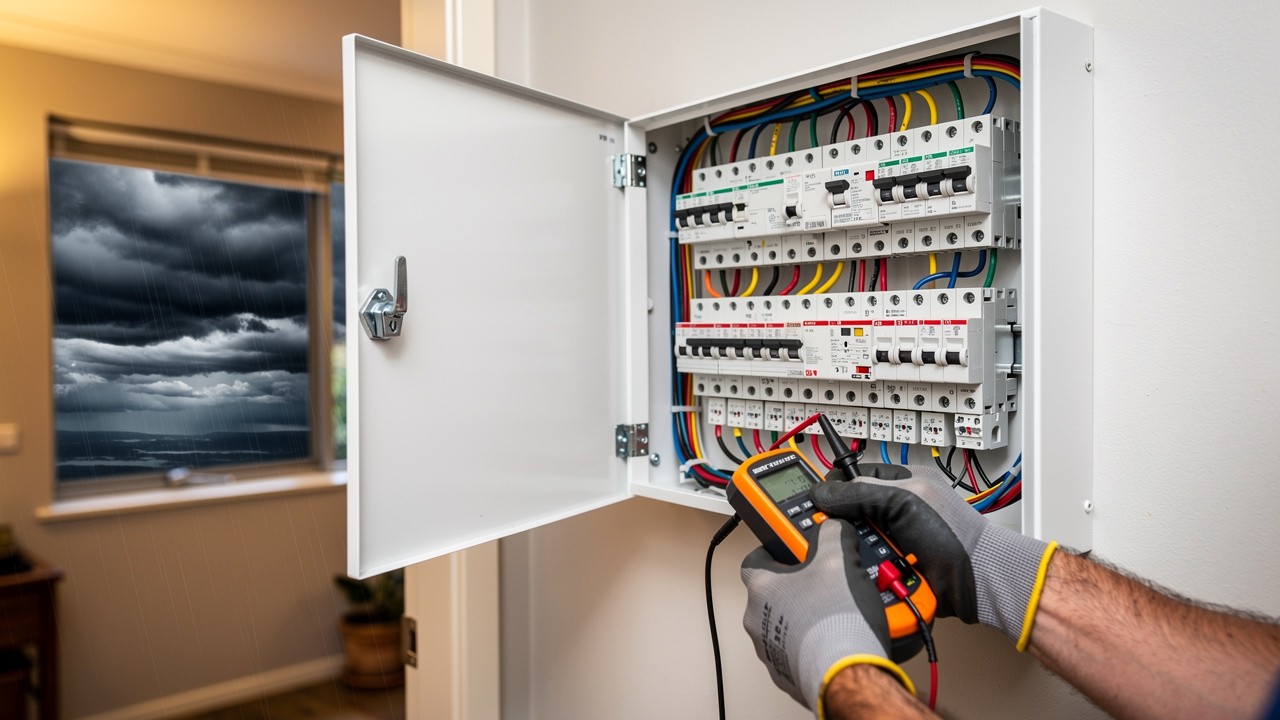
Your Essential Storm Season Electrical Safety Checklist for the Sunshine Coast
Getting your property ready for the unpredictable Sunshine Coast storm season doesn’t have to be overwhelming. This practical checklist helps you address key electrical risks before severe weather arrives, ensuring your home or business is as safe as possible.
-
Test Your Safety Switches (RCDs): Locate your switchboard and press the ‘test’ button on each safety switch. They should trip immediately to the ‘off’ position. If any feel stiff or fail to trip, contact a licensed electrician for an urgent replacement. This simple check is a life-saver, especially for older homes or rental properties.
-
Inspect Outdoor Power Points and Lighting: Check all outdoor electrical fittings for cracks, loose covers, or signs of water damage. Ensure they are weatherproof and sealed against coastal moisture and heavy rain. Unplug any temporary outdoor appliances or lights and store them safely.
-
Unplug Sensitive Electronics: Before a storm hits, unplug valuable appliances like TVs, computers, and charging devices from the wall. This protects them from power surges caused by lightning strikes or fluctuations when power is restored.
-
Clear Gutters and Drainage: Ensure gutters are clear of debris and downpipes direct water away from your home’s foundations and, critically, away from your switchboard and outdoor electrical meters. Poor drainage can lead to flooding and water ingress into electrical systems.
-
Check Pool Equipment and Air Conditioning: Inspect visible wiring for your pool pump, filtration systems, and air conditioning systems. Ensure all connections are secure and free from damage. If you have any concerns about wet-area electrical risks, arrange for a professional check.
-
Assess Solar System Safety: If you have solar panels, understand how to perform a safe shutdown. Inspect the visible components for any pre-existing damage. If unsure, consult a solar-accredited electrician.
-
Generator Preparedness: If you own a generator, ensure it has been serviced and you know how to operate it safely outdoors only, with a proper change-over switch installed by a licensed electrician.
-
Know Your Isolation Points: Familiarise yourself with the location of your main power switch, and water and gas shut-off valves. This knowledge is crucial for a quick and safe response during an emergency.
-
Have an Emergency Kit Ready: Include battery-powered lights, a portable radio, a fully charged mobile phone, and a list of emergency contacts, including your local electrician.
Why Are Safety Switches (RCDs) So Important for Storm Season?
A safety switch, or Residual Current Device (RCD), is a critical, life-saving device that is vital during storm season on the Sunshine Coast. It works by constantly monitoring the electrical current in your home. If it detects even a tiny imbalance – which often happens when electricity leaks to earth due to water coming into contact with wiring or a damaged appliance – it will instantly cut the power. This rapid disconnection, typically within milliseconds, prevents fatal electric shocks and can also reduce the risk of electrical fires. The Queensland Electrical Safety Office recommends you test your safety switches every three months to ensure they are working correctly, especially if your property is an older home or a rental.
Testing your RCD is a simple process. You can find a ‘test’ button on each safety switch in your switchboard; pressing it should cause the switch to immediately trip to the ‘off’ position. If the switch feels stiff or fails to trip, it needs urgent attention. In this situation, you should contact Sunshine Coast Projects & Electrical for a prompt replacement to ensure your family, tenants, or business occupants are protected. It is also important to confirm that all circuits, especially those for outdoor entertaining areas, bathrooms, and garages, are covered by an RCD. This level of protection is even more crucial in areas prone to heavy rain and coastal humidity like the Sunshine Coast.
What Should I Do with Outdoor Electricals and Appliances Before a Storm?
Before a severe storm hits, take proactive steps to protect your electrical equipment from damage. For indoor items, unplug sensitive and expensive appliances like televisions, computers, and stereos directly from the wall. This is the most effective way to shield them from potentially destructive power surges caused by lightning strikes or grid fluctuations. You should also take down and store any non-fixed outdoor items, such as TV aerials, portable entertainment systems, or decorative lights, in a dry and secure place.
Crucially, inspect all your outdoor electrical fittings, including power points and lights. Check that their weatherproof covers are intact and free from cracks, perished seals, or sun damage, as this is a common way for moisture to get in during torrential rain. The constant coastal moisture on the Sunshine Coast can accelerate the wear and tear on these fittings, increasing the risk. According to the team at Sunshine Coast Projects & Electrical, water ingress is a leading cause of electrical faults, leading to hazards like short circuits or electrocution. Ensure your pool pump and other permanent outdoor equipment are correctly isolated or unplugged if possible, and be certain you know where to find the isolation points for your mains power, water, and gas for a quick shutdown in an emergency. Being aware of wet-area electrical risks around patios and outdoor entertaining spaces is vital.
What Electrical Safety Steps Should I Take During a Storm on the Sunshine Coast?
During a severe weather event on the Sunshine Coast, your top priority must be personal safety, which means avoiding anything that conducts electricity. As the storm intensifies, stay indoors and unplug any appliances that you did not get to earlier. This simple action helps prevent damage from sudden power fluctuations common during lightning storms and protects against potential storm-damaged wiring.
The management of power outages and potential floodwaters requires careful and calm action. If you lose power, turn off appliances at the power point to avoid a surge when the grid is restored. Adhering to these power-down protocols protects your expensive equipment and helps prevent electrical fires. Always keep your mobile phone charged and readily accessible for emergency calls and weather updates.
How Do I Safely Manage Power Outages and Floodwaters?
If the power goes out, methodically switch off your power points and unplug equipment. This step prevents a sudden rush of electricity from damaging sensitive electronics when power is eventually restored by Energex. During a thunderstorm, avoid using a corded landline phone, as a lightning strike on the network can send a lethal shock through the line; rely on your mobile phone for updates instead. If you anticipate flooding in low-lying Sunshine Coast areas like Maroochydore, Caloundra, or Noosaville, move portable electrical items and power boards to higher ground. For small business owners, consider moving critical computer equipment to a secure, elevated spot to minimise business disruption.
The most important rule is to never step into a flooded area like a garage, basement, or any part of your home or business if the mains power is still on or you suspect it could be. Water is an excellent conductor of electricity, and entering electrified water can be fatal. Stay inside and away from windows until the storm has completely passed to avoid dangers like ‘step potential’, where a nearby lightning strike energises the ground beneath you. If you rely on medical equipment that requires power, ensure you have a backup plan, whether that’s a portable power station or making arrangements with emergency services.
When Do I Need an Emergency Electrician After a Storm? (Critical Warning Signs)
After a storm passes, a new set of hidden electrical dangers can emerge. Fallen powerlines and water-damaged switchboards present immediate, life-threatening hazards that demand urgent professional help from a 24/7 emergency electrician. You must never attempt to fix these issues yourself, even if you are an experienced renovator.
Other signs of danger may be less obvious but are just as serious. A burning smell from an outlet or a safety switch that will not stop tripping indicates a severe internal fault. These are not minor annoyances; they are clear warnings that your system has been compromised and requires immediate professional diagnosis to prevent a fire or electric shock. For landlords, quick action is crucial to ensure tenant safety and mitigate property damage.
What Are the Dangers of Fallen Powerlines or Water-Damaged Switchboards?
Fallen powerlines are one of the most lethal post-storm hazards. Always treat any fallen line as live and extremely dangerous. You must maintain a safe distance of at least 10 metres, warn others to stay away, and call Triple Zero (000) immediately, followed by Energex on 13 16 70. If a powerline has fallen onto your house, a licensed electrician must inspect your internal wiring for damage, but only after Energex has declared the area safe. High winds often damage the ‘point of attachment’ where street lines connect to your home, and this specific repair is the homeowner’s responsibility. Sunshine Coast Projects & Electrical provides specialised Point of Attachment Repairs for this exact situation, ensuring your connection is safely restored.
Water inside a switchboard creates a deadly risk of electrocution and fire. A switchboard is the central control panel for your property’s electricity, housing safety switches and circuit breakers. Warning signs of water damage include water dripping from the box, visible moisture or condensation inside, or any fizzing and buzzing sounds. Do not touch the panel under any circumstances. Contact an emergency electrician immediately, as only a professional has the insulated safety gear and testing equipment to manage the situation safely.
What Do Burning Smells or a Constantly Tripping Safety Switch Mean?
A distinct burning smell, like hot plastic or ozone, coming from a power point or light switch is a major red flag. It signals that wiring inside your walls is overheating or short-circuiting, often due to water damage from a storm, creating a serious fire risk. If it is safe to do so, turn off the mains power at your switchboard. If you see smoke or flames, evacuate the building and call Triple Zero (000) before calling an electrician.
A safety switch (RCD) that keeps tripping after a storm is not faulty; it is doing its job. This indicates it has detected a dangerous electrical fault, most likely caused by water getting into an appliance or outdoor circuit, or potentially storm-damaged wiring within the walls. Never try to force the switch to stay on or tape it down. This action bypasses your only protection against a potentially fatal electric shock. Call an emergency electrician to perform fault finding, which is the professional process of diagnosing and safely locating the source of the electrical issue and then repairing it. They use specialised equipment to pinpoint the problem without putting themselves or others at risk.
How Can I Protect My Solar System, EV Charger, and Business During a Storm?
Modern electrical systems like solar panels and EV chargers introduce unique safety challenges during the Sunshine Coast storm season. Solar panels can remain electrically live even when the grid is down, posing a hidden danger on your roof. Similarly, EV chargers are vulnerable to powerful surges from lightning, which can destroy both the charger and the vehicle’s sensitive electronics. Small business owners face the added burden of potential operational disruption and property damage.
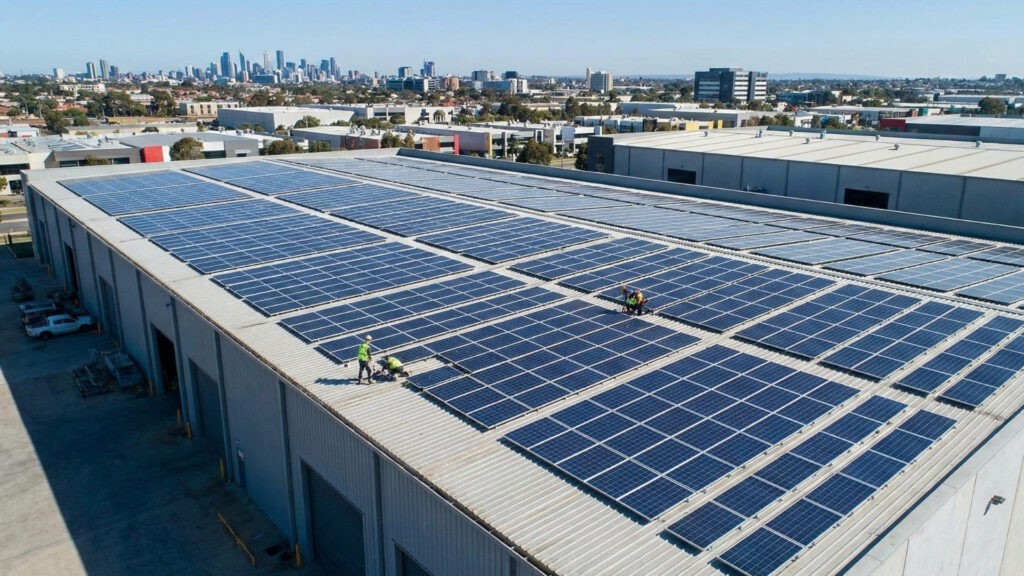
For commercial properties, the stakes are even higher. A storm can disrupt business continuity and damage expensive equipment. Proactive measures, such as robust switchboard upgrades and regular checks of emergency lighting systems, are essential to protect your assets and ensure the safety of staff and customers. Landlords of rental properties with these newer systems also have specific responsibilities to ensure they are safe for tenants.
What Are the Specific Risks for Solar Panels and Home Battery Systems?
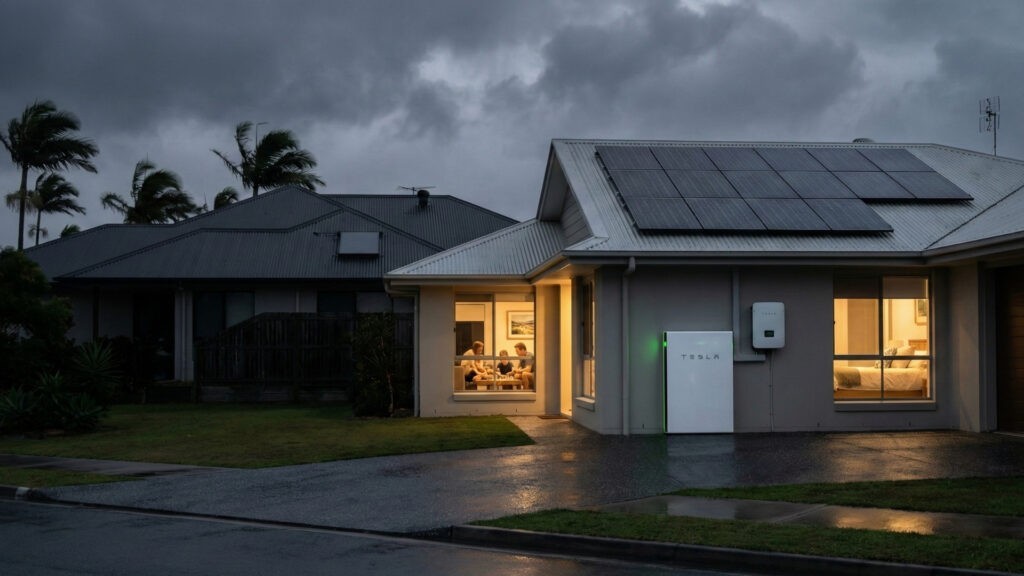
A critical fact about solar panels is that they continue to produce lethal DC voltage as long as there is daylight, even if your grid power is off. If a storm has damaged your roof or the solar array, the wiring could be exposed and live. Before a storm, you should perform a safe shutdown by following the labelled isolation procedure. This typically involves turning off the ‘Solar Supply Main Switch’ in your main switchboard, then turning off the ‘PV Array DC Isolator’ located near the near the inverter.
If your system or a connected home battery system has been damaged by debris, do not get on the roof or touch any components. Battery systems store a massive amount of energy and can be extremely dangerous if compromised. You must call a solar-accredited electrician from a trusted company like Sunshine Coast Projects & Electrical. They can safely inspect, repair, and re-commission the system before you begin any clean-up work nearby, ensuring there are no hidden electrical hazards.
How Can Commercial Properties and EV Chargers Stay Safe from Electrical Storm Damage?
For commercial properties on the Sunshine Coast, preventing storm damage involves upgrading infrastructure and regular maintenance. Comprehensive electrical fit-outs and modern switchboard upgrades are needed to handle power surges and prevent circuit overloads, protecting valuable equipment and inventory. Regular maintenance on split system air conditioning units ensures their external components are sealed against moisture, reducing the likelihood of storm-related breakdowns. Additionally, conducting mandatory 90-minute discharge tests on emergency exit lighting guarantees they will work during a blackout, allowing for safe evacuation of staff and customers. Landlords must also ensure these safety measures are in place for their rental properties.
Electric vehicle (EV) chargers are highly susceptible to lightning-induced surges. To protect your vehicle, you should always unplug it from the charger when a severe storm is forecast. Professional installation is also key to long-term safety. A qualified electrician will install the unit on a dedicated circuit with a special Type B RCD (Residual Current Device) and use high-quality weatherproof fittings to guard against the harsh coastal climate and torrential rain, common conditions on the Sunshine Coast.
How Do I Safely Use a Generator and Consider Backup Power for My Home?
During extended power outages after a storm, portable generators can be a lifeline for Sunshine Coast homes and businesses. However, they introduce serious risks if used incorrectly. Improper use can lead to deadly carbon monoxide poisoning or create a lethal hazard for utility workers. The practice of ‘back-feeding’ electricity into your home’s wiring is not just dangerous; it is also illegal.
To use a generator safely and legally, you must have a licensed electrician install a generator change-over switch. This device makes back-feeding impossible. When considering backup power, it is also important to have realistic expectations about what a system can handle, as running heavy-draw appliances requires careful load management.
Here’s how to stay safe:
-
Prevent Carbon Monoxide Poisoning: Never run a generator indoors, in a garage, or in any enclosed space. Always operate it outside in a well-ventilated area that is protected from rain, but not enclosed. Carbon monoxide is an invisible, odourless gas that can be fatal.
-
Avoid ‘Back-Feeding’: Never plug a generator directly into a wall socket. This illegal practice sends power back to the grid, which can electrocute line workers making repairs. A licensed electrician must install a dedicated generator change-over switch at your switchboard to connect it safely to your property’s electrical system.
-
Use Safe Practices: Always use heavy-duty extension leads that are fully uncoiled to prevent overheating. Only connect them to power boards that have their own overload cut-out switch, and never exceed the generator’s load rating. Be mindful of the wet-area electrical risks if you need to run leads outdoors in damp conditions.
Why is DIY Electrical Work So Dangerous and Illegal in Queensland?
Attempting to perform your own electrical repairs after a storm is extremely dangerous and strictly illegal in Queensland. Unlicensed electrical work is a criminal offence that can result in massive fines and even imprisonment. It also instantly voids your property insurance, leaving you personally liable for any fire, damage, or injury that occurs. This applies to homeowners, landlords, and renovators alike – any electrical work must be done by a qualified professional.
The risks go far beyond legal trouble. Electricity is silent and invisible, and storm-damaged systems with hidden moisture create a perfect environment for fatal electrocution. Without professional training, insulated tools, and calibrated testing equipment, you cannot safely identify or repair these hidden hazards. Always rely on a licensed and insured professional for any electrical work on your Sunshine Coast property, especially after severe weather.
Conclusion: Stay Safe This Storm Season with Sunshine Coast Projects & Electrical
Proactive electrical safety is your strongest defence against the challenges of the Sunshine Coast storm season. By prioritising pre-storm checks, following safe practices during severe weather, and relying on professional help when signs of damage appear, you can protect your property and loved ones. Remember, understanding your electrical system and knowing when to call an expert is key to staying safe. For reliable local service, contact Sunshine Coast Projects & Electrical for all your electrical safety and emergency needs, including pre-storm inspections, fault finding, and urgent repairs.
Frequently Asked Questions
Question: What is surge protection and do I need it for my Sunshine Coast home?
Answer: Surge protection diverts excess electricity from your home’s electrical system, protecting sensitive electronics from sudden voltage spikes caused by lightning strikes or grid disturbances. It is highly recommended on the Sunshine Coast to safeguard expensive electronics and appliances from damage, offering peace of mind during our intense summer storms.
Question: Can I use my outdoor power points during heavy rain?
Answer: No, it is generally unsafe. Even if your outdoor power points have weatherproof covers, torrential rain and strong winds can compromise their seals, leading to wet-area electrical risks. It’s always best to unplug and avoid using outdoor power points during heavy downpours to prevent short circuits or electric shocks.
Question: How often should I test my safety switches on the Sunshine Coast?
Answer: The Queensland Electrical Safety Office recommends testing your safety switches (RCDs) every three months. You can do this by pressing the ‘test’ button on each switch in your switchboard. If a switch doesn’t trip immediately, it indicates a fault and needs urgent professional attention from an electrician.
Question: What should I do if my home’s wiring is damaged after a storm?
Answer: If you notice any signs of storm-damaged wiring, such as frayed cables, exposed wires, or burning smells, immediately switch off your main power at the switchboard if it is safe to do so. Do not touch any damaged wiring. Call a licensed emergency electrician for a thorough inspection and repair, as damaged wiring presents a severe fire and electrocution risk.
Question: Is it safe to charge my electric vehicle during a storm?
Answer: No, it is not safe. You should always unplug your electric vehicle (EV) from its charger when a severe storm, especially one with lightning, is forecast. This protects the EV’s sensitive battery systems and the charging unit from lightning-induced power surges, even with a professionally installed charger.
Question: What should I do if my solar panels or battery system are damaged in a storm?
Answer: Do not touch the system or get on the roof. Solar panels continue to produce electricity even when grid power is off, and home battery systems store significant energy, both posing extreme hazards if compromised. Contact a solar-accredited electrician to safely inspect, repair, and re-commission your system.
Question: When is it safe to use pool equipment after heavy rain or flooding?
Answer: After heavy rain or flooding, ensure all electrical fittings for your pool equipment (pumps, filters, lights) are completely dry and visually inspect for any damage or debris. Have a licensed electrician check pumps and wiring before restarting anything. Water and electricity are a dangerous combination, so caution is paramount.
Question: What should I do in a power outage on the Sunshine Coast?
Answer: During a power outage, turn off and unplug sensitive appliances to protect them from power surges when electricity is restored. Use battery-operated lights rather than candles. Check the Energex outage map online for updates. Never approach fallen powerlines. If the outage is extended, keep your freezer/fridge doors closed to preserve food.
Question: What is “fault finding” and when is it necessary after a storm?
Answer: Fault finding is the process a licensed electrician uses to safely and systematically diagnose the cause and location of an electrical problem. It’s often necessary after a storm if your safety switches keep tripping, you smell burning, or you suspect water ingress has caused a hidden issue. An electrician uses specialised tools to identify the fault without risk, ensuring a proper and lasting repair.
Question: When should I call a licensed electrician after a storm?
Answer: You should call a licensed electrician immediately if you observe any of the following: fallen powerlines near your property (after calling 000 and Energex), water inside your switchboard, persistent tripping safety switches, burning smells, visible storm-damaged wiring, or if you have any concerns about wet electrical fittings or equipment. Do not attempt to fix these issues yourself.