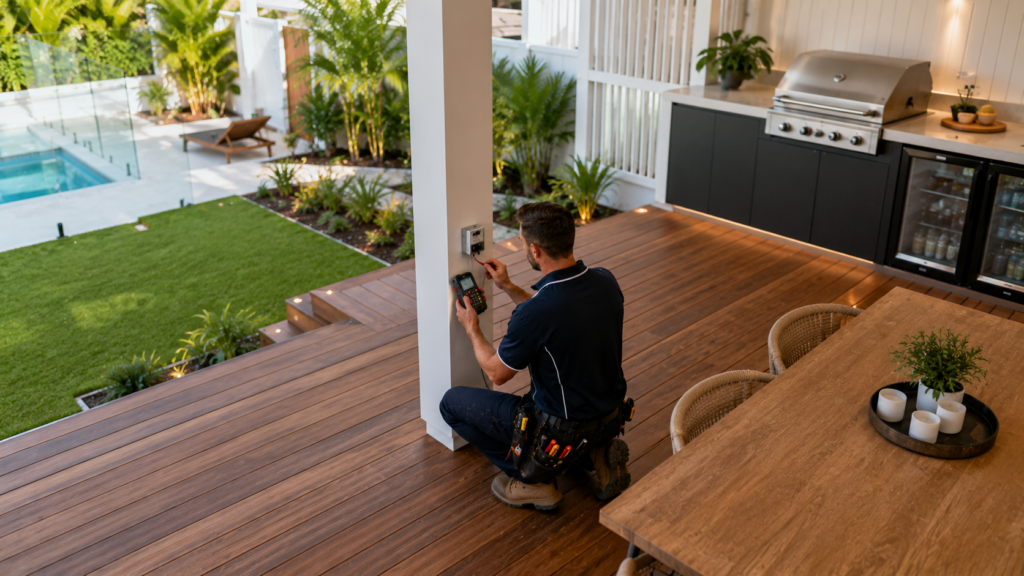
Safe outdoor and alfresco electrical safety starts with weatherproof fittings, correct IP ratings, RCD protection and a licensed electrician. Plug‑in, low‑voltage garden light kits used exactly as supplied can be a short‑term option, but any fixed garden lighting, extra cabling or new outdoor power points in Queensland must be installed and tested by a licensed electrician. That keeps garden lighting safe, legal and ready for Sunshine Coast storms.
Well‑planned outdoor electrical work makes decks, patios, alfresco areas and gardens easier to use, especially at night and during summer storms. With the right design, you get reliable alfresco power points, safe garden paths, and lighting that looks good without glare.
This guide explains how to safely plan outdoor and alfresco electrical installations on the Sunshine Coast from the ground up. You will learn about IP‑rated weatherproof power points, garden and deck lighting, RCD protection, outdoor kitchens, EV‑ready circuits, common mistakes and simple maintenance routines, with practical advice from Sunshine Coast Projects & Electrical, your local Sunshine Coast electrician.
Key Takeaways
-
Weatherproof outlets and correct IP ratings matter because outdoor fittings face rain, humidity, UV and salt air every day. When boxes seal properly, moisture and insects stay out and wiring lasts longer. This is the backbone of outdoor electrical safety in Australia.
-
Safe, practical garden and alfresco lighting design uses task, ambient, accent and security lighting in the right spots. That means steps, BBQs and paths are visible without harsh glare or dark patches. Low‑voltage garden lighting and correct IP ratings keep shock risk low around wet areas.
-
RCD protection and modern switchboard upgrades protect every outdoor circuit from dangerous fault currents. Safety switches trip in fractions of a second when leakage occurs, sharply reducing shock risk. Good layout means one wet fitting does not black out the whole house.
-
Careful planning for BBQs, outdoor kitchens, fans, heaters and EV‑ready circuits keeps loads under control. Dedicated circuits for heavy appliances reduce tripping and overheating. A licensed Sunshine Coast electrician designs with future expansion in mind.
-
A licensed Sunshine Coast electrician is the right person to call whenever you spot damage, tingling, burning smells or repeated tripping. Sunshine Coast Projects & Electrical can assess, repair and upgrade outdoor systems so you can enjoy your space with confidence.
“If you wouldn’t use an appliance in the rain, think twice about the power point you’re plugging it into.” – Queensland Electrical Safety Guidance
How To Plan Safe Outdoor & Alfresco Electrical Installations On The Sunshine Coast
Planning safe outdoor and alfresco electrical installations on the Sunshine Coast starts with a clear picture of the space, the loads and local regulations. Outdoor electrical safety in Australia also has to deal with heat, humidity, salt air and summer storms that attack fittings and cables. According to Standards Australia, Australian mains power runs at around 230 V, so shock risk outdoors is very real.
On the Sunshine Coast, alfresco areas behave more like wet rooms than lounges because rain, sea spray and condensation reach them easily. That is why outdoor electrical installation in Australia is treated as specialist work. The safest approach is to plan early with a licensed local electrician who knows coastal conditions and current Wiring Rules.
Sunshine Coast Projects & Electrical looks at how you entertain, where you need power, and how much your switchboard can handle before any cable goes in. That planning step helps avoid overloaded circuits and awkward outlet locations later.
Assessing Your Outdoor Space, Loads And Lifestyle
Good outdoor and alfresco electrical safety begins with a simple sketch and a list of loads. Think about:
-
BBQs and electric grills
-
Smokers and rangehoods
-
Bar fridges and wine fridges
-
Outdoor heaters and outdoor ceiling fans
-
Low‑voltage garden lighting and deck lighting
-
Pool pumps, chlorinators and spa equipment
-
Pressure cleaners and power tools
-
Future EV chargers and outdoor kitchen appliances
Next, think about who uses each zone. Children, older relatives, pets, staff and customers all change the level of risk and the style of fittings you need. For example:
-
Kids and pets call for higher power points and protected conduits
-
Older relatives benefit from generous step lighting and clear switches
-
Commercial venues need better cord management and emergency lighting
Mark zones such as:
-
Alfresco dining
-
BBQ and food prep
-
Pool or spa
-
Pathways and stairs
-
Lawns and garden beds
-
Carports or driveways
Leave space for future gear like outdoor blinds, extra lighting or an EV charger. Bringing in Sunshine Coast Projects & Electrical during design or renovation lets them size circuits, check switchboard capacity and plan RCD coverage before walls and ceilings close up.
Why You Must Use A Licensed Electrician For Outdoor Work In Queensland
In Queensland, almost all fixed outdoor wiring counts as electrical work under the Electrical Safety Act and must be done by a licensed electrician. That covers:
-
New circuits
-
Moving outlets
-
Hard‑wired lighting
-
Pool and spa wiring
-
EV chargers
-
Permanent garden and deck lighting
AS/NZS 3000, the Wiring Rules, sets detailed requirements for these jobs.
DIY or unlicensed work outdoors risks electric shock, fire, failed inspections, fines and rejected insurance claims. Research cited by Safe Work Australia links many serious electrical incidents to unsafe work practices. A licensed electrician selects cable sizes, IP ratings and RCDs correctly, tests the installation and issues the required documentation.
Owner and Accredited Master Electrician Charlie Doblo from Sunshine Coast Projects & Electrical brings over 20 years of experience with local conditions. The team offers honest pricing, free quotes and a 12‑month workmanship guarantee, which gives homeowners and business owners confidence that outdoor work is safe and compliant.
“Permanent outdoor electrical work is not a DIY project. In Queensland, it’s a legal requirement to use a licensed electrician.” – Queensland Government Electrical Safety Office
What Are Weatherproof Power Points, IP Ratings And RCDs – And Why Do They Matter Outdoors?
Weatherproof power points, IP ratings and RCDs are the three pillars of outdoor and alfresco electrical safety. Weatherproof fittings keep water, dust and insects away from live parts, while IP ratings describe how well a product resists solids and moisture. RCDs, often called safety switches, cut power quickly when they detect leakage current.
Outdoor electrical safety in Australia relies on these elements working together. On the Sunshine Coast, intense sun, heavy rain and salt air mean ordinary indoor outlets fail fast outside. A weatherproof GPO with an appropriate IP rating, mounted correctly and protected by an RCD, is the safe standard for external sockets.
Sunshine Coast Projects & Electrical specifies fittings that match each exposure level, then checks that lids close, seals sit flat and cable entries are tight. That detail stops slow water ingress that might not show up until the next storm.
Understanding IP Ratings And Choosing The Right Fittings
An IP rating is a two‑digit code that shows how well a product resists dust and water. The first digit (0 to 6) deals with solids such as dust and insects, while the second digit (0 to 8 or higher) deals with moisture. According to Standards Australia, this system (AS/NZS 60529) is used for outlets, lights, junction boxes and more.
On the Sunshine Coast:
-
Covered alfresco ceilings and walls often use IP44 fittings that handle splashes and wind‑driven rain.
-
Exposed walls, decks and posts usually need IP55 or IP66 to cope with heavy spray.
-
Pool pump areas and high‑spray zones commonly use IP66 or higher, as required by the Wiring Rules.
Here is a simple comparison.
| IP Rating | Exposure Level | Typical Uses | Key Points |
|---|---|---|---|
| IP44 | Light rain and splashes | Covered alfresco ceilings and walls | Keeps out splashes and insects, fine where rain rarely hits directly. |
| IP55 | Heavy rain and hose spray | External walls, decks, garden lighting | Handles jets of water, good for most weather‑exposed outlets and lights. |
| IP66 | Strong water jets | Pool pumps, coastal switchgear, carports | Dust‑tight and resistant to powerful jets, suited to harsh conditions. |
Material choice matters too. UV‑stabilised plastics, marine‑grade stainless fixings and corrosion‑resistant metals stand up far better to Sunshine Coast salt air. Even the best rating still depends on correct mounting, unbroken seals and occasional checks for damage or yellowing.
Weatherproof Power Points And RCD Protection For Outdoor Circuits
A weatherproof GPO for outdoor areas usually has a clear or opaque lid with a rubber gasket, plus cable entries that seal with glands or conduit adaptors. The hinge is often at the top so rain runs off instead of pooling on the cover. Good practice keeps these outlets:
-
Off the ground and away from pooling water
-
Clear of heavy hose spray
-
Under eaves or covers when possible
In Queensland, all socket outlet circuits, including outdoor alfresco power points, must be protected by RCDs in line with AS/NZS 3000. RCDs compare current in the active and neutral and trip when they sense leakage, often at 30 mA within about 30 milliseconds (Queensland Government Electrical Safety Office) — a safety mechanism whose real-world performance in outdoor installations is examined in research on the Analysis of Fault Potential assessment under typical line faults in urban communities. That rapid trip time sharply cuts the chance of a fatal shock.
Using multiple RCDs or RCBOs on separate outdoor circuits means one wet fitting does not drop the whole switchboard. Sunshine Coast Projects & Electrical often reworks older boards to add weatherproof GPOs, RCD protection and clearer labelling, and can diagnose nuisance tripping caused by moisture or damaged cables in gardens.
How To Design Safe, Attractive Outdoor And Garden Lighting
Designing safe, attractive outdoor and garden lighting means balancing looks, comfort and outdoor and alfresco electrical safety. Good layouts combine task, ambient, accent and security lighting so you can see steps, cook safely and enjoy the garden at night. At the same time, fittings need suitable IP ratings, sound wiring and, in many cases, low‑voltage systems in gardens.
Outdoor lighting design on the Sunshine Coast must also deal with glare, insects, salt air and storms. That is why permanent outdoor lighting should be designed and installed by a licensed outdoor electrician who understands AS/NZS 3000 and local conditions.
Sunshine Coast Projects & Electrical regularly designs alfresco lighting that ties in with existing indoor circuits, smart controls and, where installed, solar and battery systems.
Alfresco, Deck And Garden Lighting Ideas That Meet Safety Standards
Think about lighting in layers:
-
Task lighting – around BBQs, cooktops and sinks. Bright, focused downlights or under‑cabinet strips help you see what you are doing without harsh shadows.
-
Safety lighting – low‑level step lights, wall lights on stairs and level changes to help kids and visitors move around safely.
-
Ambient lighting – warm, dimmable LED downlights in the ceiling and wall lights for comfortable background light in the main alfresco area.
-
Accent lighting – spike lights to highlight feature trees and plants, plus subtle path lighting along lawns and garden beds.
-
Security lighting – motion‑sensor lights near driveways, paths and side access points for both safety and deterrence.
LED technology suits outdoor lighting and garden lighting very well. According to the U.S. Department of Energy, LEDs use at least 75 percent less energy and last up to 25 times longer than incandescent lamps. Pairing LED outdoor lighting with solar and batteries lets key paths and stairs stay lit during outages.
Safe Low‑Voltage Garden Lighting And Cable Protection
Low‑voltage garden lighting, usually 12 to 24 V, reduces shock risk when installed correctly. The transformer or driver still connects to 230 V mains, so that part of the system must be installed by a licensed electrician. DIY “plug‑and‑play” kits are only suitable when used exactly as supplied, without extra joins, buried cables or hard‑wiring.
Cables in lawns and garden beds need mechanical protection:
-
Run cables inside conduit at a suitable depth
-
Keep them away from likely digging areas for new plants or edging
-
Note cable routes on a simple plan for future landscaping work
Watch for signs of trouble such as water inside fittings, lights that fail regularly or corroded connections. Sunshine Coast Projects & Electrical can test and repair low‑voltage garden lighting, replace unsuitable connectors and upgrade systems that started life as DIY kits but have grown into permanent features.
Tip from a Sunshine Coast electrician: “If you’re mowing over cables or tripping on deck lighting leads, it’s time to talk about a permanent, hard‑wired solution.”
Outdoor Kitchens, BBQs, Fans, Heaters And EV‑Ready Circuits – Getting Power Right
Outdoor kitchens, BBQs, ceiling fans, heaters and EV‑ready circuits place heavy and sometimes continuous loads on your wiring. Safe outdoor and alfresco electrical safety means planning circuits so these appliances run without constant tripping or overheating. It also means choosing locations that avoid water, grease and trip hazards.
On the Sunshine Coast, outdoor kitchens and EV charging are often added to homes that already have pool pumps and air conditioning. A licensed electrician needs to check overall demand and switchboard capacity before adding new circuits. Sunshine Coast Projects & Electrical can combine this with any needed switchboard upgrade and RCD improvements.
Thinking ahead about EV‑ready conduits and spare capacity during renovations can save a lot of cost and mess later.
Powering BBQs, Outdoor Kitchens, Fans And Heaters Safely
Common alfresco loads include:
-
Electric BBQs and hot plates
-
Rangehoods and exhaust fans
-
Bar or wine fridges and ice makers
-
Dishwashers and outdoor kitchen sockets
-
Strip heaters and radiant heaters
-
Outdoor ceiling fans and feature fans
A single 2400 W heater can draw around 10 A at 230 V, which is close to an entire general‑purpose circuit on its own. Multiple heaters or a BBQ and heater running together quickly push circuits towards their limits.
Safer design includes:
-
Dedicated circuits for high‑demand loads to reduce tripping and overheating
-
Outlets located away from sink splash zones and underbenches where they stay dry
-
Weatherproof enclosures for any outlets exposed to wind‑driven rain
-
Mounting at a comfortable height to reduce strain when plugging and unplugging
Outdoor ceiling fans must be rated for damp or outdoor use and fixed securely to framing that can handle movement and wind — electrical safety considerations for plug-and-play and off-grid outdoor appliances are explored in the Assessment of Personal Safety concerns of plug-and-play photovoltaic inverters, which highlights risks relevant to all outdoor electrical equipment. Strip heaters need minimum mounting heights and safe clearances from furniture and pergola timbers, with clear switches or timers so they are not left on overnight. Sunshine Coast Projects & Electrical designs these layouts, installs weatherproof power points, adds RCD protection and upgrades switchboards where required.
EV‑Ready Outdoor Circuits, Carports And Driveways
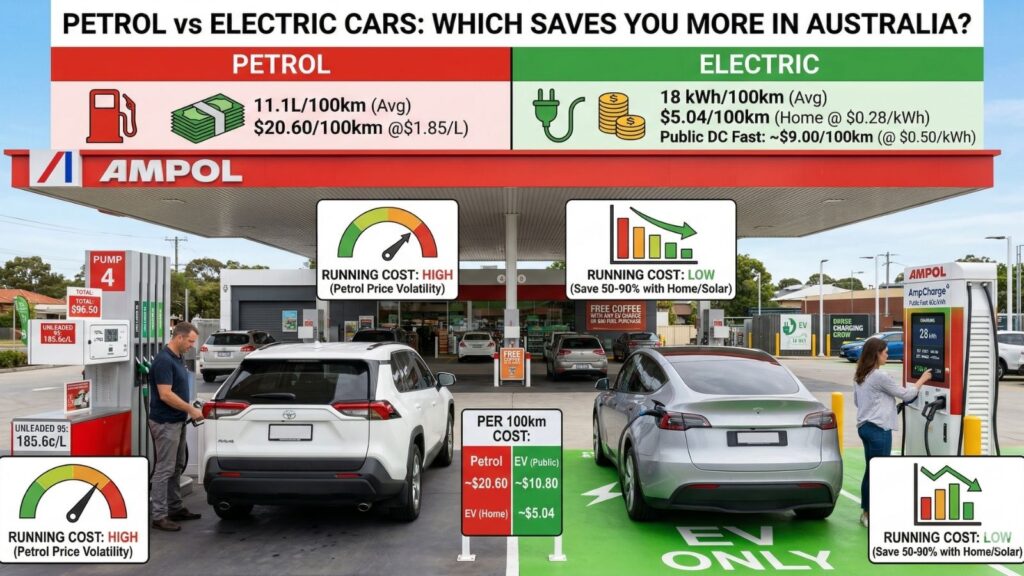
Using a standard 10 A or 15 A outdoor power point long term for EV charging is slow and hard on both outlet and lead. Dedicated wall chargers on their own circuits are safer and far more convenient. For example, a typical 7 kW single‑phase charger can add around 30 to 40 km of range per hour for many EVs (Electric Vehicle Council).
Key planning points:
-
Mount chargers in carports or on sheltered walls with suitable IP ratings
-
Protect chargers from vehicle impact where possible
-
Keep cables on hooks or reels so they do not lie across walkways or driveways
-
Size dedicated circuits to the charger rating, often 32 A for a 7 kW unit — electrical safety considerations for off-grid outdoor charging infrastructure are detailed in research going From The Laboratory To the market, covering prototype off-grid charging stations for e-bikes and the compliance journey to real-world deployment.
-
Include RCD and DC fault protection as required by standards and manufacturer instructions
Load management helps when pool pumps, outdoor kitchens, air conditioning and EV charging might run together. Sunshine Coast Projects & Electrical can plan EV‑ready conduits, integrate chargers with solar and battery systems, and keep outdoor electrical installation work compliant and tidy across the Sunshine Coast and nearby areas.
Common Outdoor Electrical Mistakes, Maintenance Tips And Safety Checklist
Common mistakes undermine outdoor and alfresco electrical safety even when the original work looked fine on day one. Weather, UV, salt, pets and DIY additions can all turn a neat system into a hazard. Regular checks and timely maintenance keep problems small and affordable.
On the Sunshine Coast, older decks and patios often hide indoor outlets used outdoors, taped joins, sagging cables and faded covers. Extension leads left out in the rain are another frequent issue. The good news is that simple visual checks combined with periodic professional inspections catch most faults before they hurt anyone.
Sunshine Coast Projects & Electrical offers electrical safety inspection services that focus on alfresco power points, garden lighting, pool equipment, carports and external switchgear. That service is especially helpful after renovations, storms or when buying a property.
Typical Outdoor Electrical Mistakes On The Sunshine Coast
Typical problems include:
-
Using indoor outlets and switches under pergolas or on external walls, which lets water and insects get in and corrode connections.
-
Power points installed too close to pools, spas or outdoor showers, ignoring separation distances around wet zones.
-
DIY junctions, taped joins and permanent power boards or extension leads where a dedicated circuit should exist.
-
UV‑cracked conduit and cables, rusted screws that stop weatherproof covers sealing, and insect‑filled fittings.
-
Overloaded circuits with strings of festoon lights, extra fridges and heaters all added over time.
Sunshine Coast Projects & Electrical can inspect these areas, replace unsafe fittings with weatherproof outdoor GPOs, rebalance loads and bring older installations back in line with current outdoor electrical safety expectations in Australia.
Outdoor Electrical Maintenance Tips And Safety Checklist
A quick visual check every few months goes a long way. Look for:
-
Cracked or discoloured outlets and switches
-
Loose covers or broken hinges on weatherproof power points
-
Water or condensation inside light fittings
-
Rust marks around switches, pool equipment and outdoor panels
-
Frequent RCD tripping or flickering lights in wet weather
For homes, many electricians suggest an electrical safety check every three to five years, and more often for properties close to the beach or with heavy outdoor use. Commercial venues, pools and EV chargers often need shorter intervals and formal test records under AS/NZS 3760. These inspections usually include:
-
RCD trip testing
-
Insulation resistance checks
-
Earthing checks
-
Review of IP seals, glands and cable terminations
Here is a simple Outdoor Electrical Safety Checklist you can print and use.
| Area | What To Check | Action Needed | Call Electrician (Y/N) |
|---|---|---|---|
| Alfresco | Outlets, fans, heaters, light fittings | Replace cracked gear, label switches | |
| Garden | Spike lights, cables, junction boxes | Re‑bury or protect exposed wiring | |
| Pool Area | Pumps, chlorinators, outlets, lighting | Remove rusted or water‑logged fittings | |
| Carport | EV charger, outdoor GPOs, conduit and covers | Fix damage, improve cable management |
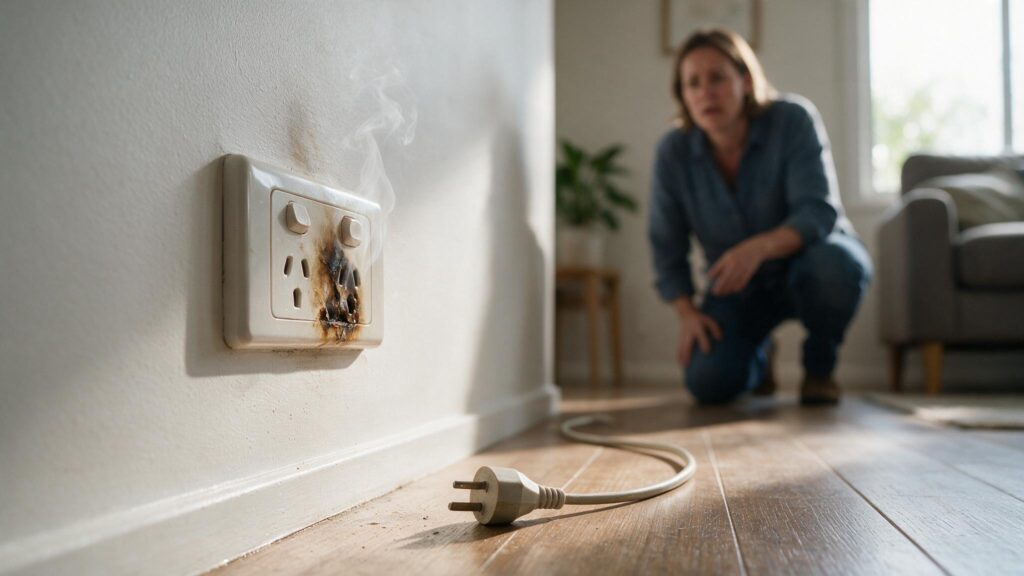
If you see damage, smell burning, feel tingling from metalwork or after any flooding, stop using the area and call Sunshine Coast Projects & Electrical straight away.
Safety reminder: Never ignore a tingling tap, fence or appliance. It’s a sign of a serious fault that needs urgent attention from a licensed electrician.
Myths Vs Facts – Outdoor Electrical Safety In Australia
Myths about outdoor and alfresco electrical safety lead many owners towards risky shortcuts and DIY fixes. Clearing up these ideas helps you decide when a simple plug‑in product is enough and when you need a licensed electrician. It also supports long‑term compliance with Australian Standards and insurance conditions.
Outdoor electrical safety Australia‑wide is shaped by the Wiring Rules, state legislation and product standards, with the technical framework for compliant outdoor switchgear and enclosures comprehensively covered in research on Outdoor Electrical Cabinets and enclosures design standards, materials and operational challenges. Sunshine Coast conditions overlay extra stress through humidity and salt air. The following myths and facts highlight common problem areas that Sunshine Coast Projects & Electrical sees in homes and small businesses.
Myth Vs Fact – What Homeowners Often Get Wrong
| Myth | Fact |
|---|---|
| If an outlet sits under a roof, normal indoor fittings are fine. | Covered alfresco areas still get wind‑driven rain and condensation, so they count as damp or outdoor zones and need IP‑rated gear. Sunshine Coast Projects & Electrical specifies fittings that suit the real exposure, not just the roof line. |
| Outdoor work is okay if it just plugs in. | Any permanent wiring, new outlets or hard‑wired lighting must be installed by a licensed electrician. Misused power boards and leads outdoors are a major hazard, especially around water. The team can add proper weatherproof outlets where you need them. |
| RCDs are optional extras that only add cost. | RCD protection is mandatory for socket outlets and strongly recommended for all outdoor circuits because it cuts power very fast during a fault. The Queensland Government Electrical Safety Office notes that safety switches greatly reduce shock risk. Sunshine Coast Projects & Electrical often adds RCDs during switchboard upgrades. |
| Weatherproof fittings can handle pressure cleaners with no problem. | High‑pressure water can force moisture past seals, even on IP66 gear, and can also damage labels and housings. Outlets, switchboards, inverters and EV chargers should never be hit directly with a pressure cleaner. Gentle cleaning and occasional inspection is the safer approach. |
| If everything still works after a storm or flood, it must be safe. | Hidden moisture and corrosion can build up inside fittings and conduits even after surfaces dry. That can cause failure months later. Post‑storm inspections by a licensed electrician help find these issues before they cause shocks or fires. Sunshine Coast Projects & Electrical provides this service after major weather events. |
In Summary
Safe outdoor and alfresco electrical safety on the Sunshine Coast relies on a few solid principles:
-
Weatherproof, IP‑rated power points and fittings to keep water and insects away from live parts
-
RCD protection, sound earthing and correct circuit design to cut shock risk and help prevent fires
-
Regular checks and maintenance to catch damage from UV, storms and salt air
-
Licensed electricians carrying out all permanent outdoor electrical work in line with Australian Standards
When you plan outdoor kitchens, garden lighting, deck lighting, fans, heaters or EV‑ready circuits, early design work with a licensed electrician pays off. You gain reliable power where you need it, outdoor lighting safety that suits your family, and compliance that stands up at sale or insurance time. Well‑planned LED garden lights and alfresco fittings work best when they are part of a thought‑through design, not a pile of add‑ons.
Sunshine Coast Projects & Electrical brings over 20 years of experience, a 12‑month workmanship guarantee and 24/7 emergency help. Whether you need weatherproof power points, outdoor and garden lighting installation, switchboard upgrades or a full electrical safety inspection for your outdoor areas, the team can help across the Sunshine Coast and surrounding regions.
If you are thinking about upgrading your patio, deck, alfresco or garden lighting, or adding an EV charger or outdoor kitchen, book a professional assessment with Sunshine Coast Projects & Electrical before you start. You will get clear advice, a practical plan and safe, compliant outdoor electrical work you can trust.
Ready to Make Your Outdoor Areas Safer and More Functional?
Whether you’re planning a new alfresco area, installing garden lighting, adding an outdoor kitchen or preparing your home for EV charging, Sunshine Coast Projects & Electrical can help you design a safe, compliant electrical solution that suits your lifestyle.
Our licensed electricians specialise in Outdoor & Alfresco Electrical Safety, using quality weatherproof fittings, RCD protection and Australian Standards-compliant installations built for Sunshine Coast conditions.
Request your free, no-obligation quote today and let us assess your outdoor electrical needs. From weatherproof power points and LED garden lighting to switchboard upgrades, outdoor entertainment areas and EV-ready circuits, we’ll ensure your installation is safe, reliable and built to last.
Contact Sunshine Coast Projects & Electrical today to book your professional outdoor electrical assessment and enjoy your outdoor spaces with complete confidence.
Frequently Asked Questions
Question: Are outdoor power points in Queensland required to be weatherproof and RCD‑protected?
Outdoor power points in Queensland are expected to be both weatherproof and RCD‑protected. AS/NZS 3000 and Queensland regulations require socket outlets supplying outdoor areas to have safety switch protection and suitable IP‑rated housings. Sunshine Coast Projects & Electrical checks existing outlets, replaces non‑weatherproof units with rated weatherproof outdoor GPOs, and upgrades switchboards with RCDs where needed.
Question: What IP rating do I need for outdoor lights and power points in an alfresco area?
For a covered alfresco with low direct exposure, fittings around IP44 are commonly used. In more exposed positions, such as open decks or posts, IP55 to IP66 is often appropriate, while pool pump areas may need IP66 or higher. A licensed electrician assesses your exact exposure and selects fittings that suit local wind, rain and salt conditions.
Question: Can I install low‑voltage garden lights myself if they just plug in?
Simple plug‑in low‑voltage garden light kits used exactly as supplied may be acceptable for short‑term or temporary use. The moment you modify the kit, extend cables, bury wiring or connect it into house wiring, the work counts as electrical work and must be done by a licensed electrician. Sunshine Coast Projects & Electrical can design and install permanent garden and deck lighting systems that are safe, tidy and scalable.
Question: How often should I get my outdoor electrical installation checked on the Sunshine Coast?
Many electricians suggest a general electrical safety check every three to five years for typical homes, with shorter intervals for harsh coastal locations or heavy outdoor use. Commercial venues, pools and EV chargers may need more frequent inspections and formal test records. An outdoor safety inspection usually covers RCD trip testing, earthing, insulation resistance and the condition of weatherproof fittings, conduits and cable terminations.
Question: What should I do if my outdoor RCD keeps tripping when it rains?
If an outdoor RCD trips during wet weather, stop resetting it repeatedly and avoid using the affected outlets or circuits. Moisture inside fittings, damaged cables or faulty appliances are common causes. Unplug portable gear on that circuit, note when it trips, and call a licensed electrician. Sunshine Coast Projects & Electrical offers fault‑finding services that focus on moisture‑related outdoor issues.
Question: Is it safe to run extension leads across the lawn for outdoor parties?
Running extension leads across lawns for short‑term events is not ideal but sometimes unavoidable. If you must do it:
-
Use heavy‑duty, outdoor‑rated leads
-
Fully uncoil them to avoid overheating
-
Plug into RCD‑protected alfresco power points
-
Keep joins off wet grass and out of puddles
-
Protect leads from foot traffic and never bury them
Permanent needs call for fixed, weatherproof power points instead of long‑term leads.
Question: Do I need a special electrician for pool, spa and water feature wiring?
Pool, spa and water feature wiring is high‑risk work that must be handled by a licensed electrician familiar with pool zoning and bonding rules in AS/NZS 3000. These locations have strict distance, voltage and bonding requirements around water. Sunshine Coast Projects & Electrical regularly installs and maintains pool pumps, chlorinators, lighting and plant rooms that meet current standards.
Question: How can Sunshine Coast Projects & Electrical help make my outdoor area safer and more functional?
Sunshine Coast Projects & Electrical can design and install weatherproof power points, alfresco and garden lighting, outdoor ceiling fans, heaters, EV‑ready outdoor circuits and RCD‑protected switchboards. The team also provides electrical safety inspections, fault‑finding and maintenance. With over 20 years of local experience, transparent quotes and a 12‑month workmanship guarantee, they help Sunshine Coast owners enjoy safer, more practical outdoor entertaining areas.