Living on the Sunshine Coast offers a fantastic lifestyle, but the beautiful sea breeze brings a hidden challenge: the coastal electrical corrosion Sunshine Coast properties face daily. The initial signs of this salt air corrosion in home electrical systems include visible rust on outdoor power points, a green or white powdery residue on wiring terminals, flickering lights, and safety switches that trip frequently.
This slow but steady damage can compromise your electrical system, leading to serious safety hazards and expensive repairs.
Understanding what is at risk is the first step towards protecting your property. From your switchboard to your solar panels, the constant exposure to salt-laden air accelerates wear and tear on essential components. This can affect everything from the reliability of your power supply to the safety of your family.
This guide explains how salt air damages electrical systems and what you can do about it. We will cover which parts of your home are most vulnerable and outline the best prevention strategies. Let’s look at how you can safeguard your coastal home.
Key Takeaways
-
Coastal electrical systems need specific protection against salt air damage to keep them safe and lasting a long time.
-
Corrosion affects switchboards, wiring, outdoor fittings, and appliances, potentially causing fire risks and power outages.
-
Using marine-grade materials and professional installation methods is essential for all electrical work in coastal areas.
-
Regular maintenance and professional inspections are necessary to identify and prevent costly electrical issues before they get worse.
-
Sunshine Coast Projects & Electrical provides tailored, expert solutions to protect local properties from corrosion.
Jump to section
- How Does Salt Air Damage Electrical Systems in Coastal Homes?
- What Electrical Components Are Most Vulnerable to Salt Air Damage?
- How Can Sunshine Coast Properties Prevent Salt Air Damage to Electrical Systems?
- Does Salt Air Affect Solar Panels and EV Chargers on the Sunshine Coast?
- What Is a Coastal Electrical Maintenance Checklist for Sunshine Coast Homes?
- Why Choose Sunshine Coast Projects & Electrical for Your Coastal Property?
- Concerned about salt air damage around your home?
- Frequently Asked Questions
- How Can I Protect My Sunshine Coast Home from Coastal Electrical Corrosion?
How Does Salt Air Damage Electrical Systems in Coastal Homes?
Salt air damages electrical systems through a persistent chemical process. The salt particles in the sea breeze are hygroscopic, meaning they attract moisture from the air, creating a thin, corrosive film on electrical components. This saltwater solution acts as an electrolyte, dramatically speeding up the natural rusting and degradation of metals, which can compromise the safety and integrity of your entire electrical system.
What Is Coastal Electrical Corrosion and How Does It Affect Homes?
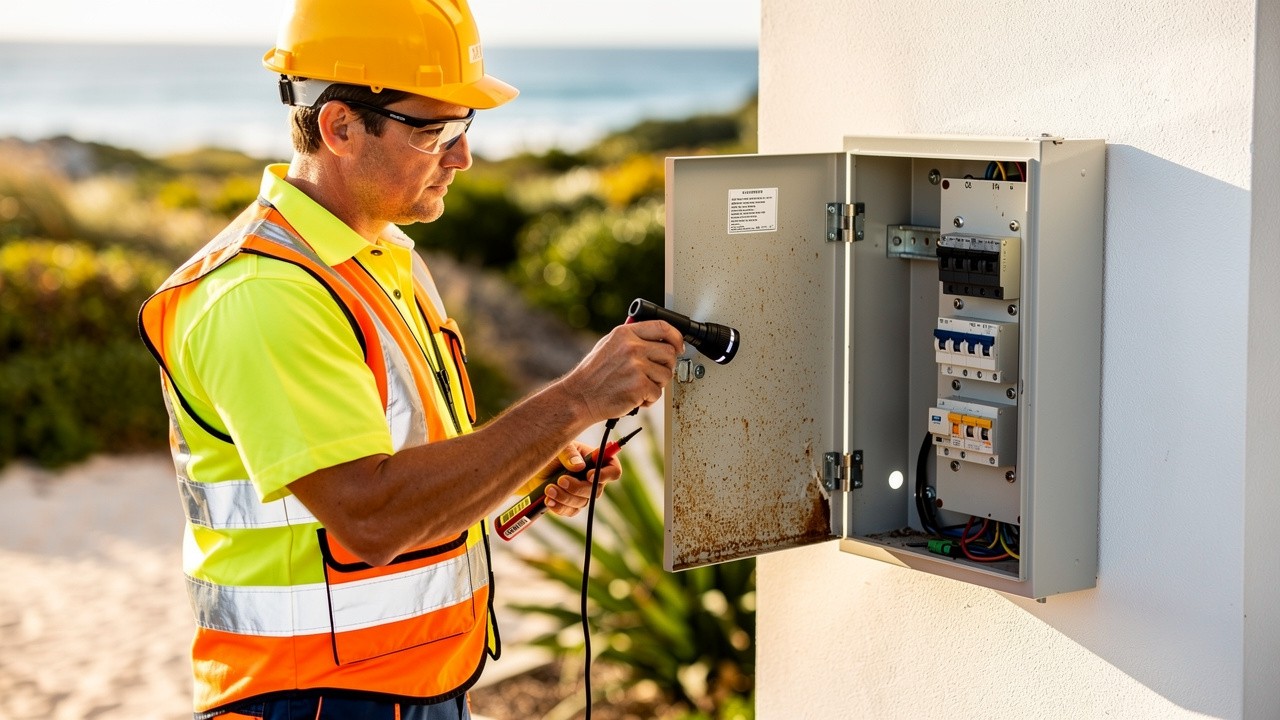
The salt-laden air and high humidity on the Sunshine Coast create a perfect storm for electrical corrosion, a phenomenon well-documented in research on Atmospheric Corrosion of Steel in Australian coastal environments. As hygroscopic salt particles settle on surfaces like switchboards and outdoor power points, they pull moisture from the atmosphere. This forms a conductive, saline layer that speeds up the oxidation, or rusting, of metal components far more quickly than in drier, inland areas.
This environment also promotes galvanic corrosion. This happens when two different metals, like copper wiring and a steel conduit, are in contact. The salty moisture acts as a bridge, causing one metal to corrode at an accelerated rate. To prevent this, Sunshine Coast Projects & Electrical uses specialised anti-corrosion paste. Another serious issue is pitting corrosion, which creates tiny, deep holes in metal conductors that can lead to sudden and unexpected electrical failures.
Why Are Sunshine Coast Properties Especially Vulnerable to Salt Spray?
Properties along the Sunshine Coast, from Caloundra to Noosa and Buderim, are directly exposed to prevailing sea breezes that carry corrosive salt mist. The region’s high humidity and frequent storms intensify this effect, keeping electrical components damp for extended periods. This continuous exposure makes them highly susceptible to damage.
Many older coastal homes were constructed before marine-grade electrical standards became common practice, leaving their original wiring and fittings extremely vulnerable. It is a common mistake to think that only beachfront properties are at risk. Strong coastal winds can carry salt spray several kilometres inland, affecting homes that are not immediately on the shoreline, as outlined in the Sunshine Coast Council’s SCC Document with Cover on shoreline erosion and coastal environmental management. Outdoor entertaining areas, pool equipment, and garden lighting are particularly exposed and require robust, weatherproof components to withstand the elements.
What Electrical Components Are Most Vulnerable to Salt Air Damage?
The most vulnerable electrical components in a coastal home include critical safety systems like switchboards, wiring connections, and safety switches, where corrosion can lead to fire risks and power failures. Additionally, outdoor fittings such as power points, lights, ceiling fans, and air conditioning units will degrade quickly if they are not specifically designed for marine environments. Failure in any of these areas can have serious consequences for your property’s safety and functionality.
Why Are Switchboards and Wiring Connections so Susceptible to Corrosion?
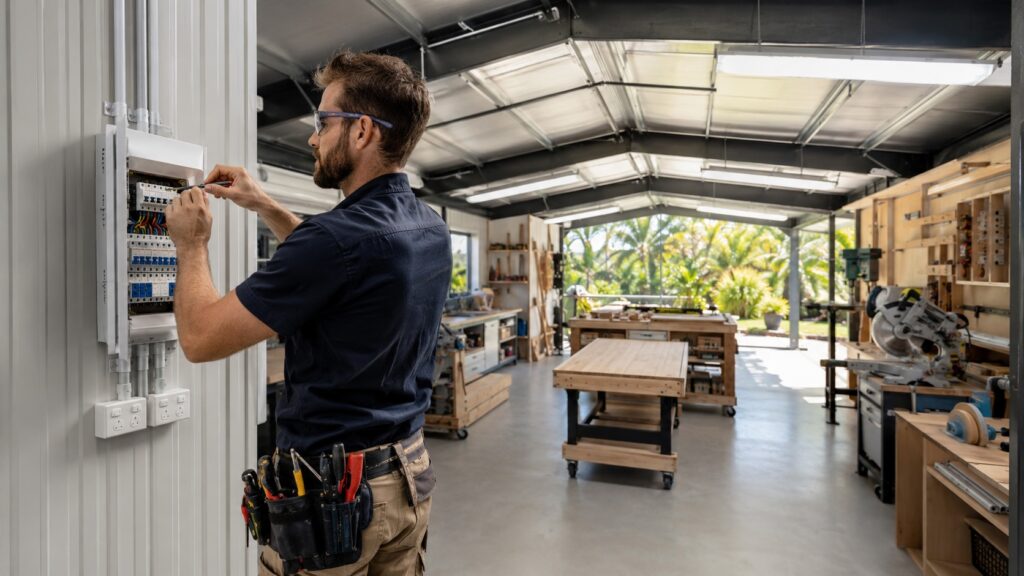
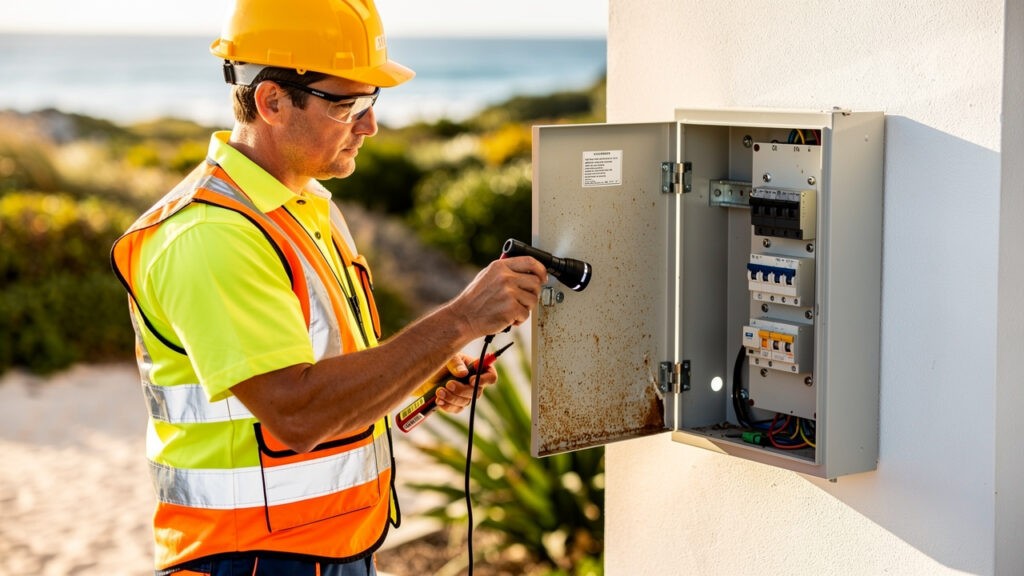
Your switchboard is the central hub of your home’s electrical system, and it is highly susceptible to salt air. Over time, salt particles can get inside older, poorly sealed enclosures and corrode the essential metal parts, including busbars, circuit breakers, and terminal screws. This corrosion increases electrical resistance, which generates heat and creates dangerous “hot spots” that are a significant fire risk. Sunshine Coast Projects & Electrical uses thermal imaging to detect these hidden hazards during inspections.
Corrosion also compromises wiring connections, which can cause flickering lights and intermittent power. A particularly dangerous outcome is the failure of safety switches (RCDs). Rust can cause their internal mechanisms to seize, preventing them from tripping during an electrical fault and leaving you unprotected. Upgrading your mains and meter box is an effective way to shield these systems from moisture and salt ingress.
How Does Salt Air Affect Outdoor Power Points, Lighting, and Appliances?
Outdoor electrical fixtures and appliances bear the brunt of the coastal climate. Standard power points and light fittings can rust quickly, leading to short circuits and exposing you to the risk of electric shock. It is essential to use weatherproof, marine-grade fittings, such as those with a high IP rating and made from 316-grade stainless steel, to keep everyone safe and provide durability.
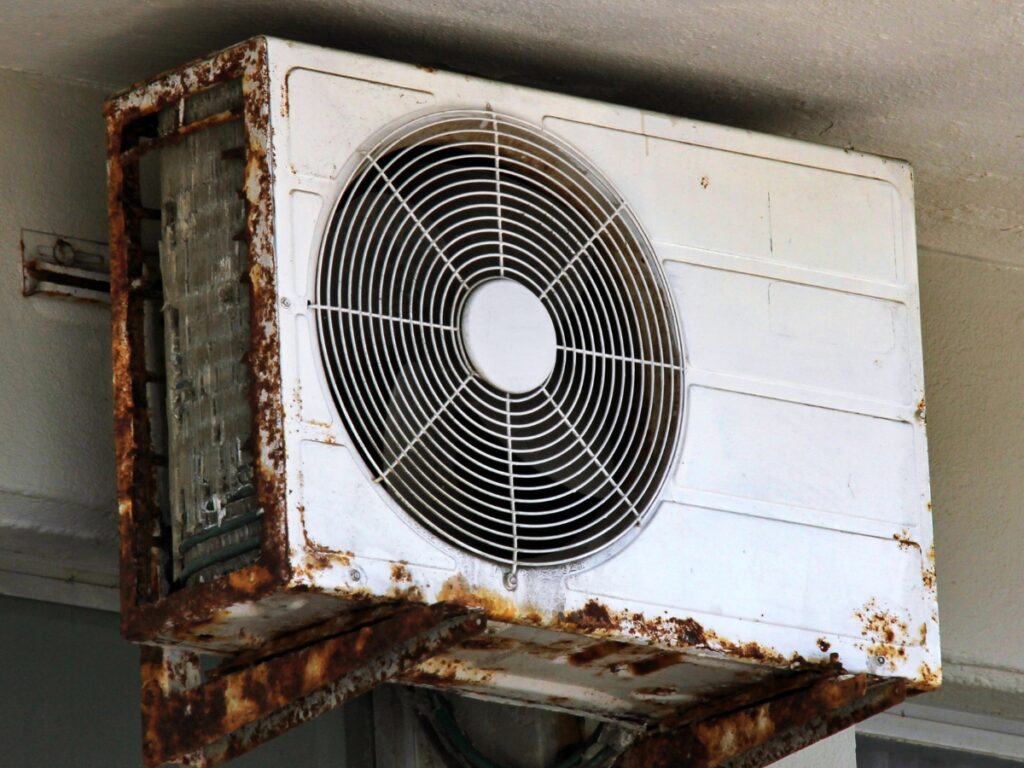
Ceiling fans are another common victim, with standard metal blades rusting and becoming noisy and unbalanced. This not only looks bad but can also spread rust particles through your home. Air conditioning units are also at risk, as corrosion of the aluminium fins on the outdoor condenser reduces efficiency and increases your power bills. Similarly, pool pumps, filters, and controllers are constantly exposed and will have a shorter lifespan without proper protection.
How Can Sunshine Coast Properties Prevent Salt Air Damage to Electrical Systems?
To prevent salt air damage on the Sunshine Coast, it is vital to use marine-grade materials and corrosion-resistant fittings for all new installations and upgrades. For existing systems, a program of regular professional inspections and the application of protective treatments can stop degradation before it becomes a serious problem. A proactive approach is the most effective way to protect your investment and keep your electrical system safe long-term.
How Can I Protect My Electrical Installations from Corrosion?
Choosing the right materials is your first line of defence against coastal electrical corrosion Sunshine Coast weather causes. This means selecting marine-grade products like 316-grade stainless steel for enclosures and marine-grade aluminium for conduits. Sunshine Coast Projects & Electrical specialises in sourcing and installing components with factory-applied protective finishes for maximum durability.
Professional installation techniques are just as important. This includes properly sealing all fixtures, using anti-corrosion paste or dielectric grease to isolate different metals, and using specialised Class 5 screws for roof-penetrating hardware on solar systems. Upgrading an old, rusted switchboard with a modern, compliant unit that includes safety switches (RCDs) on all circuits is a core service we provide, including handling all the necessary Energex paperwork. For solar and EV charger installations, we make sure designs minimise salt spray exposure and use equipment with high IP ratings.
What Proactive Maintenance and Treatments Can Prevent Damage?
Ongoing maintenance is key to preserving the health of your electrical systems. Sunshine Coast Projects & Electrical offers custom inspections that use advanced methods like thermal imaging to identify hot spots and other early signs of degradation. This allows us to catch potential problems before they escalate into dangerous and costly failures.
For existing electrical setups, we can apply protective layers such as corrosion-resistant epoxy coatings and dielectric grease to shield vulnerable components from moisture and salt. Simple steps can also make a big difference. We advise homeowners to regularly and gently clean salt deposits from external fittings using a soft brush and fresh water, but only after turning off the power at the mains. In cases of advanced degradation, we can perform emergency upgrades of switchboards and switchgear to eliminate immediate fire risks.
Does Salt Air Affect Solar Panels and EV Chargers on the Sunshine Coast?
Yes, salt air presents a significant challenge for modern electrical infrastructure like solar panels and EV chargers on the Sunshine Coast. To keep them working for a long time and safely, solar panels must meet strict marine environment standards, such as IEC 61701 Level 6 certification, and be installed with marine-grade mounting systems. Similarly, EV chargers need high IP ratings and must be strategically placed to protect them from the corrosive effects of salt mist.
What Should I Consider for Solar Panel Systems on the Coast?
For a solar power system to survive the Sunshine Coast’s marine climate, it must be built to rigorous standards. The most important of these is the IEC 61701 Level 6 certification for solar panels. This standard is mandatory for installations in severe marine environments, especially for properties within 500 metres of the shoreline, and confirms the panels can resist salt mist corrosion.
The mounting system is equally important, and research into the Corrosion behavior of conductor materials under marine atmospheric conditions highlights why material selection for all electrical hardware must prioritise corrosion resistance. Sunshine Coast Projects & Electrical makes sure all installations use rails made from structural grade anodised aluminium (AL6005-T5) and fasteners made from high-grade stainless steel (SUS304 or SUS316). The inverter, which is the brain of the system, must also be protected. We recommend installing it in a sheltered, well-ventilated location like a garage or inside a purpose-built enclosure to prevent internal salt build-up and overheating. Always check that your 25-year performance warranty explicitly covers installations in harsh marine environments.
How Can I Protect My EV Charger from Salt Air Degradation?
Installing an Electric Vehicle (EV) charger in a coastal region requires careful planning. To resist salt and water ingress, chargers must have a high Ingress Protection (IP) rating, typically IP65 or IP66. The external casing should be made from UV-stabilised polymers or treated stainless steel, and all mounting hardware must be corrosion-resistant.
Strategic placement is another key factor. Sunshine Coast Projects & Electrical will help you position the charger in the most protected location possible, shielded from prevailing sea winds. Before installation, a professional electrical assessment is needed to confirm your mains supply can handle the continuous high load of an EV charger. We install dedicated RCBOs (Residual Current Circuit Breaker with Overcurrent Protection) for every charger to provide the highest level of safety for both you and your vehicle.
What Is a Coastal Electrical Maintenance Checklist for Sunshine Coast Homes?
A proactive approach to maintenance can save you from costly repairs and dangerous situations. Regular visual checks of your outdoor electrical components can help you spot the early signs of corrosion. For a thorough assessment, a professional annual health check by a licensed electrician is essential to keep your home safe and compliant.
What Essential DIY Checks Can Coastal Property Owners Do?
You can perform several simple checks yourself to stay on top of your home’s electrical health. Remember to always prioritise safety and never touch any electrical components if you are unsure.
-
Outdoor Power Points and Lighting: Look for any visible rust, cracks in the weatherproof seals, or a green or white powdery residue. Make sure all protective covers are closed securely when not in use.
-
Switchboards: Check the external enclosure for any signs of rust. Listen for any unusual buzzing sounds or notice any burning smells, which could indicate a serious problem.
-
Exposed Wiring: Visually inspect any visible cables for signs of cracking, fraying, or exposed copper wiring.
-
Appliances: Check the power cords and casings of outdoor appliances like fridges or BBQs for any corrosion or physical damage.
-
Cleaning: After turning the power off at the mains switch, you can gently wipe down external electrical surfaces with a damp cloth to remove salt build-up.
When Should I Call a Sunshine Coast Projects & Electrical Professional?
While DIY checks are helpful, some situations require professional expertise. It is time to call a licensed electrician if you notice any of the following issues.
-
Annual Electrical Health Check: We recommend a comprehensive professional inspection every year, especially for older coastal homes or rental properties.
-
Tripping Safety Switches or Circuit Breakers: If your safety switches or breakers trip frequently, it signals an underlying fault that needs professional diagnosis.
-
Flickering Lights or Power Outages: These are common signs of increased resistance in your wiring due to corroded connections.
-
“Tingles” from Taps: Receiving a mild electric shock from taps or other metal fixtures is an extremely dangerous sign of a failed earthing system and requires an immediate emergency call-out from a qualified electrician like Sunshine Coast Projects & Electrical.
-
Upgrades and Installations: Any new electrical work, such as installing an EV charger or upgrading a switchboard, must be done by a professional to keep it safe and compliant.
-
Suspected Corrosion: If you see significant rust or powdery residue on any electrical components, contact Sunshine Coast Projects & Electrical for a professional assessment.
Why Choose Sunshine Coast Projects & Electrical for Your Coastal Property?
Choosing the right electrician is important for protecting your coastal property. Sunshine Coast Projects & Electrical combines over 20 years of local, specialised experience with a commitment to using only high-quality, marine-grade materials. We offer transparent, guaranteed services, from proactive diagnostics with advanced technology to fully compliant installations, helping to keep your home safe from the harsh coastal elements.
What Local Expertise Does Sunshine Coast Projects & Electrical Offer?
With over 20 years of local experience, our team, led by Accredited Master Electrician Charlie Doblo, possesses a deep understanding of the unique challenges posed by the salt air and humidity on the Sunshine Coast. We do not just fix problems; we prevent them. Using advanced diagnostic tools like thermal imaging, we can detect hidden faults and early signs of degradation that might otherwise go unnoticed. This allows us to provide tailored electrical approaches specifically designed to withstand the marine environment, helping to keep your property safe and reliable for the long-term.
What Is Sunshine Coast Projects & Electrical’s Commitment to Quality, Safety, and Transparency?
Your safety and peace of mind are our top priorities. We stand behind our work with a 12-month workmanship guarantee. We provide fast, obligation-free quotes with fixed, upfront pricing, so you will never face unexpected costs. We also handle all the detailed paperwork, such as liaising with Energex for switchboard upgrades. We insist on using marine-grade components like 316 stainless steel and applying protective treatments like dielectric grease to stop corrosion in its tracks. Our installations not only meet but exceed Australian Electrical Standards (AS/NZS 3000), keeping your property safe and ready for the future.
Concerned about salt air damage around your home?
Book a coastal electrical inspection with Sunshine Coast Projects & Electrical to identify corrosion, moisture issues and safety risks before they become expensive problems.
Frequently Asked Questions
Question: How often should I have my coastal property’s electrical system inspected?
An annual electrical health check is recommended for all coastal homes and businesses. For properties directly on the beachfront or those with older electrical systems, a more frequent check every six months is a wise precaution. It is also important to get an inspection after any major storm.
Question: Can salt air damage electrical appliances inside my home?
Yes, although the effect is less direct, high humidity combined with salt particles can still affect internal appliances. Electronics in unsealed areas like garages or laundries are particularly vulnerable. Signs of damage include rust on the external casing or intermittent performance.
Question: What are the common signs of electrical corrosion on outdoor power points?
Common signs include visible rust or a green and white powdery residue around the terminals or on the casing. You might also notice cracks in the weatherproof cover, loose fittings, or discolouration of the plastic. A power point that stops working or frequently trips your safety switch is another key indicator.
Question: Are newer homes on the Sunshine Coast still vulnerable to coastal electrical corrosion?
Yes, even new homes can be vulnerable if standard, non-marine-grade electrical components were used during construction. Building codes do not always specify marine-grade fittings for all applications. Proactive material selection and installation by a coastal specialist like Sunshine Coast Projects & Electrical remain essential.
Question: How does high humidity contribute to electrical corrosion in coastal areas?
High humidity provides the moisture that salt particles need to form a conductive electrolyte solution. This moisture dramatically accelerates the electrochemical reactions that cause metal to corrode. High humidity also increases the risk of mould, which can further degrade electrical components.
Question: What is the average lifespan of electrical components in a coastal environment without proper protection?
The lifespan is significantly reduced. Standard electrical components that might last 10-20 years in an inland area can degrade and fail in just a few years on the coast. Using marine-grade materials can help your electrical system last for decades, as intended.
Question: Is it more expensive to install or repair electrical systems in coastal homes due to corrosion?
The initial cost for an installation using marine-grade materials may be slightly higher, but it saves a significant amount of money in the long term by avoiding premature failure. Repairs due to corrosion can be very expensive, often requiring the complete replacement of systems rather than a simple fix.
How Can I Protect My Sunshine Coast Home from Coastal Electrical Corrosion?
The corrosive sea air is a constant threat to properties on the Sunshine Coast, but you can protect your home or business. By understanding the risks and taking proactive steps, you can prevent serious damage and help keep your electrical systems safe. This involves choosing marine-grade materials, confirming professional installation, and committing to regular maintenance.
With deep local expertise, Sunshine Coast Projects & Electrical is your trusted partner in this process. Don’t wait for a flicker or a fault to signal a bigger problem. Contact a licensed Sunshine Coast electrician today to book a comprehensive coastal electrical inspection or to receive a free, no-obligation quote.