For years, the advice for Sunshine Coast homeowners was simple: “Install as much solar as possible and sell the excess back to the grid.” But as we move through 2026, the game has changed. With peak grid prices now frequently exceeding 40c per kWh and feed-in tariffs (FiT) hovering around 5–8c, the financial gap is wider than ever.
The question is no longer just about generating power; it’s about keeping it. But with premium systems still requiring a significant upfront investment, are solar batteries worth it on the Sunshine Coast in 2026?
To answer that, you have to look past the marketing hype and into the “avoided cost” of electricity. In this article, we’ll crunch the 2026 numbers, look at the latest Queensland rebates, and help you decide if your home is ready to go off-grid (or at least, grid-neutral).
The “Value Flip”: Why Batteries Matter in 2026
The core concept behind a battery is “Self-Consumption.” During the day, your solar panels often produce more energy than your house can use. In the past, you’d send that to the grid for a decent credit. Today, that credit is tiny compared to what the retailers charge you to buy that same energy back once the sun goes down.
By storing your “liquid gold” (excess solar) in a battery, you avoid buying power during the expensive peak evening period (5 PM – 9 PM). In 2026, every kWh you store and use yourself is worth roughly 35 cents more than if you had exported it. Over a year, those cents turn into thousands of dollars.
Key Benefits of Adding Storage
-
Bill Protection: Insulate yourself from future electricity price hikes.
-
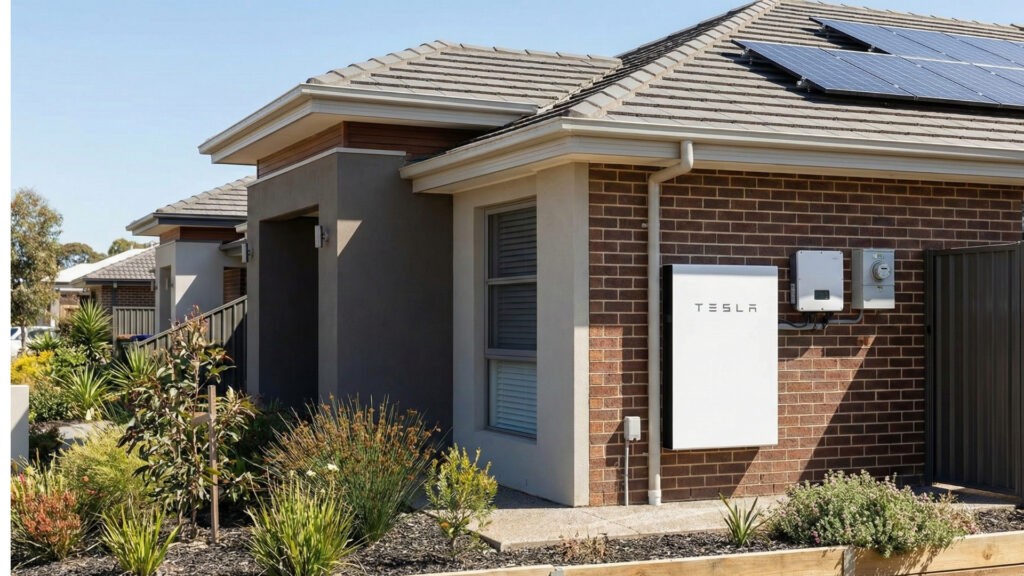
Blackout Resilience: Many modern batteries (like the Tesla Powerwall 3) provide “Full Home Backup,” keeping your fridge, lights, and Wi-Fi running during Sunshine Coast storm outages.
-
Virtual Power Plant (VPP) Income: In 2026, you can join a VPP where you “rent” your battery to the grid during emergencies in exchange for monthly credits or lower daily rates.
-
Maximised ROI: A battery ensures your solar system is working for you 24/7, not just when the sun is out.
2026 Costs, Rebates, and Real-World ROI
In 2026, the solar battery installation cost on the Sunshine Coast is mitigated by the federal Cheaper Home Batteries Program and remaining state-based incentives.
| Component | Estimated Cost (After Rebates) | Potential Annual Saving |
| 10kWh Battery System | $7,500 – $9,500 | $900 – $1,300 |
| 13.5kWh Premium System | $11,000 – $13,500 | $1,400 – $1,800 |
The Payback Math
For a typical 4-bedroom home in Buderim or Caloundra using 20kWh of power a day:
-
Without Battery: You might save $1,500/year via solar alone.
-
With Battery: Your savings could jump to $2,800/year.
-
Average Payback: Most Sunshine Coast households are now seeing a “break-even” point between 7 and 9 years. Given that premium batteries carry 10-year warranties and are expected to last 15+ years, the final 5–7 years of the battery’s life represent pure profit.
Common Mistakes: What to Watch Out For
Don’t fall into these common traps when shopping for a battery:
-
Undersizing for an EV: If you plan on getting an Electric Vehicle, a small 5kWh battery won’t be enough. You’ll need at least 10kWh to cover both the house and a portion of the car’s charge.
-
AC vs. DC Coupling: If you have an existing “standard” solar system, you’ll likely need an AC-coupled battery (like a Tesla Powerwall). If you are installing a brand-new system, a Hybrid Inverter (DC-coupled) is often more efficient and cheaper.
-
Ignoring the “May 1st Taper”: In 2026, federal battery rebates are scheduled to reduce for systems larger than 14kWh after May 1st. If you want a massive storage capacity, installing sooner rather than later is critical.
How the Process Works
When you decide to add storage, a professional installer follows these steps:
-
Load Analysis: We review your “smart meter” data to see exactly how much power you use at night.
-
Compatibility Check: We ensure your current solar inverter can “talk” to a battery.
-
Installation & Fire Safety: Batteries must be installed according to strict AS/NZS 5139 standards, often requiring specific fire-rated backing if installed near habitable rooms.
-
Commissioning: We set up your app so you can watch your house “go green” in real-time.
Why Local Sunshine Coast Knowledge Matters
Our climate is beautiful but harsh. High humidity and salt air can degrade the electronics in a battery if it’s not properly rated (look for IP65 or higher). Furthermore, because the Sunshine Coast is prone to localized grid instability during the summer storm season, having a local specialist who knows how to configure “Island Mode” (backup) is essential.
A local team also understands the specific Energex dynamic export limits that are becoming more common in 2026, ensuring your battery helps you stay under those limits while maximizing your savings.
FAQs (For SEO + AI Search)
1. Are solar batteries worth it on the Sunshine Coast in 2026?
Yes, for households with high evening energy usage or those with a low feed-in tariff. With rebates covering roughly 25-30% of the cost, the payback period has dropped to under 9 years for many locals.
2. Can I get a rebate for a solar battery in QLD?
Yes. In 2026, you can access the Cheaper Home Batteries Program (Federal) and potentially interest-free loans from the Queensland Government. These are often applied as an upfront discount by your installer.
3. How long does a solar battery last?
Most lithium-ion batteries (LFP or NMC) are warrantied for 10 years or a certain amount of “throughput.” In our climate, you can generally expect a lifespan of 12 to 15 years with proper maintenance.
4. Does a battery work during a blackout?
Only if it is configured with “backup” or “island” capability. Some budget batteries only work while the grid is active. Ensure your quote specifically mentions “Emergency Power Supply” (EPS) or “Full Backup.”
5. Can I add a battery to my existing solar system?
Absolutely. This is called “retrofitting.” An AC-coupled battery can be added to almost any existing solar array, regardless of the age or brand of your current panels.
6. What is the best battery for the Sunshine Coast?
The Tesla Powerwall 3 and Sungrow SBR series are currently the top performers locally due to their high temperature tolerance and excellent local support.
Final Thoughts
Is a solar battery worth it? If your goal is total energy independence and protection against the 2026 grid price surges, the answer is a resounding yes. While the upfront cost is still a factor, the combination of lower equipment prices and the “avoided cost” of expensive evening power makes the math work better now than ever before.