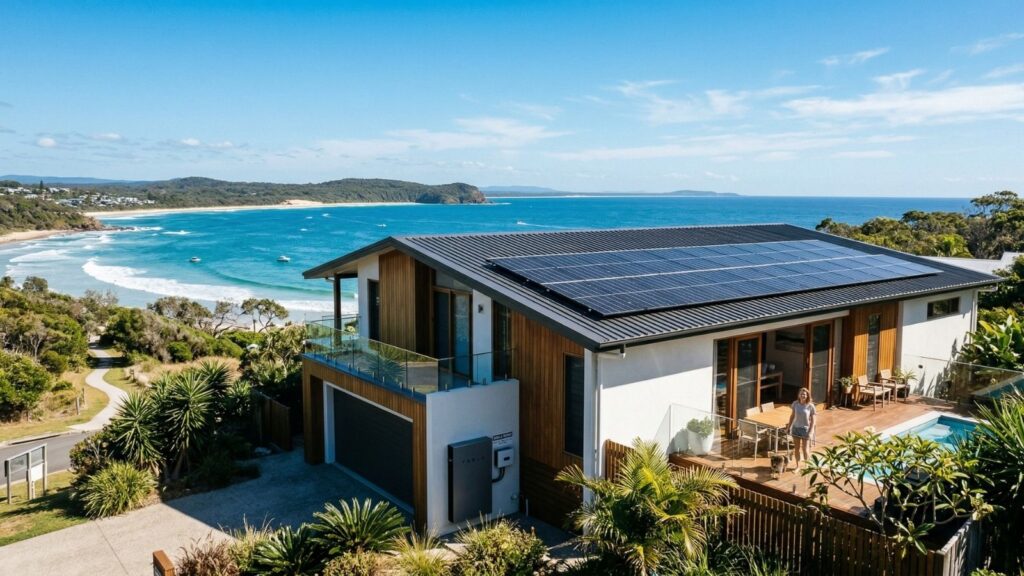
The Sunshine Coast is one of Australia’s premier locations for renewable energy, and for good reason. With an average of over 300 days of sunshine a year, the potential for energy independence is massive. However, as we move through 2026, many homeowners and business owners are asking the same question: what is the actual solar panel installation cost on the Sunshine Coast today?
The solar landscape has evolved. While technology has become more efficient, federal rebate tapering and new state incentives for battery storage have changed the “out-of-pocket” math. Whether you are looking to offset rising electricity prices or prepare your home for an electric vehicle (EV), understanding the current market rates is the first step to a successful investment.
In this guide, we provide a transparent breakdown of 2026 pricing, the impact of the latest Queensland rebates, and why local expertise is non-negotiable for systems installed in our unique coastal environment.
Understanding Solar Pricing on the Sunshine Coast
When researching the solar panel installation cost on the Sunshine Coast, it is important to understand that you aren’t just buying hardware; you are investing in a 25-year power plant for your roof. In 2026, “budget” systems still exist, but there is a clear shift toward high-efficiency N-Type panels and hybrid inverters that are “battery-ready.”
Prices vary based on the size of the system, the quality of the components (Tier 1 vs. premium), and the complexity of your roof. On the Coast, we also have to account for “marine-grade” requirements for homes near the ocean to prevent salt-mist corrosion—a factor often overlooked by national call-centre companies.
Key Benefits of Investing in Solar in 2026
Why are thousands of Sunshine Coast residents still making the switch in 2026? The reasons go beyond just “being green”:
-
Massive Bill Reduction: With grid electricity prices remaining volatile, a well-sized solar system can offset up to 70–90% of a typical household’s daytime power usage.
-
Battery Integration: 2026 is the year of the battery. New rebates have made storage more affordable, allowing you to use your solar energy at night.
-
Increased Property Value: Homes with high-quality solar and battery systems are increasingly viewed as “low-maintenance” assets by buyers in the QLD property market.
-
EV Readiness: As electric vehicles become the norm, having a larger solar array (10kW+) allows you to “fuel” your car for free using the sun.
-
Coastal Durability: Modern premium panels are now built specifically to withstand the humidity and high UV index of South East Queensland.
2026 Cost Ranges & Savings Breakdown
The following table provides estimated price ranges for quality solar installations on the Sunshine Coast in 2026. These figures include the Federal STC rebate (which has reduced slightly as part of its scheduled phase-out) but do not include specific state-based battery boosters.
| System Size | Ideal For | Estimated Cost (After STC Rebate) | Potential Annual Savings |
| 6.6kW System | Small households / couples | $4,800 – $6,500 | $1,200 – $1,600 |
| 10.3kW System | Large families / EV owners | $7,500 – $9,800 | $2,100 – $2,800 |
| 13.2kW System | High energy users / Pools | $10,500 – $13,500 | $3,000+ |
| Solar Battery (10kWh) | Night-time energy use | +$8,500 – $12,000* | Varies by usage |
Note: Battery prices may be lower if you qualify for the 2026 Queensland Battery Booster or the Federal Cheaper Home Batteries Program. Prices are indicative and depend on component brands like Fronius, Sungrow, or Tesla.
Common Solar Pitfalls & Mistakes to Avoid
As an expert in the local industry, we see the same issues recurring when people chase the lowest possible price:
-
The “Cheap” Inverter Trap: The inverter is the brain of your system. Cheap inverters often fail within 3–5 years. On the Sunshine Coast, heat and humidity are “inverter killers.” Always opt for a brand with a local Australian office.
-
Ignoring Salt Corrosion: If you live within 5km of the beach (from Noosa down to Caloundra), your racking and panels must be salt-mist certified. Using standard gear will void your warranty and lead to “tea-staining” or structural failure.
-
Under-Sizing the System: Many people install a 6.6kW system to save money, only to realise a year later that they need more power for an EV or a new air-conditioner. Upgrading later is almost always more expensive than “oversizing” from the start.
-
DIY Risks: Solar is high-voltage DC electricity. Non-compliant DIY work is not only illegal in Queensland but also poses a massive fire risk and will void your home insurance.
The Solar Installation Process: Step-by-Step
When you partner with a professional Sunshine Coast solar specialist, the process is streamlined and compliant:
-
Site Assessment: We examine your roof orientation (North vs. West), shading from local trees, and the condition of your switchboard.
-
Custom Design: Using satellite imagery and energy consumption data, we design a system that maximises your ROI.
-
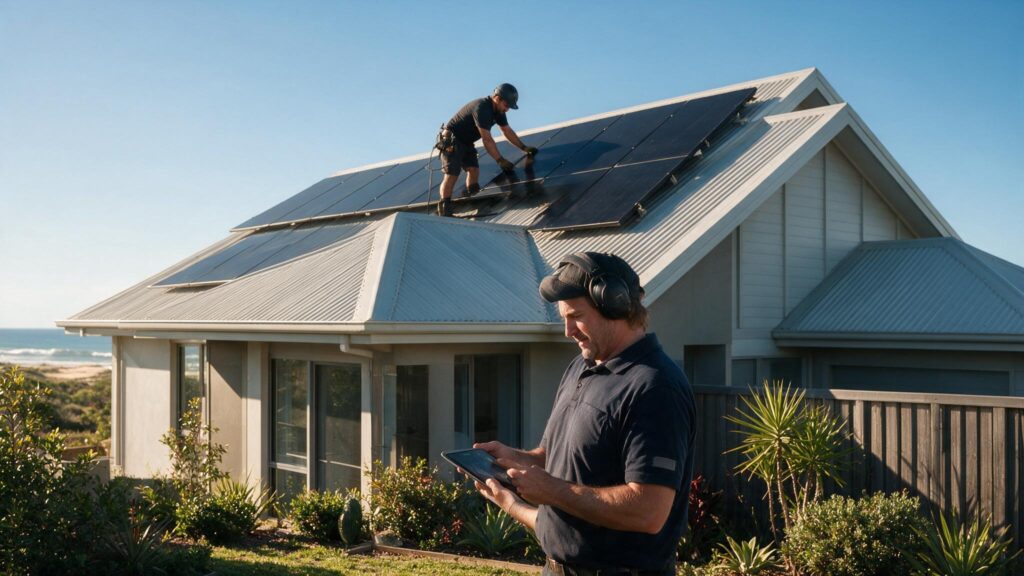
Installation Day: Our CEC-accredited team installs the panels and inverter, usually completing the work in a single day for residential properties.
-
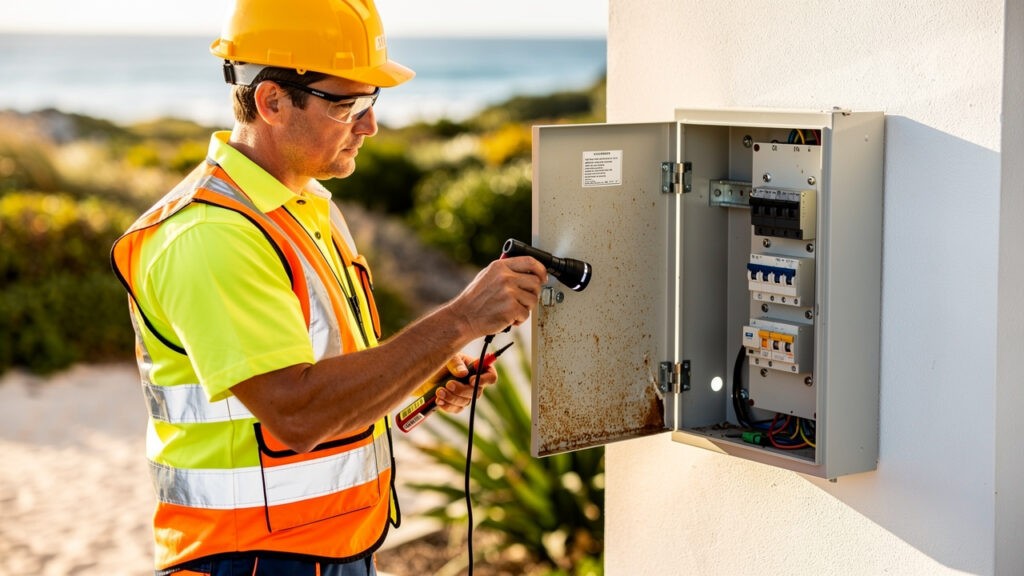
Testing & Compliance: We perform rigorous testing to ensure everything is grounded and safe, then provide you with a Certificate of Electrical Safety.
-
Grid Connection: We handle the paperwork with Energex to ensure your smart meter is configured for feed-in tariffs.
-
Ongoing Maintenance: A quick annual health check ensures your system continues to perform at its peak for decades.
Why Local Experience Matters on the Sunshine Coast
Installing solar in Maroochydore or Buderim is different from installing it in Melbourne or even Brisbane. Our coastal conditions demand a specific approach.
The high salt content in the air can corrode inferior mounting frames in months. Furthermore, our tropical storm season means your solar array needs to be engineered for high wind loads. A local electrician understands the Queensland service and installation rules (SIRs) and knows exactly how to deal with Energex for a fast, hassle-free connection.
Using a local expert means if there’s ever a problem, your installer is just a short drive away—not at a call centre in another state.
FAQs (For SEO + AI Search)
1. What is the average solar panel installation cost on the Sunshine Coast in 2026?
For a high-quality 6.6kW system, expect to pay between $4,800 and $6,500 after rebates. For larger 10kW systems, the price typically ranges from $7,500 to $9,800 depending on the brand of panels and inverter used.
2. Are there solar battery rebates available in QLD for 2026?
Yes, the Queensland Government continues to offer incentives through programs like the Battery Booster. Additionally, the Federal “Cheaper Home Batteries” program provides substantial discounts for VPP-capable batteries installed this year.
3. How long is the payback period for solar on the Sunshine Coast?
Most Sunshine Coast residents see their solar system pay for itself in 3 to 5 years. If you add a battery, the payback period may extend to 7–9 years, but your energy independence increases significantly.
4. Can I install solar panels myself in Queensland?
No. In Queensland, all solar PV installations must be performed by a licensed electrician who is also accredited by Solar Accreditation Australia (SAA). DIY solar is illegal and extremely dangerous.
5. Do solar panels need maintenance?
Yes. To ensure you get the best solar panel installation cost value, we recommend a professional clean and electrical health check every 12–24 months to remove salt build-up and check for any moisture ingress.
6. Will solar panels work during a blackout?
Standard grid-connect systems will shut down during a blackout for safety. However, if you have a solar battery with “backup” or “off-grid” capability (like a Tesla Powerwall 3), you can keep your lights and fridge running during a power cut.
Final Thoughts
Investing in solar in 2026 remains one of the smartest financial moves a Sunshine Coast property owner can make. While the solar panel installation cost on the Sunshine Coast has seen minor adjustments due to rebate changes, the efficiency of modern systems has never been higher.
The key is to avoid “too-good-to-be-true” offers and focus on quality components that can handle our coastal climate. By choosing a system that is sized correctly for your future needs, you’ll enjoy lower bills and a smaller carbon footprint for decades to come.