In our daily lives, we rely on electricity without a second thought. But behind the walls of every Sunshine Coast home lies a complex network of wires and circuits that, if neglected, can pose a significant risk to your family and property. Electrical faults are a leading cause of house fires, and many of these issues go undetected until it’s too late.
Protecting your home isn’t just about locking the doors; it’s about ensuring the very systems that power your life are safe and compliant. A regular electrical safety inspection is not an expense—it’s an essential investment in your peace of mind and the protection of your most valuable asset.
This guide will walk you through the key components of home electrical safety, the warning signs you should never ignore, and why a professional inspection is crucial.
The Three Pillars of Electrical Safety in Your Home
A safe electrical system relies on several key protective devices. Understanding what they are and ensuring they are functional is your first line of defence.
- Safety Switches (RCDs): A safety switch is a life-saving device designed to cut the power in milliseconds if it detects an electrical fault, preventing a fatal electric shock. Since 2019, Queensland law has mandated safety switches on all circuits in new homes. If your home is older, it may not have this level of protection, leaving you vulnerable.
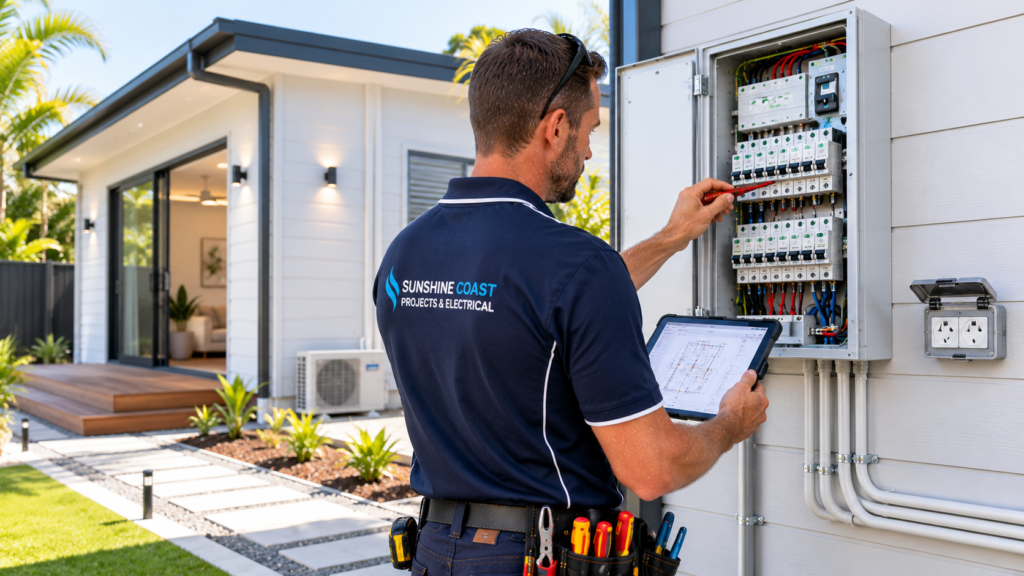
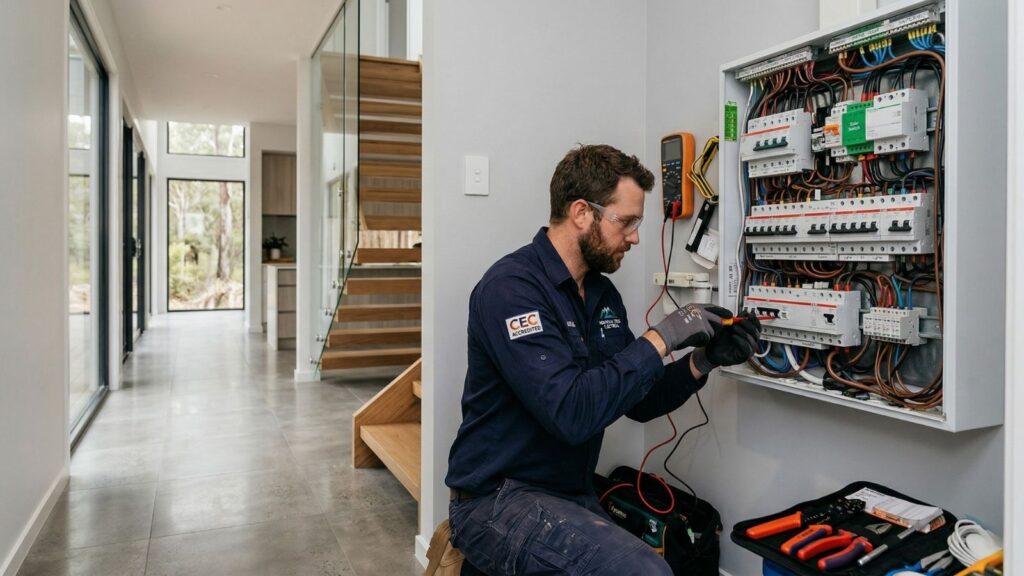
- Modern Switchboards: The switchboard is the ‘heart’ of your home’s electrical system. Older homes often have outdated switchboards with ceramic fuses or even asbestos backing. These boards were not designed for modern power demands and can be a serious fire risk. A modern switchboard with individual circuit breakers and safety switches is essential for handling today’s appliances safely.
- Smoke Alarms: Working smoke alarms can more than double your chances of surviving a house fire. Queensland legislation requires all homes to have interconnected, photoelectric smoke alarms by 2027. This means when one alarm detects smoke, they all sound, providing the earliest possible warning.
Warning Signs You Must Not Ignore
Your home will often give you subtle clues that something is wrong with the electrical system. Recognising these signs and acting quickly is critical. Contact a licensed electrician immediately if you notice :
- Flickering or Dimming Lights: This can indicate an overloaded circuit or faulty, outdated wiring.
- Frequently Tripping Breakers: While circuit breakers are designed to trip, frequent tripping means there is an underlying problem, such as an overload or a short circuit that needs professional diagnosis.
- Sparks, Burning Smells, or Scorch Marks: Any sparks from an outlet, a persistent burning smell, or brown/black marks around switches are serious hazards. Turn off the power at the main switchboard and call an emergency electrician immediately.
- Buzzing or Humming Noises: Your outlets, switches, or switchboard should be silent. Any buzzing or humming sounds can indicate loose wiring or failing components.
- Hot Power Points: A switch or outlet that is warm to the touch is a clear sign of a wiring fault and a potential fire risk.
Why a Professional Electrical Safety Inspection is Essential
Many of the most dangerous electrical issues are hidden behind your walls. The only way to ensure your home is truly safe is with a comprehensive electrical safety inspection from a licensed professional. This is especially vital if your home is more than 25 years old, you are buying or selling a property, or you have recently experienced a major storm.
During an inspection, a qualified electrician will assess the overall condition of your electrical system, looking for :
- Faulty or outdated wiring that could cause fires or electrocution.
- Overloaded circuits that can’t handle modern appliance loads.
- Compliance with current Queensland safety laws and Australian Standards.
- Correct installation and operation of safety switches and smoke alarms.
- The condition of your switchboard, identifying hazards like ceramic fuses.
An inspection provides a detailed report of any risks and offers practical solutions to keep your property safe and compliant, protecting both your family and your investment.
Don’t Take Chances with Your Family’s Safety
Electrical safety is not a DIY job. It requires the expertise of a licensed and qualified professional who understands Queensland’s strict regulations. Taking proactive steps and investing in a regular safety inspection is the best way to prevent devastating accidents and ensure your home remains a safe haven.
Your family’s safety is our top priority. To schedule a comprehensive electrical safety inspection for your Sunshine Coast home, contact our trusted team today.
Frequently Asked Questions
How often should I have my home's electrical system professionally inspected?
There is no single inspection interval that suits every home. Older properties, homes that have been renovated, properties being purchased or sold, and homes that have experienced storm damage should all be professionally inspected.
If you notice flickering lights, frequently tripping safety switches, burning smells or other warning signs, arrange an electrical inspection as soon as possible rather than waiting for a routine check.
How can I tell if my switchboard is outdated?
Older switchboards often contain ceramic fuses instead of modern circuit breakers and safety switches. Other warning signs include overcrowded circuits, frequent tripping, buzzing sounds, heat damage or visible deterioration.
A licensed electrician can inspect your switchboard and advise whether it continues to meet the needs of your household or whether a modern replacement would improve safety and reliability.
Do all homes in Queensland require safety switches?
Queensland electrical legislation has progressively increased safety switch requirements over time. Many newer homes have safety switches protecting multiple circuits, while some older homes may have limited protection or none at all.
If you're unsure, a licensed electrician can inspect your switchboard and explain what protection is currently installed and whether additional safety switches are recommended.
What should I do if I notice burning smells or scorch marks around a power point?
Burning smells, scorch marks, buzzing sounds or excessive heat around electrical fittings should always be treated as potentially dangerous. Stop using the affected outlet or switch immediately.
If it is safe to do so, isolate the circuit at the switchboard and arrange for a licensed electrician to inspect the installation before it is used again.
Can old electrical wiring become a fire hazard?
Yes. As electrical wiring ages, insulation can deteriorate and connections may loosen or become damaged. Older wiring may also have been installed before modern electrical loads and safety standards were introduced.
A professional inspection can identify deteriorated wiring, overloaded circuits and other hidden faults before they develop into more serious safety risks.
Are smoke alarms part of an electrical safety inspection?
Electrical safety inspections commonly include checking that smoke alarms are correctly installed, interconnected where required and operating properly. Queensland has specific smoke alarm requirements that apply to residential properties.
An electrician can advise whether your existing smoke alarms comply with current Queensland legislation and recommend upgrades where necessary.
Is an electrical safety inspection worthwhile before buying a home?
Yes. A pre-purchase electrical inspection can identify hidden problems such as outdated switchboards, deteriorated wiring, overloaded circuits or non-compliant electrical work before settlement.
Understanding the condition of the electrical system allows buyers to budget for any future upgrades and helps avoid unexpected repair costs after moving in.