You flick on the kettle while the air conditioner is running, and… click. The house goes dark.
Or maybe you’ve noticed the lights in the lounge room flicker every time the dryer starts. Perhaps you’ve just moved into an older, charming Queenslander in Nambour or Buderim and you’re staring at a wooden box with old porcelain fuses, wondering if it’s “retro” or just plain dangerous.
That box—your switchboard—is the heart of your home’s electrical system. It’s the central control point that distributes power and, more importantly, it’s your number one defence against electrical fires and electric shock.
The problem? Many Sunshine Coast homes, especially those built before the 1990s, have switchboards that are struggling. They weren’t designed to handle our modern, power-hungry lives. Between split system air conditioners, home office setups, smart TVs, pool pumps, and kitchen gadgets, we’re asking more from our homes than ever before.
If your switchboard can’t keep up, it’s not just an inconvenience—it’s a serious safety hazard.
As your local Sunshine Coast electricians, we’ve seen it all. We believe in giving honest, practical advice to keep our community safe. So, here are the 7 telltale signs that your home is overdue for a switchboard upgrade.
What is a Switchboard, Anyway? (And Why Does It Matter?)
Think of your switchboard as the “mission control” for your home’s electricity. Power comes in from the street, hits the board, and is then divided up and sent to your lights, power points, oven, and A/C via different “circuits.”
Each of these circuits is protected by a fuse or a circuit breaker.
- Old Boards (Pre-1990s): These typically use ceramic fuses with replaceable fuse wire. Their job is basic: to melt and cut power only if there’s a major overload (e.g., 16 amps of power try to go down a 10-amp wire). They are slow, imprecise, and offer zero protection against electric shock.
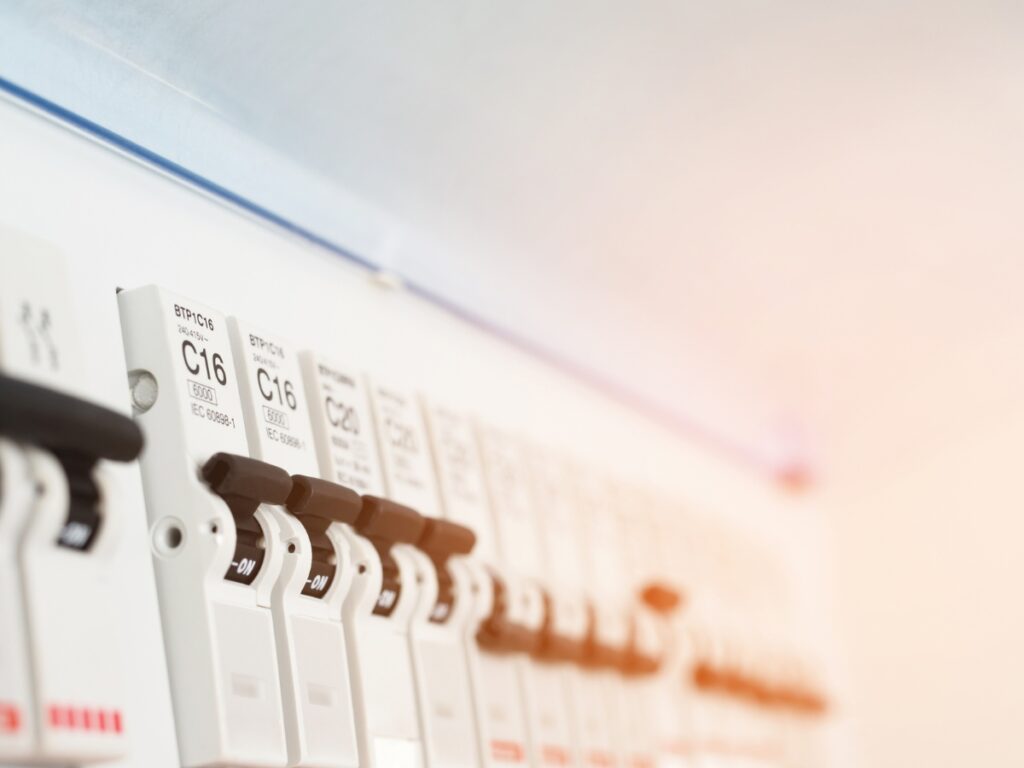
- Modern Boards (Post-2000s): These use circuit breakers and safety switches (RCDs). Circuit breakers are the modern, convenient version of a fuse. But the real hero is the safety switch, which detects tiny “leaks” of electricity—like the kind that would flow through a person—and cuts the power in milliseconds.
An upgrade isn’t just about getting a cleaner-looking box. It’s about replacing an outdated, overloaded, and dangerous system with one that can protect your home and your family.
The 7 Telltale Signs You Need a Switchboard Upgrade
If you spot any of the following, it’s time to call a professional for an inspection.
1. You Still Have Old Ceramic Fuses
This is the big one. If you open your meter box and see a row of white, porcelain plugs, your board is dangerously outdated.
These fuses are problematic for a few key reasons:
- Slow to React: They take much longer to trip than a modern circuit breaker, allowing more time for a fault to cause a fire.
- Shock Hazard: They offer absolutely no protection against electric shock.
- Risk of Human Error: People often “fix” a blown fuse by using the wrong type or thickness of fuse wire (or worse, aluminium foil!). This completely removes the protection and is a major fire-starter.
If you have ceramic fuses, you don’t have mandatory safety switches. This is a non-negotiable, high-priority reason for a switchboard upgrade on the Sunshine Coast.
2. Frequent Circuit Breaker Tripping
Does your TV switch off every time you use the toaster? Do you have to reset a breaker every few days?
A tripping circuit breaker is a safety feature working correctly. It’s telling you that the circuit is overloaded. But if it happens often, it’s a massive red flag.
It usually means one of two things:
- You have too many high-draw appliances on a single circuit.
- Your switchboard itself is old and its components are failing or “tired,” causing “nuisance tripping.”
A modern board will be designed to handle your home’s load, with dedicated circuits for high-powered items like air conditioners, which is a common need in our humid coastal climate.
3. Flickering or Dimming Lights
This is a classic sign of an overloaded system. When a major appliance (like your A/C, dryer, or pool pump) kicks in, it draws a huge amount of power.
If your wiring or switchboard is old, this large draw can cause a temporary “brown-out” across the system, resulting in flickering or dimming lights. It’s a clear signal your board is straining at the seams and can’t provide stable power.
4. A Burning Smell or Scorch Marks
This is an electrical emergency.
If you smell a sharp, acrid, fishy, or “burning plastic” smell coming from your switchboard, do not wait. It’s the sound of wiring and connections overheating and melting. This is how house fires start.
- What to do: If it’s safe, turn off your main power switch. If you’re not sure, just get everyone out.
- Who to call: Call Triple Zero (000) if you see smoke or fire. Then, call an emergency electrician Sunshine Coast like Sunshine Coast Projects &Electrical. We offer a rapid response for urgent, dangerous situations like this.
Even if you just see brown or black scorch marks around the fuses or breakers, it means a “fault” has already occurred. The board is compromised and needs to be replaced immediately.
5. You Have No Safety Switches (or Only One)
A safety switch (also called an RCD, or Residual Current Device) is the single most important safety device in your home. It’s the one that saves your life.
- Circuit Breakers protect appliances and wiring from overloads (fire).
- Safety Switches protect people from electric shock.
In Queensland, all new homes must have safety switches on all circuits (lights, power, A/C, oven, etc.). When you sell a home, you must have them installed.
Many older homes have one RCD for their power points, but none for their lights, oven, or air conditioning. An electric shock from a faulty light fitting can be just as deadly. A full switchboard upgrade ensures your home is compliant with the latest QLD electrical safety standards and your family is protected on every single circuit.
6. You’re Planning Renovations or Major Appliances
This is the “proactive” sign. If you’re planning any of the following, a switchboard upgrade should be first on your list:
- Installing a new split system or ducted air conditioner
- Putting in a pool or spa
- Renovating your kitchen (new oven, induction cooktop, etc.)
- Adding a home office or granny flat
- Installing an EV charger for an electric car
Your old board simply won’t have the spare circuits or the total capacity to handle this new, heavy load. A professional electrician from Sunshine Coast Projects & Electrical will factor this into your upgrade, ensuring your board is future-proofed for your plans.
7. The Switchboard is Old, Rusty, or Damaged
Finally, just use your eyes. As a local Sunshine Coast team, we see the impact of our humid, salty air every day, especially in suburbs like Marcoola, Coolum, or Mooloolaba.
Look for:
- Rust: On the enclosure or any components inside. Rust + humidity + electricity = disaster.
- Brittle/Cracked Casing: Old plastic becomes brittle and can crack, exposing live components.
- A Wooden Backing: If your fuses are mounted on a black or brown wooden board, it’s a fire hazard from the 1960s. It needs to go.
- Poor Weatherproofing: The board should be completely sealed. Any gaps let in moisture, geckos, and ants, all of which are famous for causing short circuits.
What’s Involved in a Switchboard Upgrade?
The idea of a major electrical job can be daunting, but we pride ourselves on making the process clear, tidy, and transparent.
Here’s the Sunshine Coast Projects & Electrical process:
- The Consultation & Quote: We’ll visit your home, whether you’re in Buderim, Mountain Creek, or Nambour. We inspect your current board, test your wiring, and (most importantly) listen to your needs. Do you have tripping issues? Are you planning a reno? We then provide a fixed, upfront price with no nasty surprises.
- The Paperwork: We handle all the ‘boring’ stuff, including logging the job with Energex and arranging the temporary power disconnection for the day of the upgrade.
- The Installation: Our licensed electrician arrives on time. The first step is to safely remove your old board and any asbestos-containing materials (common in old boards) following strict safety rules.
- The Fit-Out: We install a new, modern enclosure, new circuit breakers for each circuit, and mandatory RCD (safety switch) protection for all circuits. We re-wire everything neatly and label it all clearly so you know what’s what.
- Testing & Compliance: This is the most critical step. We test every single circuit. We check the earth connection. We trip every safety switch to ensure it’s working perfectly.
- The Tidy-Up & Handover: We’re known as the “tidy tradies” for a reason. We clean up every last bit of dust and wire. We then walk you through your new board, show you how it works, and provide you with a Certificate of Compliance, which is your guarantee that the job was done to the highest Australian standards.
The power is typically only off for 3 to 6 hours, and we’ll schedule it at a time that works best for you.
Don’t DIY: Why This is Strictly a Job for a Pro
We have to say it: DO NOT attempt any work on your switchboard yourself.
- It is illegal in Queensland for anyone other than a licensed electrician to perform this work.
- It is incredibly dangerous. You are dealing with live power from the street that can kill you instantly.
- It will void your home insurance. If a fire starts from your illegal DIY work, you will not be covered.
This is not a “have a go” task. For the safety of your family and your home, you must use a licensed professional.
Worried About Your Switchboard? Take the Next Step.
If you’ve read this and ticked off even one or two of these signs, don’t put it off. An old switchboard is a gamble you don’t want to lose.
Your family’s safety is worth more than the “she’ll be right” attitude.
As your local Sunshine Coast electricians, we’re here to help. We’re not about an aggressive sales pitch; we’re about providing safe, practical solutions for our community. We’ll give you honest, straight-up advice, a transparent quote, and the peace of mind that comes from knowing the job is done right.
Don’t wait for a flicker to become a fire.
Call Sunshine Coast Projects & Electrical today for a free inspection and quote on your switchboard upgrade, or book your job online.
Switchboard Upgrade FAQ (Frequently Asked Questions)
Q: How much does a switchboard upgrade cost on the Sunshine Coast?
A: The cost varies depending on the size of your home, the number of circuits, and whether the old board contains asbestos. A typical, straightforward upgrade in 2025 usually starts around $900 – $1,500. We provide a firm, itemised quote after a free, on-site inspection so you know the exact price upfront.
Q: How long does a switchboard upgrade take?
A: A standard residential upgrade usually takes between 3 and 6 hours. The power to your home will be off during this time, so we recommend planning for it (like charging your phone beforehand!). We’ll always schedule a time that’s least disruptive for you.
Q: What’s the difference between a circuit breaker and a safety switch (RCD)?
A: This is a great question. A circuit breaker protects your property (wiring and appliances) from overloads and short circuits, which prevents fires. A safety switch (RCD) protects people from electric shock by detecting tiny leaks of current and cutting the power in 30 milliseconds. A modern board has both.
Q: Do I legally need safety switches on all circuits in QLD?
A: Yes. According to the Queensland Electrical Safety Office, all new homes must have safety switches on all circuits. For older homes, if you are selling the property, or if you modify a circuit (like adding a new power point or A/C), you must install a safety switch on that circuit. The safest and best-practice approach, which we always recommend, is to protect all circuits during a single upgrade.
Q: My house was built in the 1980s. Is my switchboard safe?
A: Honestly? It’s highly unlikely to be up to modern standards. A home from the 1980s was not built to handle 2025 levels of power use. It will almost certainly lack safety switches on all circuits (especially lights and A/C) and is at high risk of being overloaded. We strongly recommend an electrical safety inspection for any home of this age.